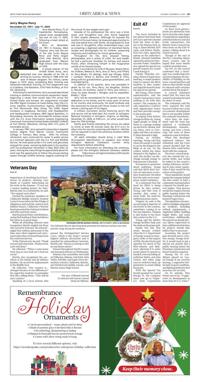

Veterans, community saluted at Chilhowie ceremony

VFW Post 4667's honor guard offered a gun salute and Taps during Chilhowie's Veterans Day ceremony on Wednesday.

Vietnam War veterans who attended Chilhowie's ceremony were welcomed home and thanked for their service.
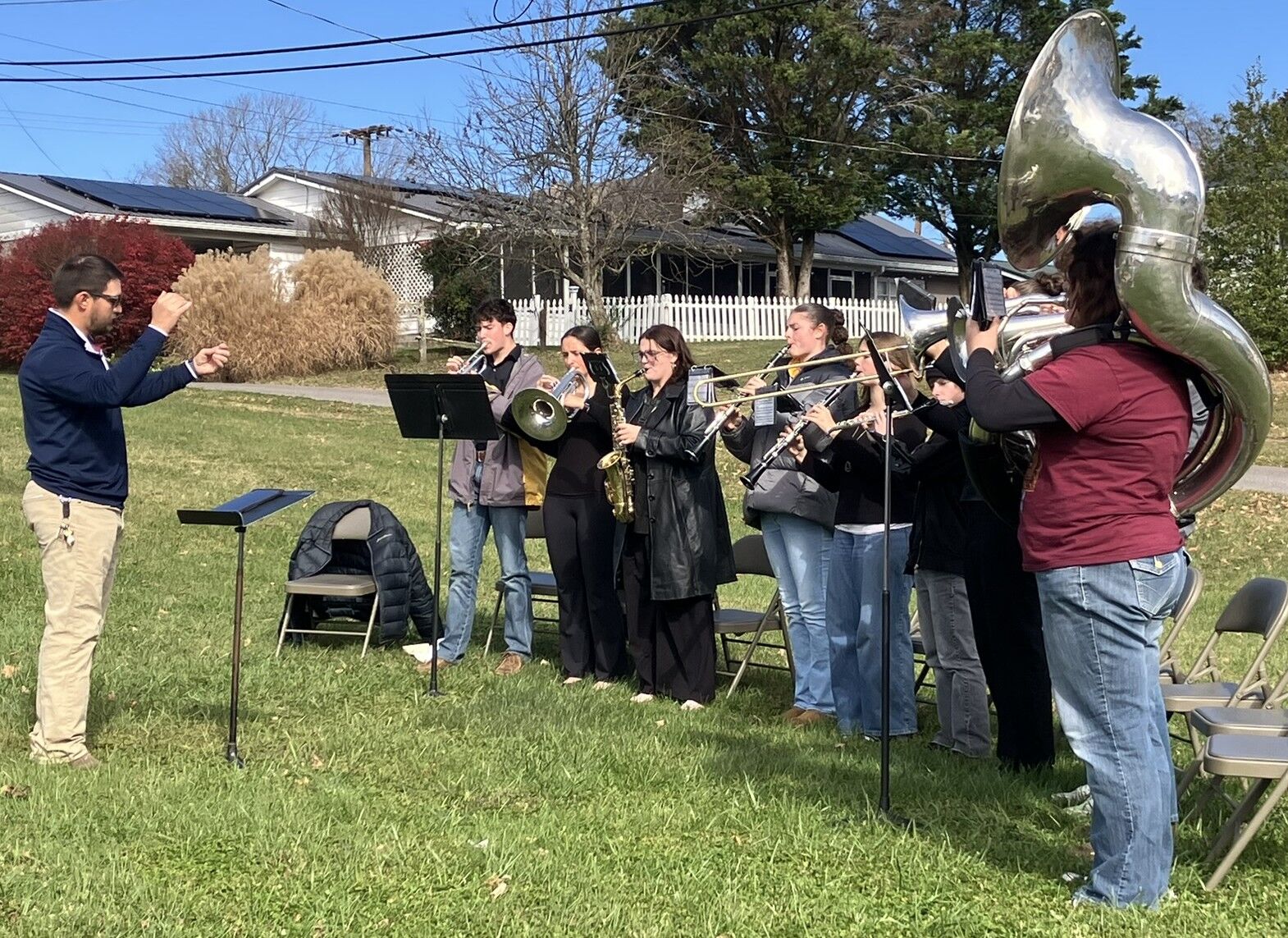
The Chilhowie Warrior Marching Band presented the National Anthem and other patriotic songs during the ceremony.
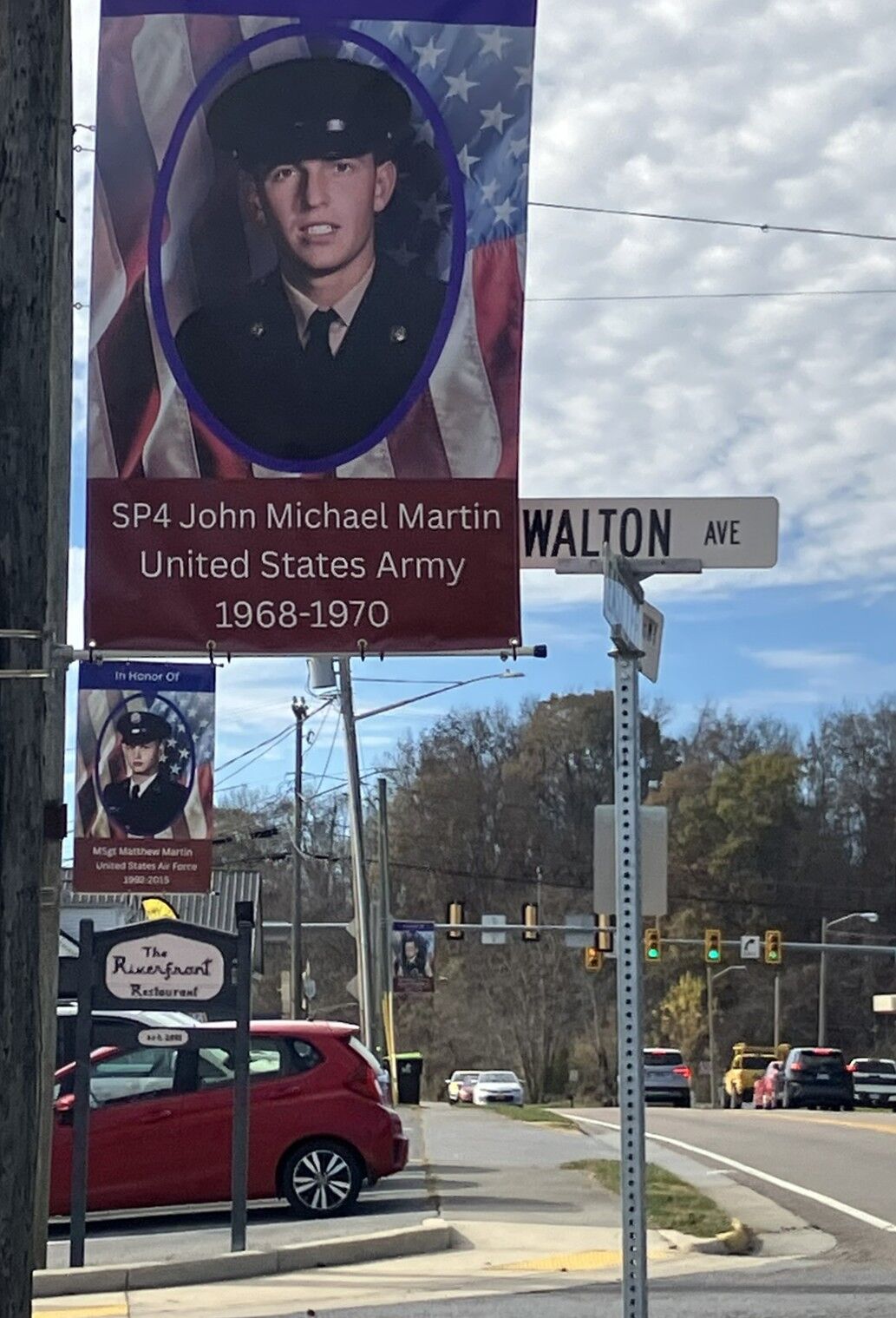
This year, Chilhowie honored its veterans with banners placed along Lee Highway.

Members of Chilhowie Middle School's Student Council Association read the creed of each military branch.

Brian Martin, a retired U.S. Air Force officer and Chilhowie's town manager, served as the ceremony's keynote speaker on Wednesday.
Along Lee Highway in Chilhowie, the faces and names of veterans greet drivers every few feet. Looking at the banners, Brian Martin, a 29-year U.S. Air Force veteran and the town manager, said he sees four generations of veterans, including his grandfather, other relatives, friends, and community members.
Martin noted that the project, which featured dozens of banners, was not easy, but was worthwhile. “When you see how they affect people and how well they turned out,” he said he was proud to be a small part of the endeavor.
Speaking during Chilhowie’s Veterans Day ceremony on Wednesday, Martin noted the importance of involving local businesses in projects, praising Gary Heath of Confetti Advertising for his work on the banners. “It was not a money-making project for him,” Martin said. In a community, he said, “We support each other.”
During the ceremony, members of Chilhowie Middle School’s Student Council Association led the Pledge of Allegiance and read the creed of each military branch. Chilhowie’s Warrior Band presented the National Anthem and other patriotic music.
Martin praised their contributions, saying that looking at them he believes the future is in good shape.
While all attending veterans were recognized, Martin singled out those who served in Vietnam. He acknowledged that military personnel of the time were often targeted and ostracized when they returned home from the controversial war.
To the Vietnam vets, he said, “Thank you and welcome home. Thank you for a job well done.”
He reflected, “When I came home from Iraq no one took out a bad war on me.”
Martin also recognized the sacrifices of his family and all military families. He served two deployments in the Middle East.
He reflected, “Our country is… stronger because of our differences.” He urged the students to remember that idea, telling them, “This will be your country.”
Speaking of a local veteran who earned the Distinguished Service Cross, which is the Army's second highest military decoration and is awarded for extraordinary heroism, Martin said, “Heroes ar among us who no one knows about.”
Schools throughout Smyth County also honored veterans on Wednesday.
Veterans Day assemblies were held at Chilhowie, Marion, Oak Point, Rich Valley, Saltville, and Sugar Grove elementary schools, Chilhowie, Marion, and Northwood middle schools, and Marion Senior High School.