

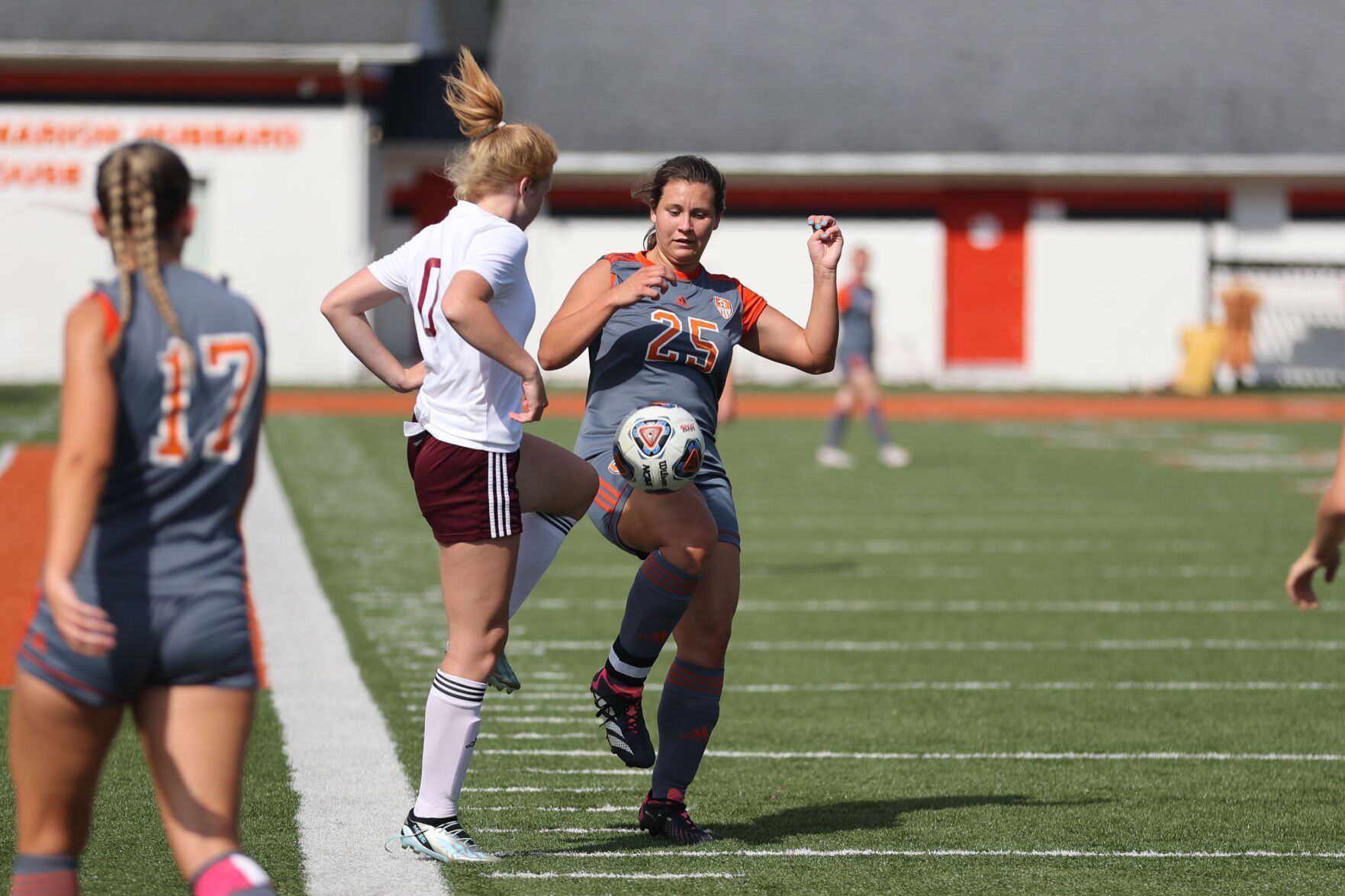
Honaker’s Kate Jessee and George Wythe’s Zoey Childers fight for the ball during the Region 1 state semifinals.
Honaker’s Kate Jessee and George Wythe’s Zoey Childers fight for the ball during the Region 1 state semifinals.
Honaker’s Kate Jessee and George Wythe’s Zoey Childers fight for the ball during the Region 1 state semifinals.
Honaker’s Kate Jessee and George Wythe’s Zoey Childers fight for the ball during the Region 1 state semifinals.
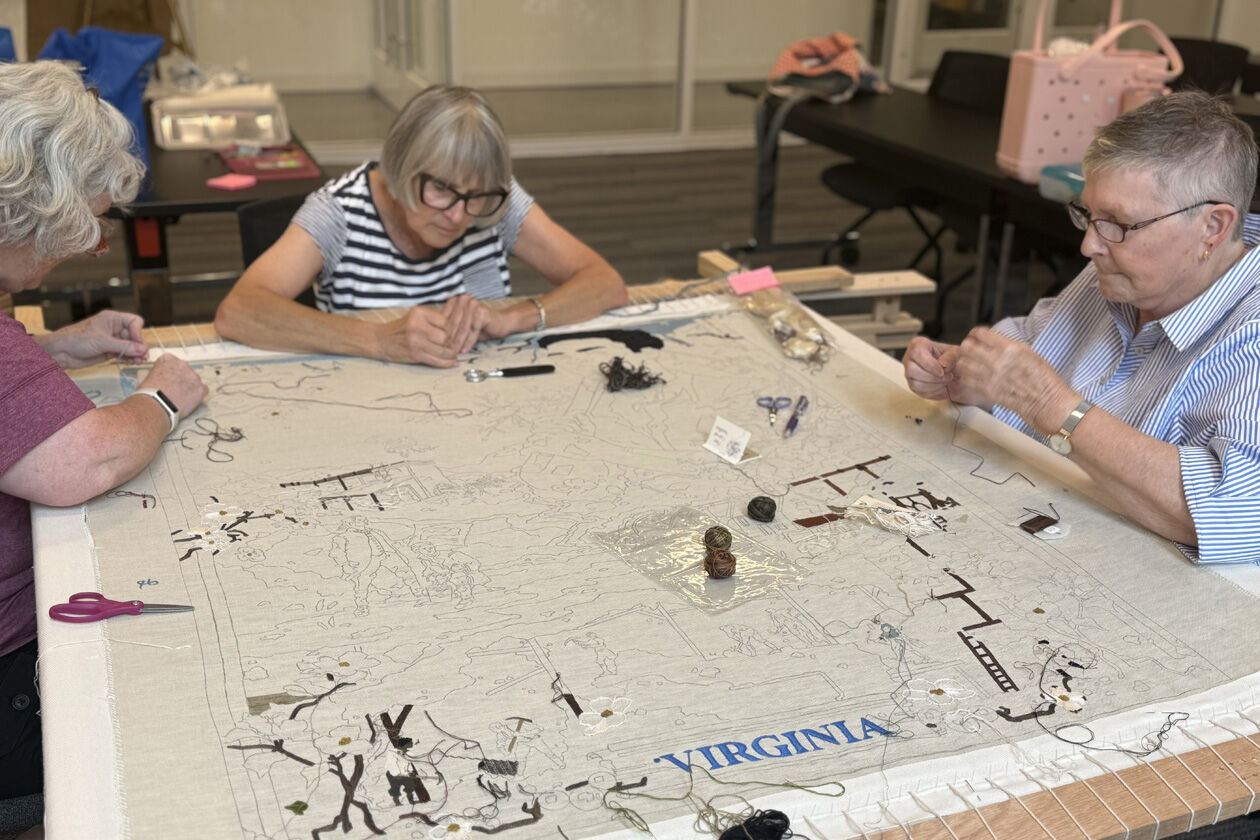
Volunteers stitch the Virginia panel. Stitchers are to take creative liberties, using prized personal materials to provide a personal touch. Hand-stitching is being done by community volunteers and members of the Williamburg Rose and Thistle Chapter of the Embroidery Guild of America, under the direction of Catherine Theron – Virginia Tapestry State Director. (Courtesy of W&M News).
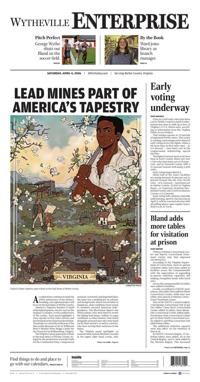
Virginia Colony Tapestry pays tribute to the lead mines of Wythe County.
As celebrations continue to mark the 250th anniversary of the nation’s founding, one regional project will focus on the lead mines of Wythe County.
America’s Tapestry features 13 hand embroidered panels, one for each of the original 13 colonies, to tell a unified story of the nation. Each panel highlights a story specific to that state’s history and involvement in the American Revolution. The project is currently underway at the Muscarelle Museum of Art at William & Mary’s Martha Wren Briggs Center for the Visual Arts in Williamsburg, Virginia.
The Virginia Colony panel pays tribute to the lead mines of Wythe County-integral to the production of musket balls for the Continental Army. Composed of enslaved, convicted, and imported labor, the mine was a melting pot of cultures and backgrounds whose forced labor in dangerous, dark conditions from sunup to sundown ensured American independence. The illustration depicts the Welch miners who were hired to revive the failing lead mines. Subject to same conditions as other laborers, they toiled alongside enslaved men who were hired out by their master’s as well as convicts, who were serving their sentences in the mines.
The Virginia panel spotlights an enslaved man named Aberdeen, located in the upper right-hand corner, who defied his Loyalist master’s orders to join the British cause and ended up working seven years in the lead mines in Austinville.
“Aberdeen is a very important, early figure in modern Wythe County history. As an enslaved person, his owner was loyal to the King. Aberdeen ended up working the lead mines and after the Revolutionary War, he petitioned for his freedom. Colonial Charles Lynch vouched for him, and he was awarded his freeman status in 1783,” explained Michael Gillman, Manager of Heritage Sites/Homestead Museum Operations for the Town of Wytheville Department of Museums. He added, “His story is one of the many scenarios we find in the fight for freedom in the 18th century.”
The America’s Tapestry was organized by costume designer and fiber artist Stefan Romero in collaboration with Willam & Mary, Seton Hill University (PA), and a number of historical and craft organizations – including the Town of Wytheville Department of Museums as an historical partner.
The Virginia Tapestry is currently being hand stitched at the Muscarelle Museum of Art and will join panels from the other 12 original colonies in an exhibition at the Museum from June 19 – Sept. 6.
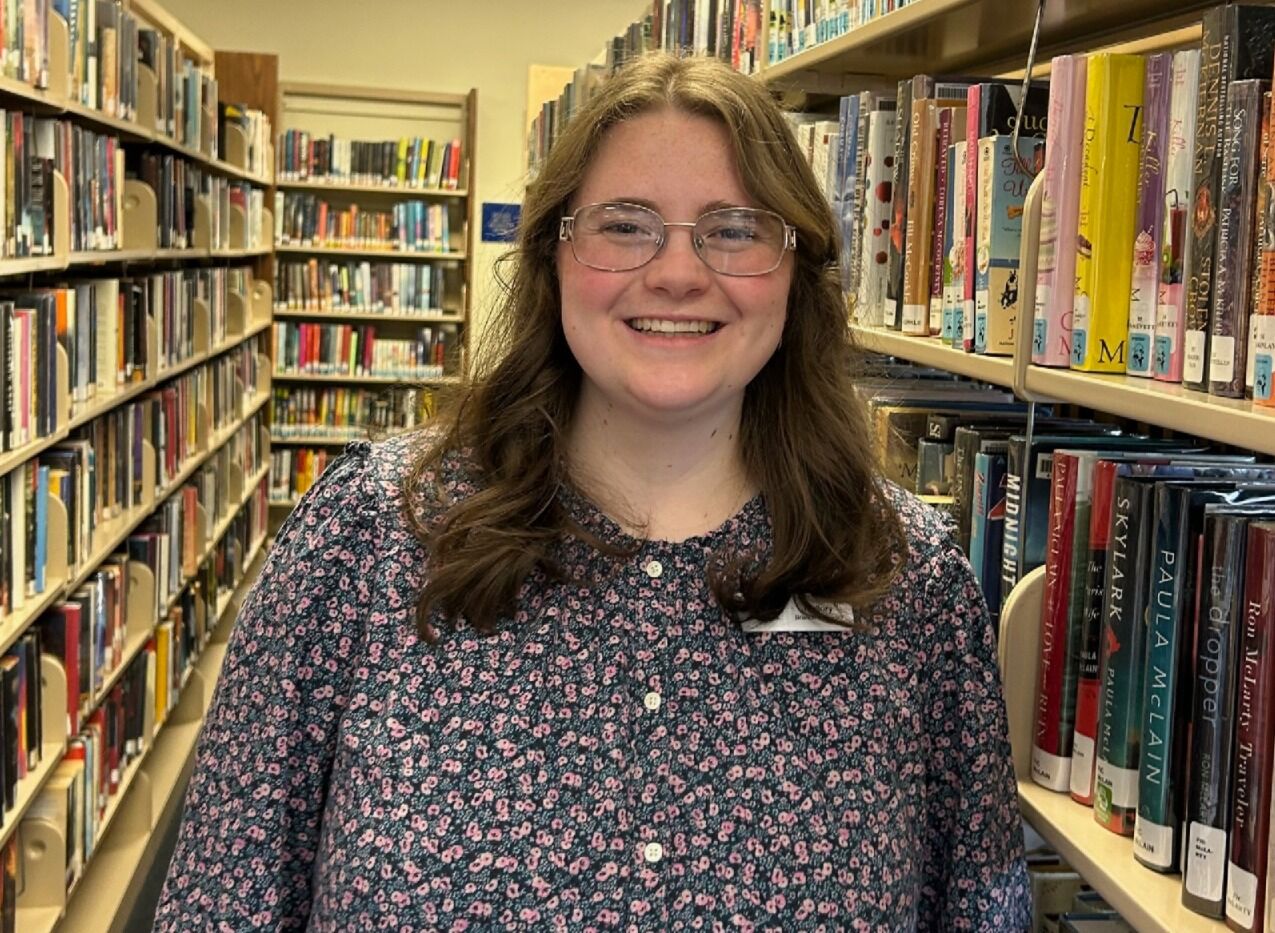
Mallory Ward, the new branch manager at the Wythe County Public Library in Wytheville.
Mallory Ward, the new branch manager at the Wythe County Public Library in Wytheville.
Close to 2,000 early votes have been cast in Wythe County in April 21 referendum that aims to shift up to four of Virginia’s 11 U.S. House seats, according to information from the Virginia Public Access Project.
That number equates to 7.9 percent of registered Wythe voters. The county is running a percentage point ahead of early voting across the region, where a bit more than 16,400 early votes – or 6.9 percent – have been cast in the congressional redistricting special election.
The highest turnout spots so far have been in Scott County where just over 1,700 votes have been cast or 10.6 percent, and in Tazewell County with a 9.2 percent turnout with nearly 2,600 votes.
Early voting began March 6.
About half of the state’s localities are seeing between 10 percent and 21 percent turnout thus far. Over 54,500 votes – or 6.7 percent - have been cast in Fairfax County, 25,000 in Virginia Beach – or 7.4 percent, 24,000 in Chesterfield County and 23,000 in Henrico County, or 9.2 percent.
Early voting will continue statewide until Saturday, April 18. Election Day on April 21 will be a normal election with all polling places open regular hours, from 6 a.m. to 7 p.m.
Visitors to Bland Correctional Center and Marion Correctional Treatment Center may find improved circumstances.
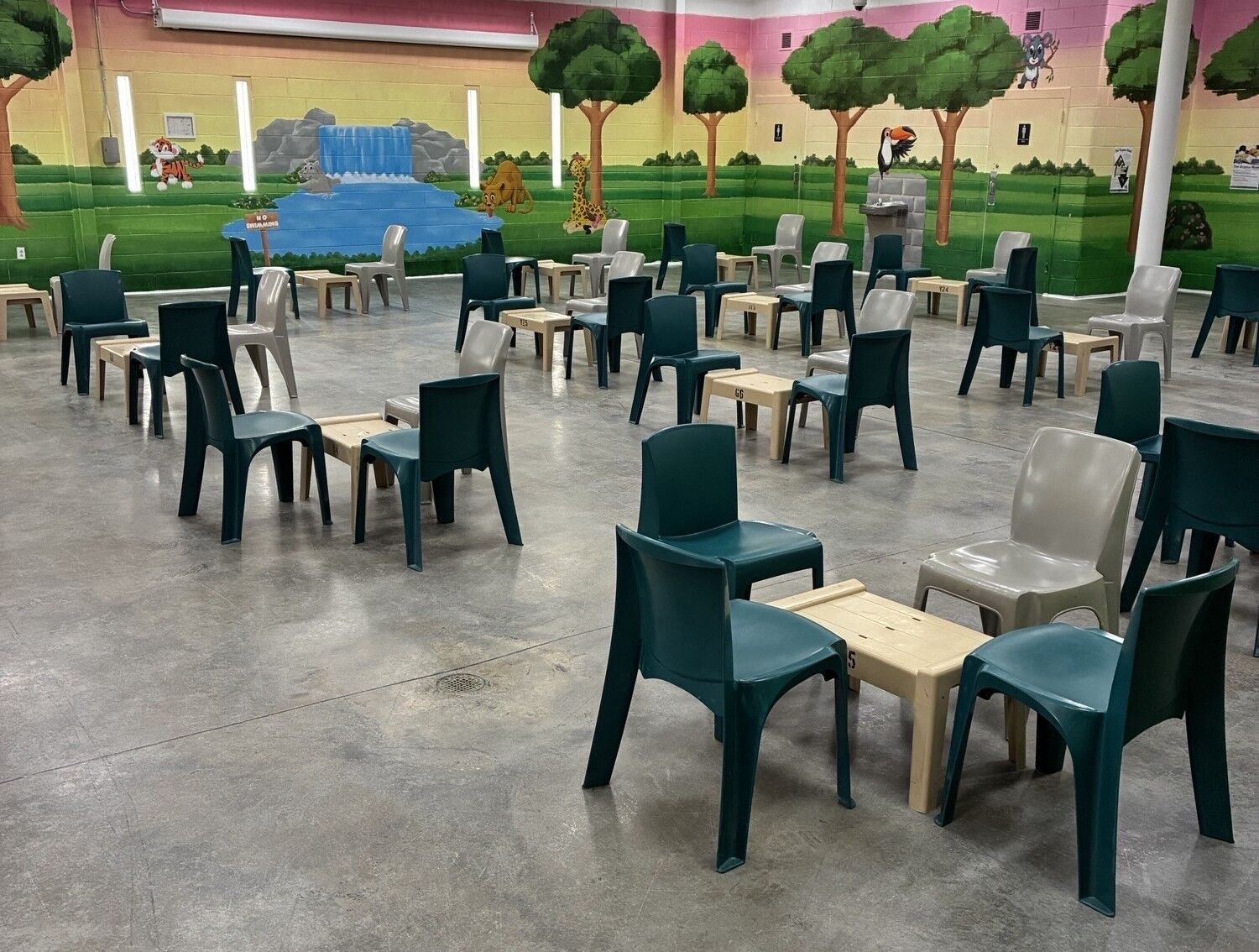
According to the Virginia Department of Corrections, more in-person visitation tables have been added to facilities across the Commonwealth with the expectation of expanding in-person visitation capacities and helping strengthen bonds with loved ones.
Across the commonwealth 162 tables were added to facilities.
Locally, according to a VADOC news release, nine tables were added to Bland Correctional Center, while four new tables were placed at Marion Correctional Treatment Center.
Also, in the VADOC’s western region, Cold Springs Correctional Unit 10 got two tables; Green Rock Correctional Center added 10 tables; Keen Mountain Correctional Center added eight; Pocahontas State Correctional Center got 10; River North Correctional Center added 15; and Wise Correction Unit added three tables.
The additional visitation capacity went into effect on the weekend of March 28.
In VADOC’s Eastern Region, 33 visitation tables were added, 64 in the Central Region, and 61 were added in the Western Region. This increased the total number of visitation tables at VADOC facilities to 566.
“Visitation is a crucial part of the reentry journey,” said Director Joseph W. Walters. “It is so important for members of the population to maintain and build relationships with their loved ones, which strengthens family bonds and makes a smoother transition to society when they are released. Also, the additional tables put VADOC back at pre-COVID-19 visitation capacity, making it easier for loved ones to stay connected.”
More information about visitation can be found on VADOC’s website.