This content is unavailable. Please contact customer service for more information.
Already a subscriber? Login or Activate your account.
You've reached the end of the standard E-Edition.
This content is unavailable. Please contact customer service for more information.
Virginia Department of Corrections announces launch of Citizen's Academy (copy) (copy)
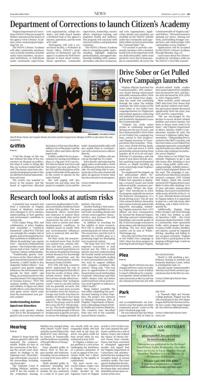
Virginia Department of Corrections (VADOC) Director Joseph W. Walters announced the launch of the agency’s first Citizens’ Academy, a four-week program beginning Oct. 14.
The VADOC Citizens’ Academy will offer community members, such as family members of public safety team members, incarcerated individuals, or individuals under community supervision, civic organizations, college students, and faith-based leaders a firsthand look at the agency’s mission, operations, and the work of its staff.
Participants will visit a correctional facility, a Probation & Parole Office, VADOC’s headquarters in Richmond, and the agency’s Academy for Staff Development to learn about institutional operations, community supervision, leadership, reentry efforts, employee training, and employee health and wellness. The program will conclude with a keynote address and graduation ceremony.
The VADOC Citizens’ Academy aims to strengthen public understanding, highlight employee professionalism, and support relationship-building with community leaders, educators, businesses, and civic organizations. Application details and schedules are available on the VADOC website under the Community and Legislative Affairs section located under the “General Public” tab.
“I’m excited to provide community members with a detailed, inside look at the important work our dedicated public safety team performs every day to keep people in communities all across the Commonwealth of Virginia safe,” said Walters. “We look forward to opening our doors, sharing our work, and building stronger connections and relationships with communities across Virginia.”
Applications will be accepted for the VADOC Citizens’ Academy through Monday, Aug. 24.
Learn more about the Citizens’ Academy by watching a video on the VADOC’s YouTube channel.
Jim Talbert
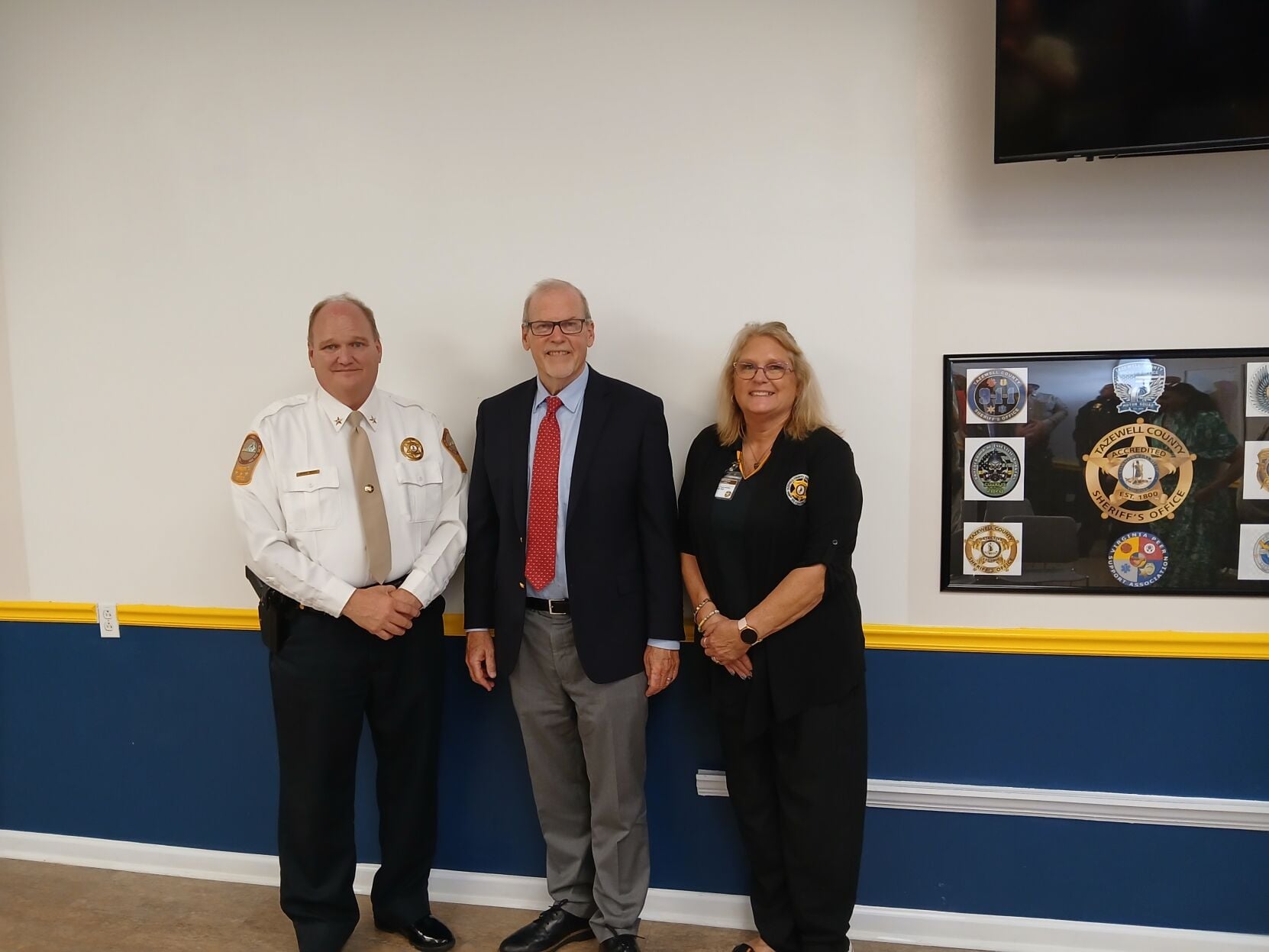
Sheriff Brian Hieatt and Captain Randy Ann Davis joined
Congressman Morgan Griffith to talk about the new equipment. Jim
Talbert
Page A3
Jim Talbert
Sheriff Brian Hieatt and Captain Randy Ann Davis joined
Congressman Morgan Griffith to talk about the new equipment. Jim
Talbert
New research tool uncovers how nature, nurture shape child autism risks (copy) (copy)
A powerful new research tool from a University of Virginia School of Medicine scientist and colleagues is set to advance understanding of how genetics and environment contribute to autism risk.
UVA’s Ziqiao Wang, PhD, and collaborators at Johns Hopkins have assembled a “statistical framework” called PGS-TRI that can untangle the complex web of genetic and environmental factors that contribute to childhood conditions. By analyzing "case-parent trios" – data from a child and both parents – this tool provides a more precise look at how "nature" and "nurture" interact within families.
“Traditionally, genetic studies focus on the ‘direct effects’ of genes passed from parent to child. However, a child’s health is also shaped by ‘indirect effects’—how a parent’s own genetic makeup influences the environment they provide for their child,” said Wang, an assistant professor who recently joined UVA’s Department of Genome Sciences. “PGS-TRI analyzes families, both parents and children, to figure out which health effects come directly from your genes versus which come from the environment your parents created.”
Understanding Autism Spectrum Disorders
Large-scale genetic studies have led to the development of genetic risk scores that estimate a person's predisposition to diseases and health conditions based on their DNA profiles. The new framework allows researchers and clinicians to analyze these scores using family data and to characterize the risk of conditions such as autism and other developmental conditions in children based on family DNA and environmental influences such as maternal diet and lifestyle factors.
For their study, the researchers analyzed more than 18,000 case-parent trios, autistic children and their parents, across diverse ancestral populations in the Simons Foundation Powering Autism Research for Knowledge (SPARK) consortium and the Genes and Environment Autism Research Study (GEARS).
PGS-TRI will help scientists better understand the role of genes and distinguish their effects from the results of those other, outside factors. Initial tests of the tool have already offered reassuring evidence that “polygenic scores” used to calculate autism risk are generally accurate. But these scores were more accurate for families from the Americas, Europe and South Asia than for families of African or East Asian ancestry. This difference likely reflects the groups used to build the scores, the PGS-TRI developers say. The results highlight the need to include people of diverse backgrounds in genetic research, to ensure the findings benefit all patients, they note.
Another finding is that maternal genetic susceptibility for certain traits, including obesity and certain neurocognitive characteristics, may increase the risk of autism in children.
In addition to vouching for the validity of prior research, PGS-TRI is already producing promising leads for future work. The researchers used the tool to identify the CADM2 gene as a promising target for developing ways to prevent autism.
“We hope that PGS-TRI will empower researchers to look beyond just the DNA a child inherits and start understanding the broader family environment that shapes their health, leading to more personalized and effective ways to support children with complex conditions like autism,” Wang said. “This tool gives us opportunities to study the potential causal relationships of parents’ phenotype and their child’s disease risks and better understand how nature and nurture work together to influence a child's health.”
Findings Published
Wang helped assemble the tool while completing her postdoctoral training at Johns Hopkins; the project was overseen by Nilanjan Chatterjee, PhD, of Hopkins’ Department of Biostatistics, Bloomberg School of Public Health and School of Medicine. The scientists have described their new tool in the scientific journal Nature Genetics.
The research team consisted of Wang, Luke Grosvenor, Debashree Ray, Tianyuan Cheng, Ingo Ruczinski, Terri H. Beaty, Heather Volk, Christine Ladd-Acosta and Chatterjee. The scientists have no financial interest in the work.
The research was supported by National Institutes of Health grants.
To keep up with the latest medical research news from UVA’s School of Medicine and UVA’s new Paul and Diane Manning Institute of Biotechnology, bookmark the Making of Medicine blog at https://makingofmedicine.virginia.edu.
25th anniversary Drive Sober or Get Pulled Over Campaign launches across Virginia (copy) (copy)
Virginia officials launched the Commonwealth’s 25th anniversary drunk driving enforcement and public awareness effort, Drive Sober or Get Pulled Over. Beginning this week and continuing through the Labor Day holiday weekend, the 2026 version of the Drive Sober or Get Pulled Over campaign features 111 Virginia law enforcement agencies conducting 665 individual saturation patrols and 58 sobriety checkpoints across the Commonwealth.
“Virginia has made major strides in combating impaired driving over the last 25 years, and the Commonwealth’s Drive Sober or Get Pulled Over campaign has been central to that progress,” said Virginia Secretary of Transportation Nick Donohue. “However, every drunk driving death, injury, crash and arrest is 100% preventable and preventing them requires all of us to do our part. Whether it’s planning a safe ride home if your plans include alcohol, reporting suspected impaired drivers, or simply buckling up, every action helps make Virginia’s roads safer.”
To complement the stepped-up law enforcement effort, Virginia’s 2026 Drive Sober or Get Pulled Over operation is deploying a research-based and newly enhanced public awareness program called “What’s the Damage?”. First introduced in 2024, the program originally focused on the financial consequences of a drunk driving arrest. The all-new 2026 outreach delivers innovative and creative materials paired with impactful messaging, reminding Virginia motorists that a DUI offense can have consequences far beyond the financial impact, affecting a person’s relationships, friendships and overall quality of life. It also encourages everyone to always plan a safe ride home before drinking. The new 2026 digital creative can be seen at WhatsTheDamage.org.
Since the start of the Drive Sober or Get Pulled Over campaign in 2002, there has been progress in reducing drunk driving in Virginia. Alcohol-related traffic crashes have nearly halved (45%), fatalities have decreased by 36%, and injuries have decreased by 42% (2001 vs. 2025, Virginia DMV).
More recently, newly released DMV data from 2025 shows that both alcohol-related crash fatalities and serious injuries decreased significantly from the prior year (22% and 9%, respectively).
“We are encouraged by the decline in recent alcohol-related fatalities and serious injuries, but there is always more work to be done,” said Virginia Department of Motor Vehicles (DMV) Commissioner Saundra M. Jack, the Governor’s Highway Safety Representative. “Safeguarding lives is central to the DMV’s mission, and the Drive Sober or Get Pulled Over campaign represents a meaningful step forward in our collective effort to foster safer roadways for motorists across Virginia.”
Drive Sober or Get Pulled Over reminds Virginians to get a safe ride home after drinking or face arrest, using public safety messaging and high-visibility enforcement to keep impaired drivers off the road. The campaign is supported by new data from consumer research company GWI (Global Web Index), which this month surveyed 500 Virginia drivers most likely to drive after drinking: 21 to 35-year-old males. Among other findings, the research showed that while nearly all (89%) of the 21- to 35-year-old male drivers surveyed in Virginia believe it is important to plan for a safe ride home after drinking, only a third (34%) frequently do.
Additionally, Virginia State Police troopers will work through the Labor Day holiday as part of Operation CARE – the Crash Awareness Reduction Effort. CARE is a nationwide, state-sponsored traffic safety program that aims to reduce traffic crashes, fatalities and injuries caused by impaired driving, speeding and failing to use occupant restraints. Virginia State Police’s participation in the program will begin Sept. 4 and run through Sept. 7.
“With over 100 law enforcement agencies participating throughout the Commonwealth, Virginians will see a significantly stepped-up effort by state and local law enforcement to identify and apprehend impaired drivers through the Labor Day holiday,” said Virginia State Police Superintendent Colonel Jeffrey S. Katz.
Virginia’s Drive Sober or Get Pulled Over campaign is supported by a grant from DMV to the Virginia-based nonprofit Washington Regional Alcohol Program (WRAP).
Click and hold your mouse button on the page to select the area you wish to save or print.
You can click and drag the clipping box to move it or click and drag in the bottom right corner to resize it.
When you're happy with your selection, click the checkmark icon next to the clipping area to continue.