

Chilhowie's Sadie Paine swam in the Region Swim Meet on Wednesday evening at Virginia High.
Chilhowie's Sadie Paine swam in the Region Swim Meet on Wednesday evening at Virginia High.
Chilhowie's Sadie Paine swam in the Region Swim Meet on Wednesday evening at Virginia High.
Chilhowie's Sadie Paine swam in the Region Swim Meet on Wednesday evening at Virginia High.
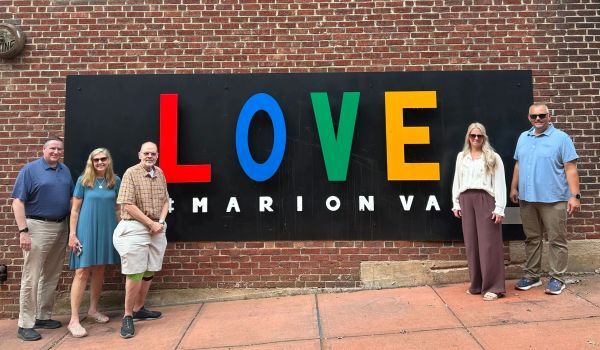
Regional partners and local leaders, including Ken Heath, in each community participated in a collaborative planning process designed to strengthen downtown economies across the region.
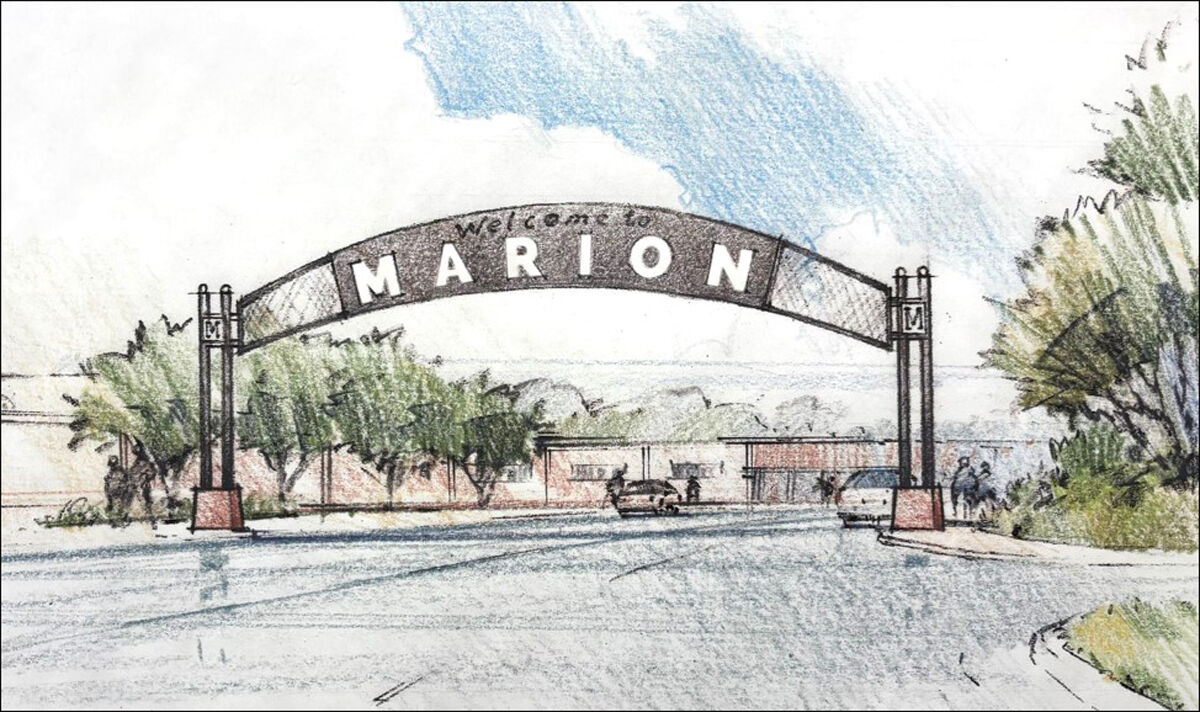
Marion 2035 envision transforming the Interstate 81 Exit 45 entrance corridor into a landscaped gateway.
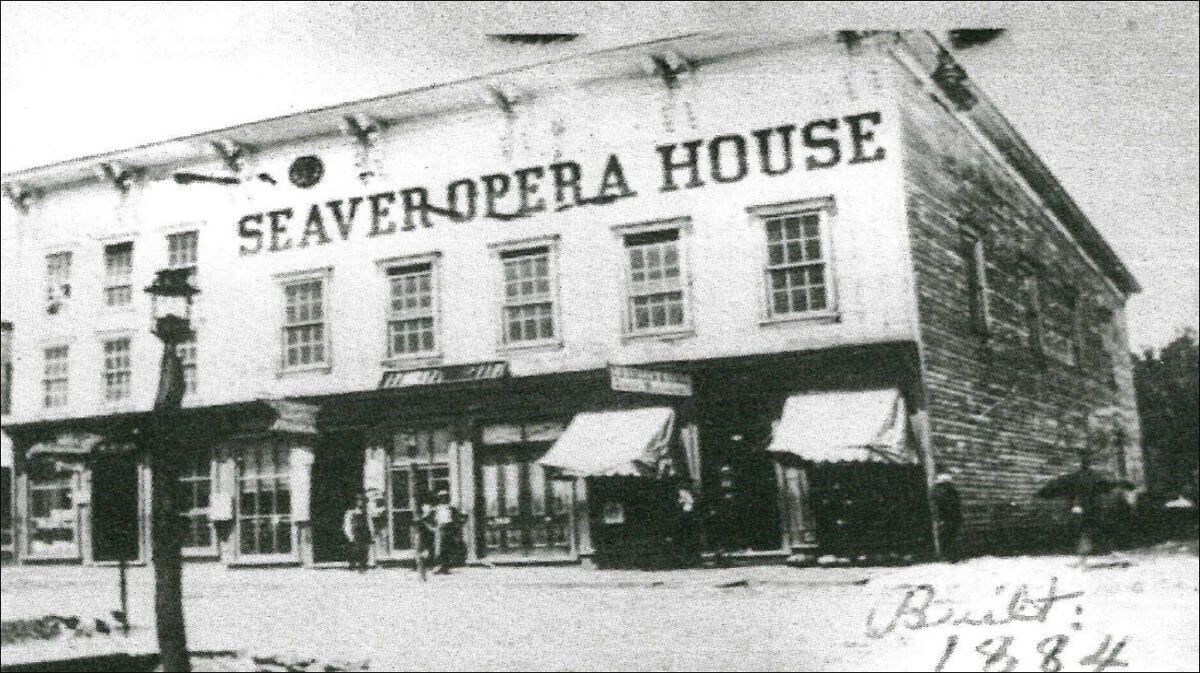
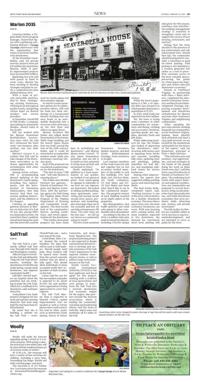
A vision of one aspect of the rehabilitated Seaver Opera House.
This rendering imagines a historic renovation that could bring Smyth County administrative offices to the downtown.
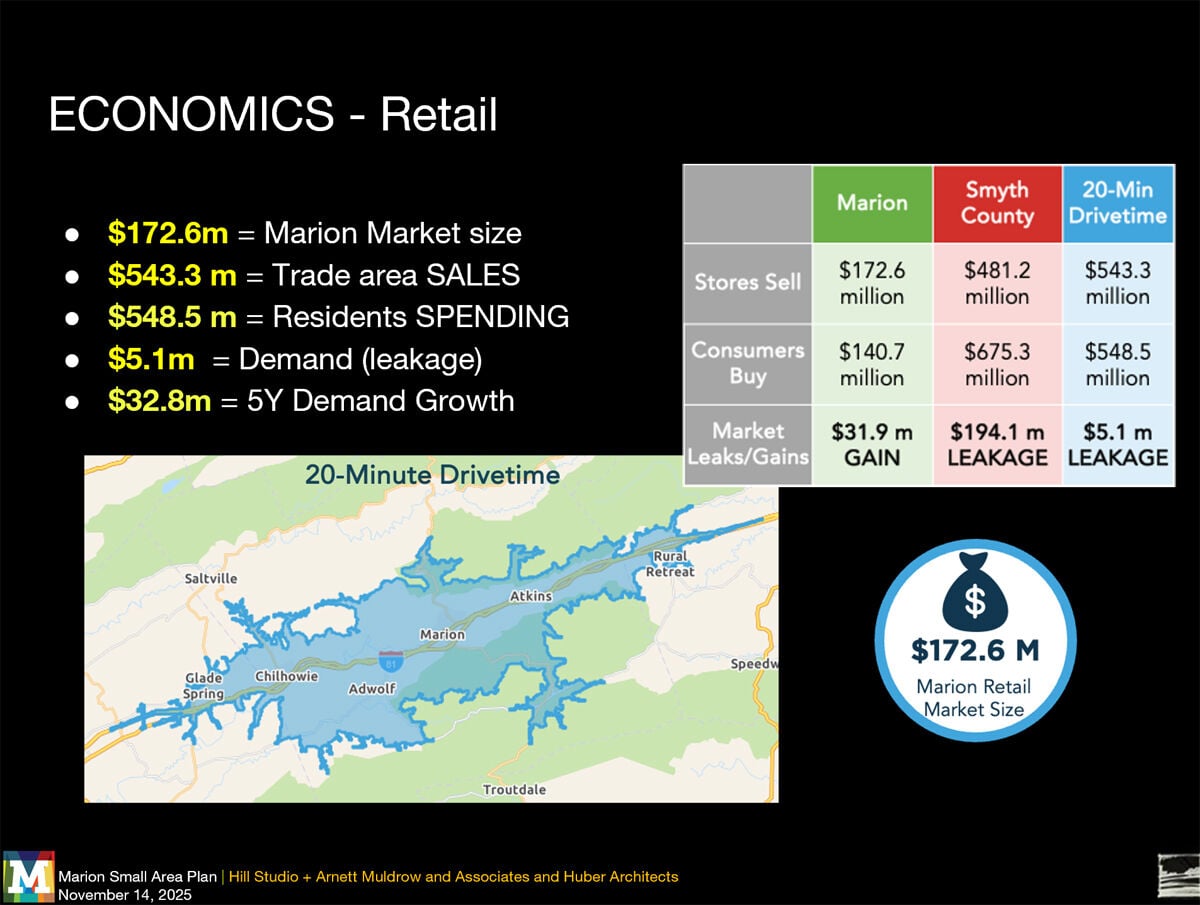
By 2030, retail demand within the 20-minute drivetime of Marion is projected to reach $32.38 million. Town officials are working to bring more of that potential income to Marion as well as capture some of the income gaps that exist right now.
A report analyzing some of the existing gaps found that there’s a $6.3 million gap for family clothing between what exists and what is desired and an $18 million one for restaurants and bars.
In a news release issued Thursday, Ken Heath, Marion’s Director of Community and Economic Development and the town’s Main Street Director, said, “You’re either moving forward or you’re losing ground, and we are always pushing forward here in Marion. By engaging all our partners – business owners, property owners, customers, visitors, and the whole community, and by bringing in the very best consultants in the business, we’ve created a solid workplan, a roadmap for the next decade for Marion’s success.”
Heath first noted how Marion, grappling with a dying downtown in the 1990s, brought it back to life.
The town did more than restore life.
Over the last three decades, about $85 million has been invested in improvements to downtown Marion, the first community in Southwest Virginia to earn the designation of a Virginia Main Street town.
Courtney Malley, a Virginia Main Street program manager, shared that figure with a gathering celebrating Marion’s 30th anniversary with the organization that works to promote healthy, vital downtowns.
At the November event, Malley said 318 private investor projects have put $45 million into downtown Marion, while 51 public improvement projects have invested $40 million.
Beginning last year and with grants in hand to cover costs, Marion has been working to develop strategies and plans to create a comprehensive plan dubbed Marion 2035.
With a team of private and public partners, they’ve been cataloguing existing businesses, studying local and regional market trends, and getting citizen input on desired retailers and service providers.
In November, David Hill of Hill Studio, a company specializing in community designs, shared some of the results.
Hill has worked with the Marion Downtown Revitalization Association since 1999. He said he’s witnessed the town work “one business after another, one tree after another.”
Marion’s success is so evident that Hill said he takes images of the downtown everywhere as he shares opportunities for revitalization with other communities.
Among future actions, Hill is recommending phased updating of the downtown’s landscaping, including tree replacements, and the introduction of Downtown Ambassadors, who help tourists find their way around, parking enforcement, and the addition of EV chargers.
Creating an appealing gateway entrance to Marion via Interstate 81’s Exit 45 was also among Hill’s recommended actions. He noted that there’s publicly owned land along the route into the town that could be used for landscaping and more modern signage.
As Smyth County examines options for its administrative offices, Hill said his team has done renderings of a transformed historic building that was once home to an automobile dealership into a structure with retail space on the first floor and offices on upper floors.
Marion Architect Bill Huber also talked about the potential of the former Wells Fargo building and the Seaver Opera House that was built around the turn of the 20th century. Huber said it could be renovated to accommodate modern needs while also featuring a meeting-theatre space.
Each of the proposals are considered as gamechangers for the downtown.
“The next 30 years,” Hill said, “will take Marion to amazing places.”
The studies were divided between two agencies – Friends of Southwest Virginia and Marion Downtown, with the partnering agency for both being the Virginia Main Street Program of the Virginia Department of Housing and Community Development. The final results look at the community’s history, existing conditions, and future opportunities for the downtown.
“The studies show great progress has been made here in revitalizing our downtown,” said Marion Mayor Avery Cornett. “It also shows tremendous potential, and our job is to build on that potential to bring more growth and excitement to town.”
Heath explained, “In addition to a hard examination of our market, we looked at our physical plant, from landscaping to signage to sidewalks to see how we can improve our downtown. We looked at adding needed parking, more apartments, renovating and reusing vacant second story spaces, promotions and marketing, plus what gaps there are in our economy and how we can help entrepreneurs fill those. The next steps are the fun ones – we roll up our sleeves as a community and go to work!”
The first study examined Downtown Inventory, Market Analysis, and Real Estate Redevelopment Strategy: From Inventory to Insight.
Last summer, members of the study team not only met together but on two occasions invited members of the public to visit five buildings (130 East Main, 220-224 East Main, 214 South Commerce, 137 East Main, and 125-131 East Main) and share what they’d like to see in the commercial properties. The property owners of each building received an in-depth report of the properties.
Key demographics, foot traffic patterns and retail sales going to other communities were all examined.
According to the data, in 2024, 1.6 million visits were made to downtown Marion, including 178,000 unique visitors.
While the town’s population is 5,788, a 30-minute drive area around it in which people shop boasts a population of 55,213.
In 2025, retail trade was reported to be $413 million.
Yet, the town is losing some customers to other communities for restaurants and dining, clothing and accessories, furniture, sporting goods, pet supplies, specialty foods and gift shops.
While addressing products for sale, the studies also looked at improving the downtown’s infrastructure with moves such as repairing loose bricks and concrete, installing bike racks, updating trees and plantings, adding amenities for trail hikers, and energizing side/back streets for service businesses.
Among other improvements, the reports also suggested adding parking spaces and enforcing time limits.
The Real Estate Redevelopment report said, “Parking turnover is one of the most critical metrics for a healthy downtown economy. The more often a space turns over, the more customers businesses can serve. With new housing units coming online and more residents expected to live downtown, the demand for convenient short-term parking will only grow. For this reason, creating a clear and effective parking management strategy is essential to strengthen retail and to support the success of new housing, restaurants, and services.”
Noting that the town should try the presence of law enforcement and soft enforcement first, should that fail, the community should be prepared to consider a transition to paid on-street parking. Paid parking is not intended as a revenue generator but rather as a tool to prioritize customer access to the most valuable spaces, preserving the prime on-street spaces for shoppers and visitors who fuel downtown’s economy.”
Friends of Southwest Virginia, in partnership with Place + Main Advisors, completed the nine-month Downtown Inventory and Real Estate Redevelopment Strategy supporting economic development and downtown revitalization for Marion and nine other Southwest Virginia and neighboring communities.
“After spending the past nine months working alongside ten communities across Southwest Virginia, helping them identify their potential and chart a clear path forward, we are excited by the momentum and hopeful for the future of the region,” said Joe Borgstrom, principal at Place + Main Advisors.
“This initiative puts real numbers, real opportunities, and real strategies in the hands of the people doing the work on Main Street every day,” said Kim Davis, executive director of Friends of Southwest Virginia. “By combining local vision with expert analysis and regional coordination, our communities are prepared to recruit businesses, bring vacant properties back into productive use, and build downtown economies that serve residents while attracting new visitors and private investment.”
The full studies for Marion are available online at www.marionva.org/economicdevelopment, and are intended to serve as guide for the town.
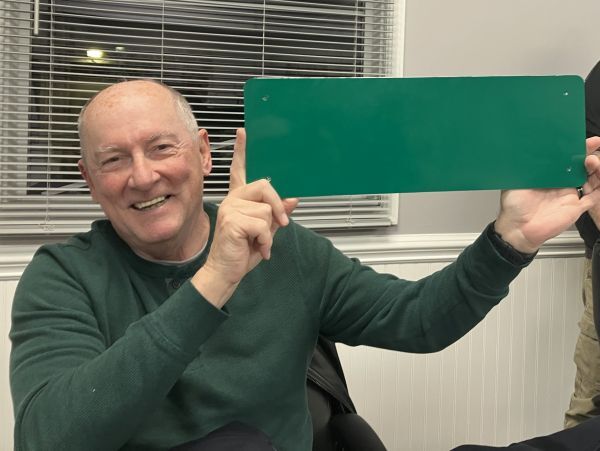
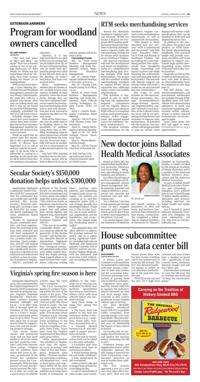
Councilman John Carter showed his peers the type of sign that will be used to add more closely spaced markers on the Salt Trail.
Tuesday evening, Saltville’s town council celebrated the news that the work to enhance the Salt Trail just got another funding boost.
Earlier this month, the state Tobacco Commission awarded $40,000 to Smyth County to undertake a master plan for the 8.5-mile trail. This week, news came that the Wellspring Foundation of Southwest Virginia awarded another $40,000 grant for the master plan.
Amanda Livingston, Smyth County Tourism Association director and leading project coordinator, said, with this grant the work is ready to move forward.
“We have 100% funding for the planning phase, and we are working on an RFP [Request for Proposals] to come out probably next month.”
The Salt Trail is a primarily railbed trail that runs through both Smyth and Washington counties.
Officials hope to revitalize the trail and ultimately “help the Salt Trail attract tourists, revitalize the downtowns of Saltville and Glade Spring, sustain small businesses, and improve community health.”
Saltville’s elected leaders are hopeful about the potential and are working to make the Salt Trail, which has a trailhead in its downtown, safer and more attractive.
Councilman Cary Sauls praised Livingston for her work and said she’s moving obstacles that have long held the trail back from its full potential.
He noted that she is building a website for the Salt Trail -- www.TheSaltTrail.com – and a new map of the trail.
Councilman John Carter showed the council members the signs that will be used as trail markers. Should people need help, these markers will be spaced more closely than the current concrete markers that are about a mile apart. This should allow individuals to more accurately notify first-responders of their location on the trail.
Carter said the cost for the new markers and poles is expected to be about $7,500. He said another town organization is being approached to cover that expense.
The Salt Trail Master Plan is expected to identify critical capital improvements that are needed as well as future phases that could connect the trail to other assets such as downtown Glade Spring, Emory & Henry University, and downtown Meadowview. The proposed planning project is also expected to design a promotional infrastructure to develop and sustain awareness of the Salt Trail’s importance to the regional outdoor recreational cluster, as well as address long-term maintenance of the trail.
Smyth County Economic Development Authority (SCEDA) is the lead applicant and fiscal agent for this project, working with a coalition of local government and civic groups to transform the Salt Trail into a tourism destination and economic engine for the region. Key partners include the Tourism Association, which is leading the community visioning and fundraising efforts, and The Town of Saltville, which owns and maintains all 8.5 miles of the trail.
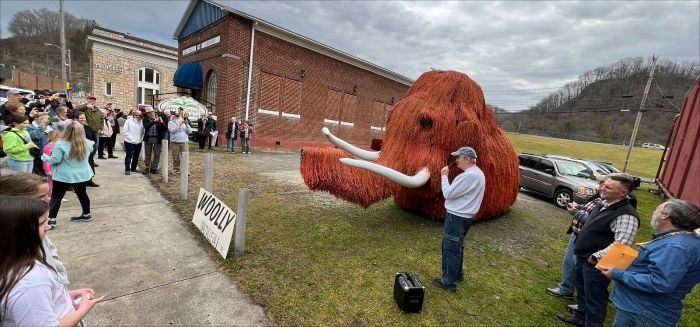
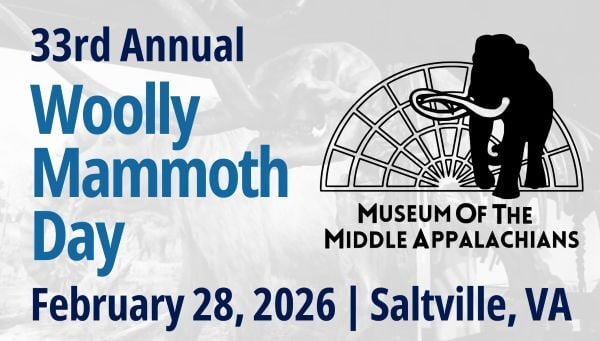
The third time is hoped to be the charm for the 33rd annual Woolly Mammoth Day celebrated in Saltville.
While Woolly, the mammoth mascot of the Museum of the Middle Appalachians, could have likely withstood the winter weather that caused the postponements of his day, humans are hoped to fare better on Saturday, Feb. 28.
The event, which is a major fundraiser for the Museum of the Middle Appalachians, will begin with breakfast from 8:30-10:30 a.m. at Northwood High School’s cafeteria. Tickets will be $10 for adults and $5 for children. They are available at the museum or at the door. Madam Russell and Blackwell’s Chapel United Methodist churches will prepare the breakfast foods.
Woolly will make his forecast regarding spring’s arrival at 11 a.m. at the museum. With spring’s calendar arrival just a few weeks later, will he stick with his traditional forecast of six more weeks of winter?
At 11:30 a.m., the museum will host a variety of free activities for children, including a story time, Groundhog Day bingo, Woolly and Salty coloring pages, and more.
The museum is at 123 Palmer Ave. Learn more about the museum at museumofthemiddleappalachians.org.