Virginia students continue to struggle in reading, years after the state suffered some of the worst learning losses in the country following the COVID-19 pandemic. But the state ranks 10th out of 35 states in reading growth between 2022 and 2025, according to the new Education Scorecard, a project by researchers at Harvard, Stanford and Dartmouth that analyzes standardized test scores across thousands of school districts nationwide.
The report found that reading scores have continued to stagnate or decline in most states since 2022. The researchers have shared data annually over the past four years, translating changes in state and national test scores to “grade-level equivalents” in an attempt to give added context to what the numbers mean.
The average Virginia student is performing about .68 grade-level equivalents behind their 2019 level and .04 grade equivalents behind their 2022 levels. A number of districts like Roanoke City, Portsmouth and Frederick County continue to slip.
But the report also highlighted five “districts on the rise": Richmond, Charlottesville, Danville, Roanoke County and Smyth County. These districts “have shown unusual progress relative to similar districts in their own state,” the report says.
Va. SOLs will be later and harder next year
![]()
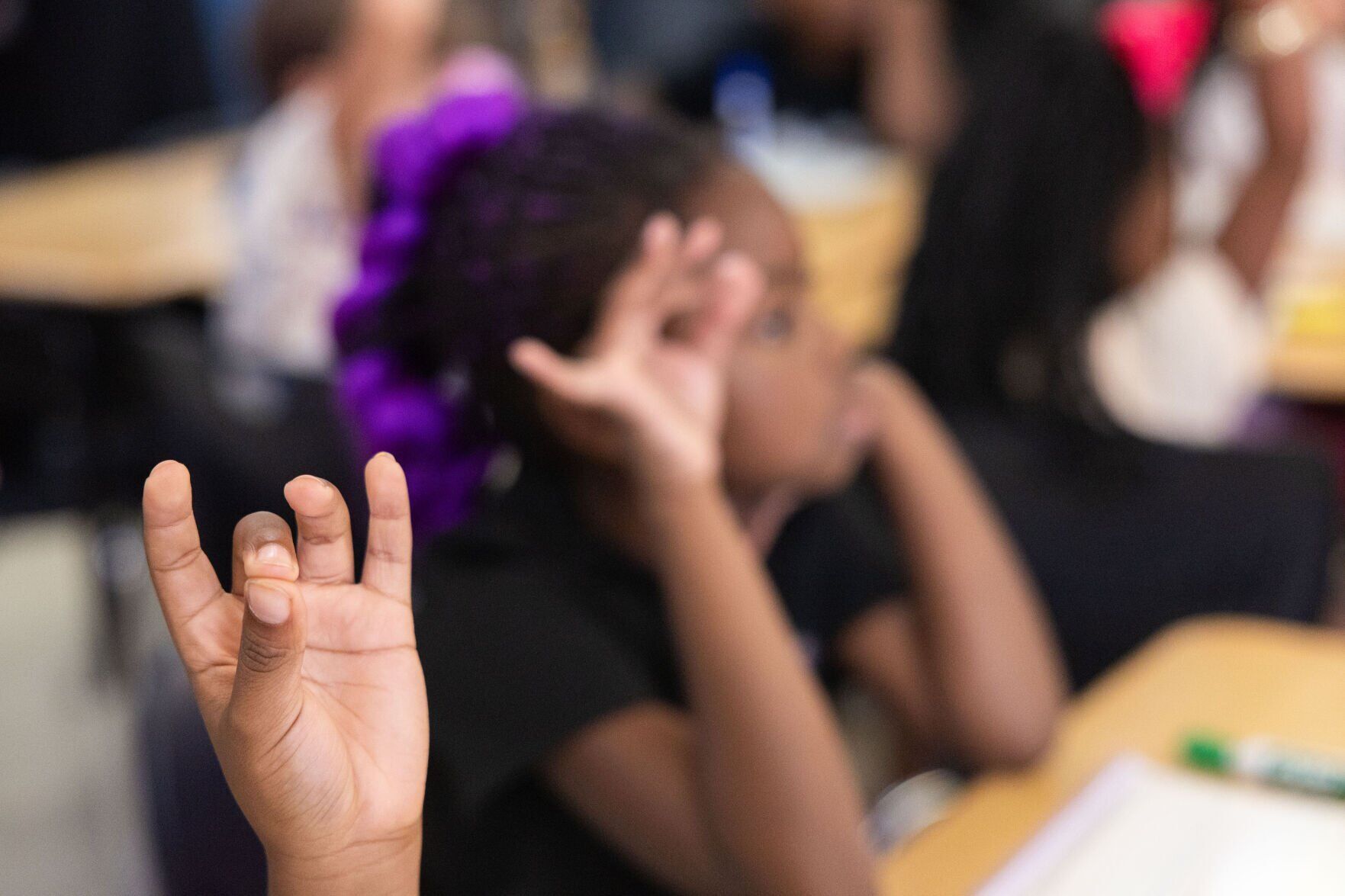
Students at Broad Rock Elementary School in Richmond are seen
tapping their fingers to sound out parts of a word during a
September 2025 phonics lesson.
MARGO WAGNER, TIMES-DISPATCH
Richmond Public Schools lost an average of 1.45 years of reading instruction immediately following the pandemic, but has shown impressive gains since then and rebounded from the pandemic at a faster rate than most school districts in Virginia.
Literacy has been the district’s No. 1 priority, said RPS Superintendent Jason Kamras, as shown by the school board’s investments in research-based curriculum and educator training.
“I'd say we still have a really long way to go, but it's really gratifying to be recognized for the progress that we are making,” Kamras said.
Richmond was one of the last of Virginia’s public state school divisions to return to 100% in-person learning, and Kamras said the district is still grappling with the consequences of the extended school closure.
“We are still climbing our way out from the losses that we incurred during that time,” he said. “And it's not just academic. We still see so many social and emotional challenges that kids are facing that I think still have some connection to the pandemic … It’s a long road ahead.”
Richmond was ahead of the state in adopting a curriculum based on the science of reading.
The Virginia General Assembly in 2022 passed the Virginia Literacy Act – landmark legislation that requires reading intervention services for students in kindergarten through eighth grade who are struggling to read. The law, which took effect in 2024, requires teachers to use evidence-based reading curriculum and bans the use of “three-cueing,” a popular teaching technique that encourages children to guess words based on pictures and context. State officials who helped implement the law hope the results will be seen soon.
![]()
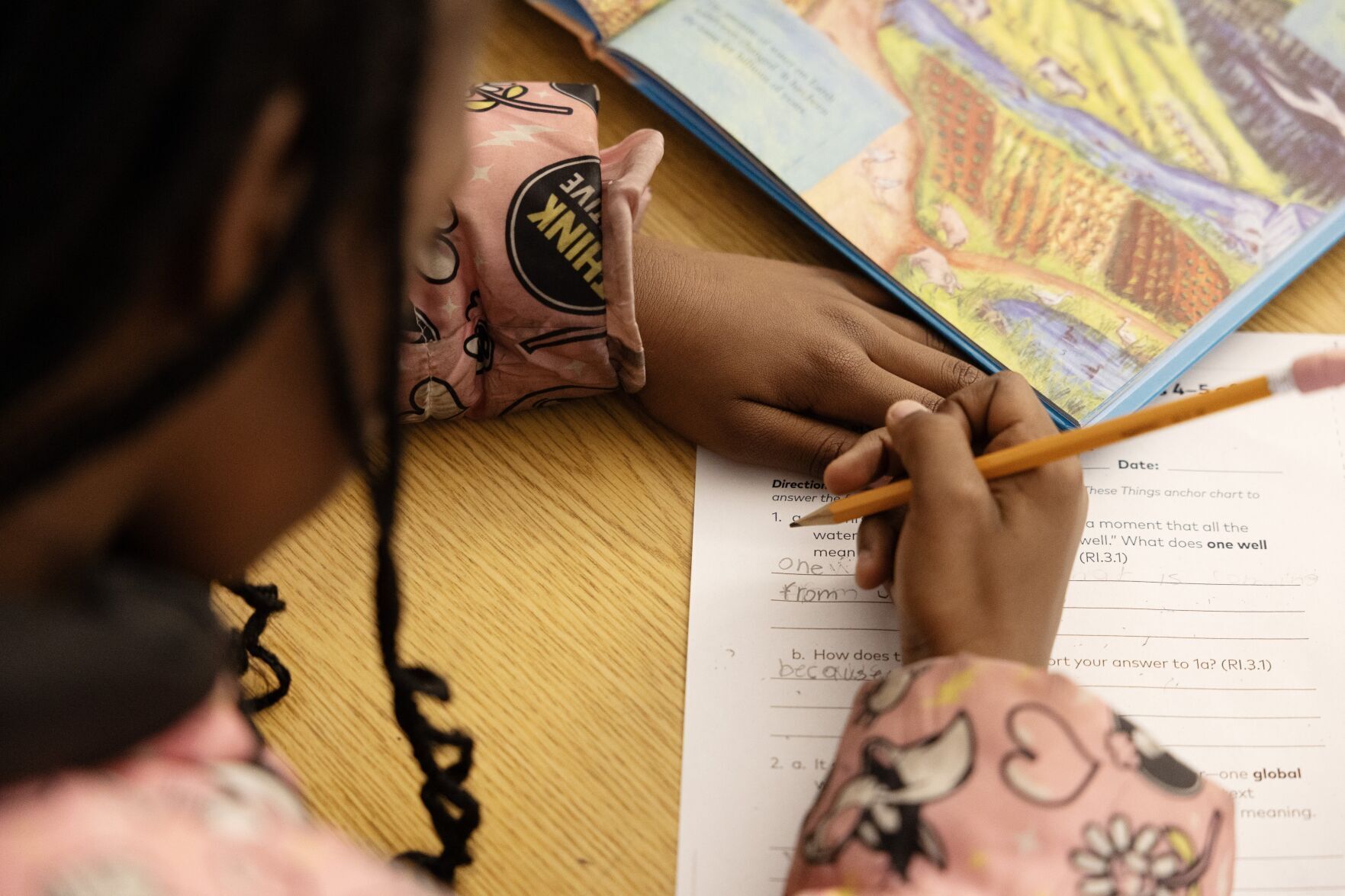
Shavaya Washington answers questions during a small reading
group at Chimborazo Elementary School on May 13, 2024 in
Richmond.
Margo Wagner, TIMES-DISPATCH
Social media and the decline of school accountability
Across the country, the “reading recession” began before schools closed down in 2020, according to the Education Scorecard researchers.
“The pandemic was the mudslide that followed seven years of erosion in student achievement,” said Professor Tom Kane, faculty director of the Center for Education Policy Research at Harvard University. “The ‘learning recession’ started a decade ago, after policymakers switched off the early warning system of test-based accountability and social media took over children’s lives.”
In Virginia, the state Board of Education under then-Gov. Ralph Northam’s administration lowered the number of correct answers needed to pass the Standards of Learning math tests in grades 3-8 in 2019. The following year, it lowered the number of correct answers to pass reading tests for the same grades.
But under the next administration of Gov. Glenn Youngkin, the board reversed the trend and implemented a plan to raise the standards on Virginia’s standardized tests incrementally over a four-year period. By 2030, Virginia’s exams will be among the hardest in the nation to pass.
The report, published Wednesday, says the slowdown in learning across the U.S. coincided with a dismantling of test-based accountability in schools and a dramatic rise in social media use among kids. Although it remains unclear whether and how much each factor caused the decline in scores, both are likely candidates, researchers say.
Virginia has passed laws to ban students' use of cellphones in schools, but not all districts are fully implementing the ban. Legislation passed this year seeks to tighten the restrictions and reinforces the expectation that students should have their phones away during the entirety of the school day.
Governor to 8.8 million, but she's 'mom' in the mansion
Nottoway special ed teacher named Virginia Teacher of the Year