

News
Centerpiece Top Story
Naming ceremony: Bland County Sheriff's Office's new K9's name honors partnership

1st Sgt. Tyler Stuart and his new K9 partner formed a special bond the moment they met.
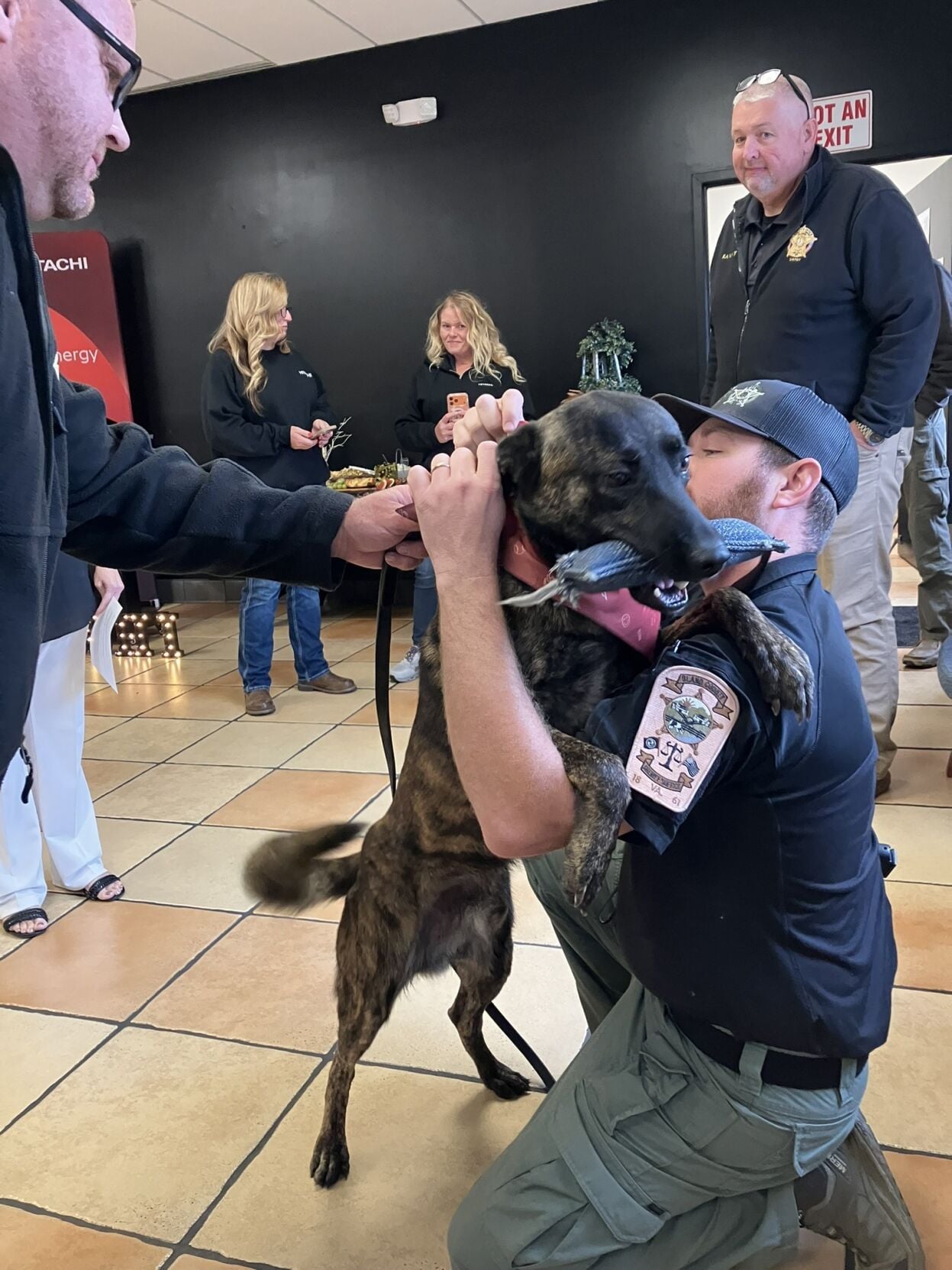
Bland County Sheriff Jason Ramsey looks on as 1st Sgt. Tyler Stuart and Hitachi work off a bit of the 19-month-old dog's energy.
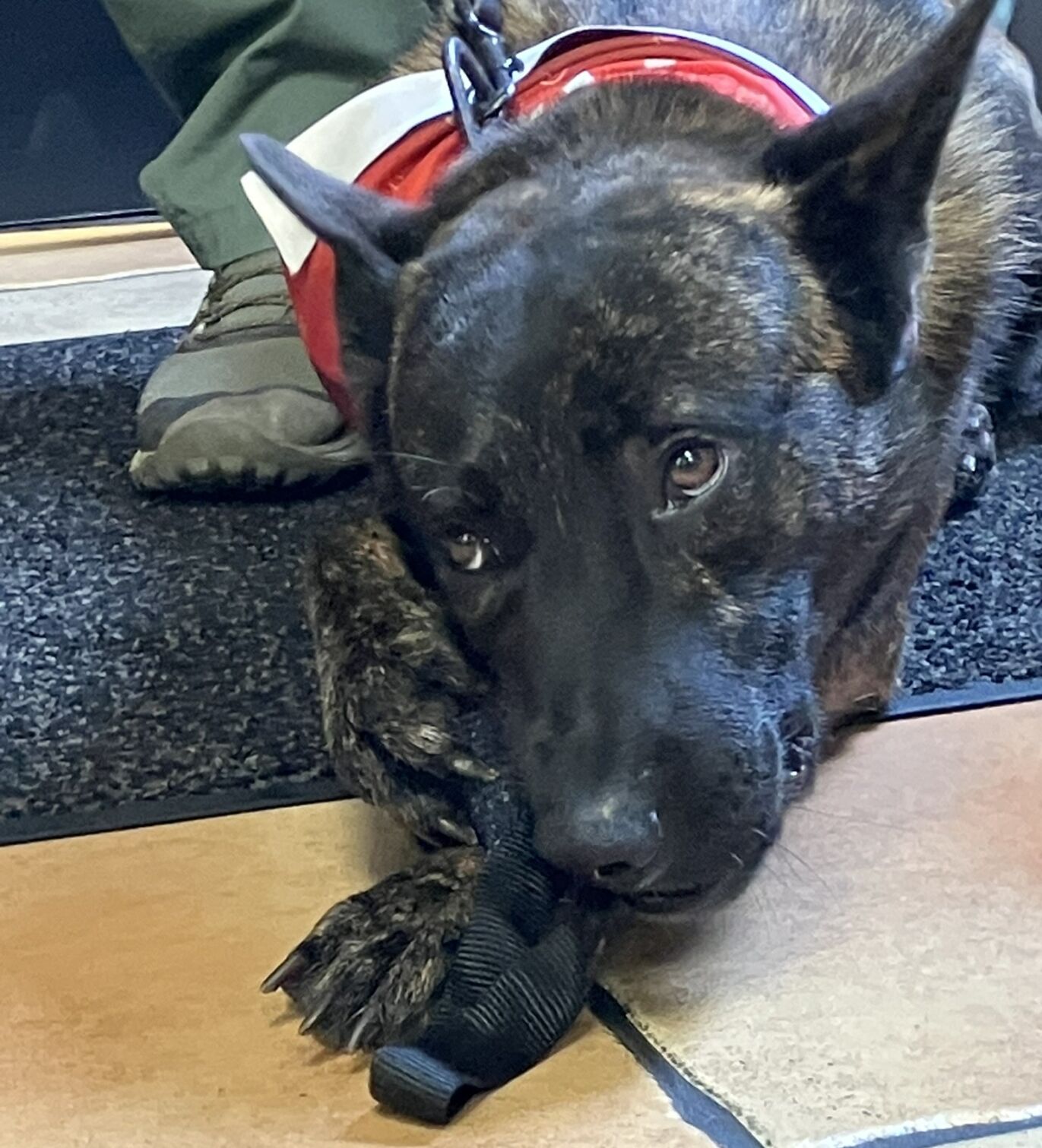
Hitachi was born in France and answers commands given in French.
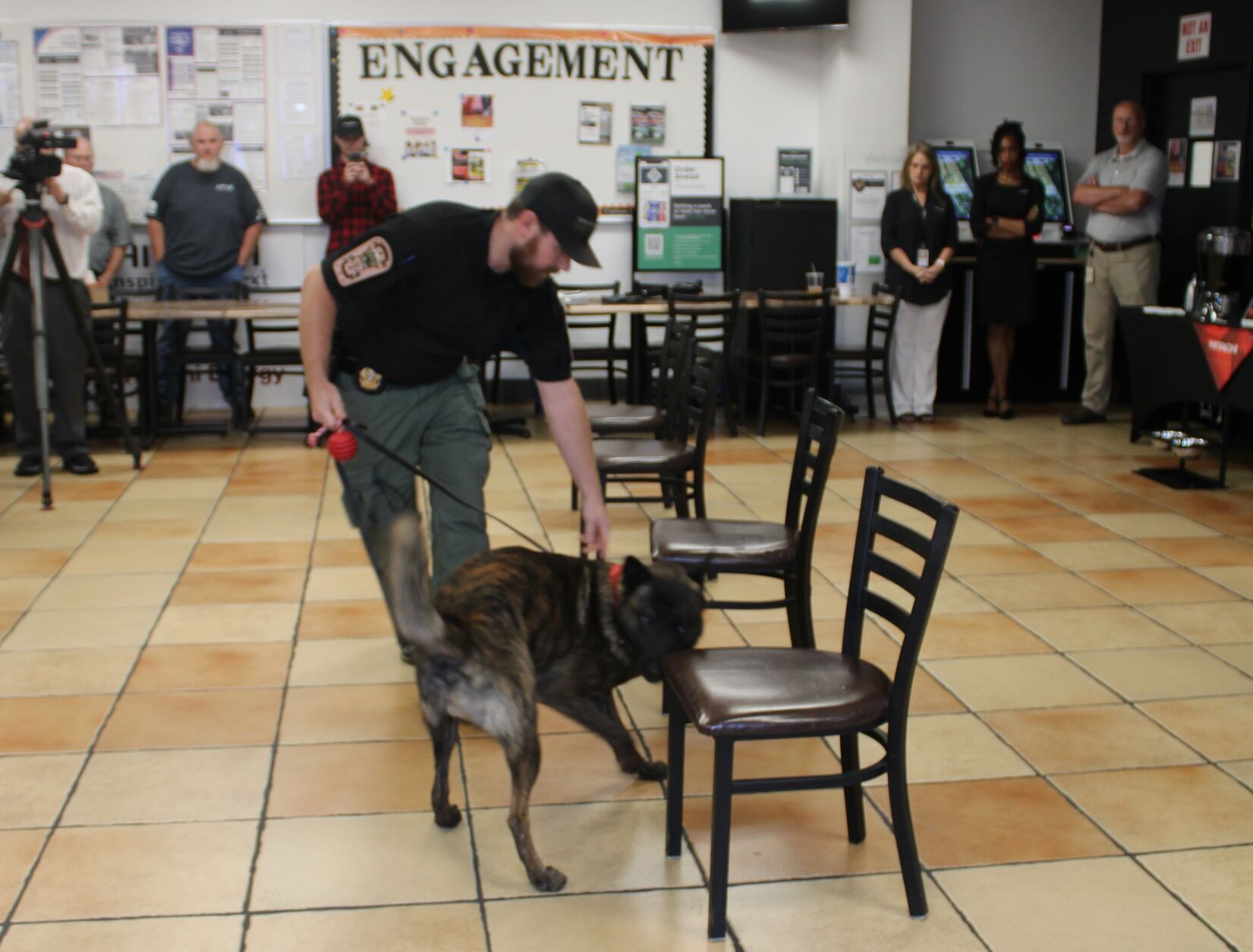
Hitachi is trained to detect narcotics.
The newest member of the Bland County Sheriff's Office is only 19 months old and best understands his commands in French. However, he’s already helped make multiple felony arrests.
A Dutch Shepherd from France, this K9 does bear a familiar name: Hitachi.
Recently, Sheriff Jason Ramsey explained that Hitachi Energy, which operates a plant in Bland, donated $23,000 to the department to help buy new ballistic vests for the agency’s tact team. Naming the K9 after such partners was the least the BCSO could do, Ramsey said.
The Sheriff expressed his “extreme gratitude” to Hitachi for all it’s done to help the sheriff’s office and the whole community, including the school system. The company does more to give back to the community than any he’s seen, Ramsey said.
The new protective vests will make an incredible difference, the sheriff said. Noting that the tact team can be on a manhunt or similar operation for 12, 18, or even 24 hours all while wearing their vests that weigh around 60 pounds.
Kim Hernandez, Hitachi Energy Community Engagement Manager, said seeing and feeling those vests made all the difference for her. She imagined carrying that weight for hours at a time. The new vests offer better protection and weigh 5-12 pounds.
The old vests won’t be thrown away but are going to the patrol division.
Wesley Strock serves as the manager of Hitachi’s Bland County factory, which employs about 530 people. He expressed gratitude that his company’s partnership with the sheriff's office is helping support the men and women who work daily to keep the community safe.
As for the four-legged Hitachi, Strock said he looks forward to watching him serve.
Hitachi started with the BCSO in July.
Ramsey credited his early success to 1st Sgt. Tyler Stuart, his handler. Stuart has dedicated considerable time and sacrifice to the program, he said.
Stuart is a Wythe County native, having grown up in Ivanhoe. He’s spent 10 years in law enforcement, first serving with the Virginia State Police.
When asked what brought him to the BCSO, Stuart said, “I fell in love with the community and people.”
He and Hitachi also developed a special bond.
On the day they became a team, Stuart said that he tried out 15 dogs. Hitachi was the last one of the day. When the future K9 got loose, he ran right up to Stuart and brushed up against his leg. “That was it,” said Stuart.
Stuart and the energetic Hitachi train every day. Hitachi, who lives with Stuart and his family, detects narcotics. He’s certified to detect meth, cocaine, and heroin.
Stuart set up a demonstration at the Hitachi plant. The K9 Hitachi found the drug scent in short order.
Though only a few months into his post, Stuart said that Hitachi has “already served the community well.”
Working with the K9 is also a pleasure. Stuart said he’s having the most fun of his career, getting to see Hitachi grow and get better each day.
“Every day is a great day,” Stuart said.
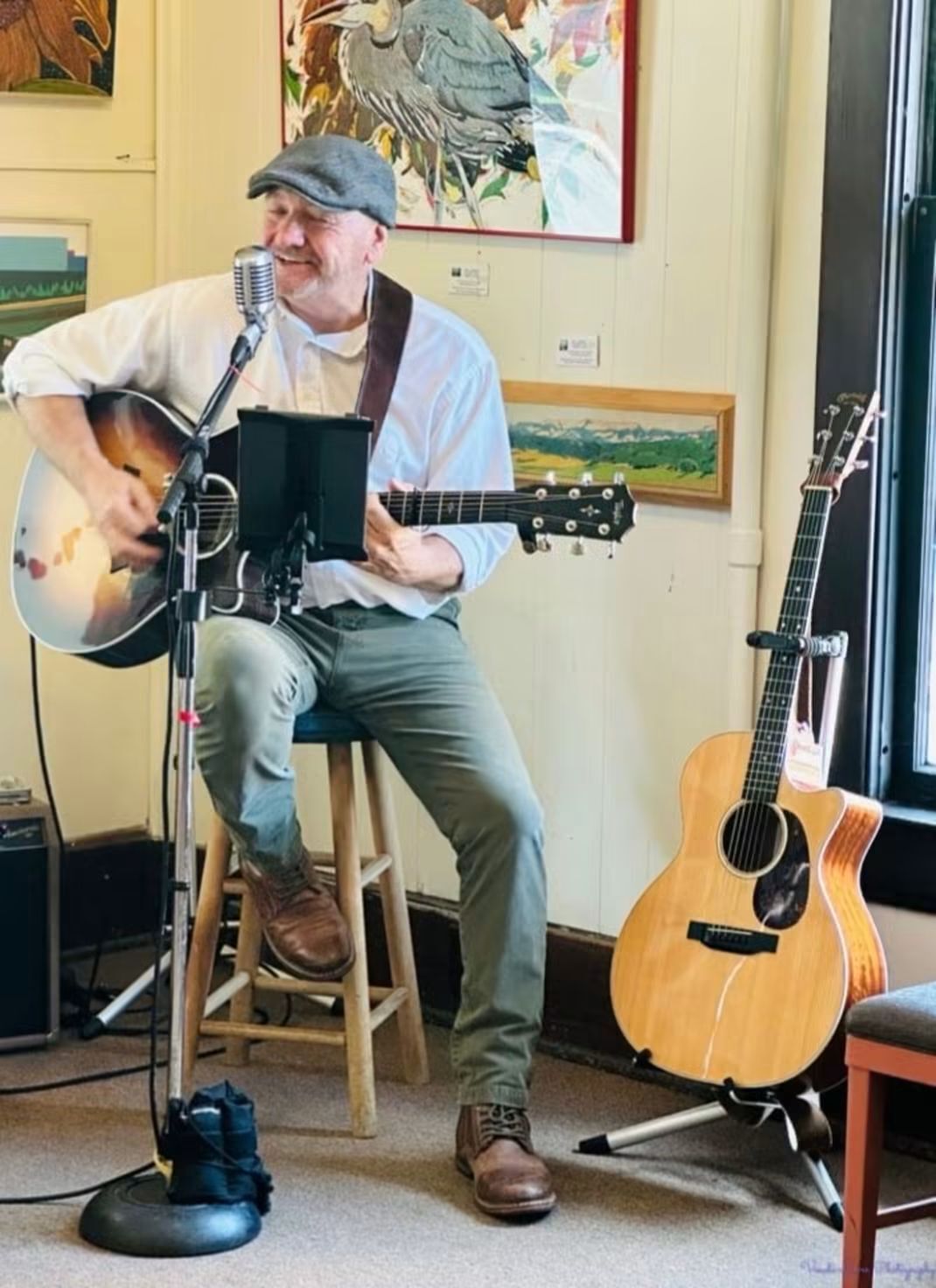
Wayne Dunford will offer an informal concert, featuring an acoustic blend of folk, Americana, Indie and old-time music.
Wayne Dunford will offer an informal concert, featuring an acoustic blend of folk, Americana, Indie and old-time music.
Fingerprints reach through history
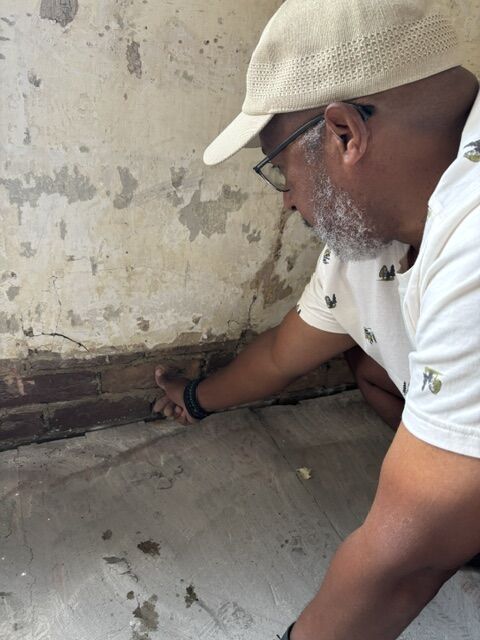
Ben Jackson examines part of the past.
A prominent African American historian, storyteller and Smyth County native will come to the Edith Bolling Wilson Birthplace Museum in Wytheville on Saturday, Oct. 17, to present a program to illuminate the museum’s latest exhibit titled “Touching History: Matilda Stepteau and the Slave Experience.”
Jackson’s presentation will focus on three subjects: the Bolling home itself; Matilda Stepteau, an enslaved African American woman who attended to future First Lady Edith Bolling Wilson as a child during her time in Wytheville; and the fingerprints that have been discovered in the handmade bricks of historic buildings.
Jackson has developed a specialty in studying fingerprints found in bricks that were typically made by hand by enslaved people who constructed many of Virginia’s colonial-era homes.
“With a fingerprint, you don’t have a name or any information about the person who made it,” he explained. “That’s where I come in, as I try to explain the person behind the fingerprints.”
Born in Smyth County, Jackson spent the first two years of his life in Rural Retreat before he and his family moved to Marion. He now lives in Woodlawn.
His interest in the lives of enslaved people began in part through visits to local cemeteries, where he was troubled to see graves belonging to enslaved people marked only by a stone, with no name or date attached.
When he learned about research being conducted in Charleston, South Carolina, involving fingerprints left by enslaved people in handmade bricks, he immediately considered traveling there to learn more about this unique aspect of historical research.
“Then I got to thinking that there were plenty of fingerprints on the historical areas around Wythe County,” he said. “That’s when I started researching the buildings of Wythe County for the fingerprints of slaves who built these local homes.”
Over the past year, Jackson has partnered with the Edith Bolling Wilson Birthplace Museum to research fingerprints found in the bricks on the upper level of the Bolling home.
Jackson first became interested in pursuing his own family history. He began photographing old homes, and that interest eventually developed into a desire to uncover the stories behind the buildings themselves. That research ultimately led him to specialize in the study of fingerprints left behind in historic brickwork.
“I appreciate the fact that the researchers at the Edith Bolling Wilson Birthplace Museum dug a little deeper into their work to tell Matilda’s story,” Jackson said. “That is something they could have kept quiet, and they decided to spotlight it, and I appreciate that.”
During the Oct. 17 program, visitors will have an opportunity to see an actual encased brick containing the fingerprints of a local enslaved person. A replica has also been created so visitors can touch and examine the fingerprints for themselves.
Since meeting with museum owner Farron Smith more than a year ago, Jackson said he has been fascinated by the history and intriguing facts he has been able to uncover.
“I can’t express my appreciation enough to Farron for allowing me to be a part of this program and tell people about what I do,” he said. “I’m honored just to be a part of the great things that are happening in Wytheville.”
For Jackson, studying and touching the fingerprints left behind by enslaved people is more than a hobby. He considers it a spiritual experience.
“No matter how many fingerprints I touch, here we’re gone, I always get the same feeling,” he said.
Jackson says he feels personally connected to the individuals who left those fingerprints centuries ago, and he considers that connection one of the most rewarding aspects of his work.
“When you touch the fingerprints of those men, women and children, you are touching the past directly,” he explained. “I had a preacher who was a dear friend of mine who found fingerprints in the bricks of a building after he heard me speak. Once he touched them, he said it became spiritual for him.”
Jackson has spent countless hours examining historic brickwork, sometimes climbing ladders and viewing individual bricks from different angles in an effort to identify fingerprints. Along the way, he said, he has discovered a few that he considers nearly perfect.
“Once you touch these fingerprints, you have seen the past,” he said. “Once you have seen the past like this, you can never unsee it.”
To reserve a seat for Ben Jackson’s presentation on October 17, visit the Edith Bolling Wilson Birthplace Museum’s website or call the museum at 276-223-3484.
Powers stumps in Wytheville
If the midterms should result in the Ninth Congressional District electing its first woman representative, it would be due to Donald Trump.
“I got involved in politics because the Trump win was so egregious to me,” Democrat candidate Joy Powers told some 40 attendees at an appearance here Oct. 1 at the Franklin Training School, referring to Trump’s election to a second term. “I never imagined until two years ago running for political office.
Powers is challenging Republican incumbent Morgan Griffith, who has served since 2011. He has been re-elected six times.
“The next two years, Congress is going to have to undo a lot of damage that has been done,” she said. “There’s people bought and paid for on both sides of the aisle in Washington, D.C.”
Powers lives and works on a family 350-acre farm in Bedford. She spent just a few minutes introducing herself and then took questions for the next hour or so.
If she wins she said, her approach would be modeled on that of Rick Boucher, a Democrat who represented the district for 14 terms until he lost to Griffith. She cited Boucher’s initiatives such as pushing internet connectivity and industry infrastructure throughout the district, and his frequent in-person town hall meetings. Griffith meets constituents through periodic telephone town halls, and says he finds this a more efficient way to reach them.
Powers said a key would be finding high-quality staff as Boucher did. “We had a team of people who really served the district.”
The Artificial Intelligence data centers being pushed on this part of the state would permanently change our landscape, and then be obsolete in 10 years, she said. As for an AI race with China, “we’re already winning.” Virginia alone has more data centers than China.
Virginia currently hosts 335 to 665 data centers, depending on the threshold used to count smaller or newly energized ones. Researchers have tracked 270 to 450 verified sites in China.
Medicaid cuts through the so-called Big Beautiful Bill will be coming after the midterms, resulting in hospitals having to close. “We need to bring more true manufacturing into the Ninth District,” she said. “Who will come and build where there are no hospitals?” She said she hoped a future rural health care initiative would be a bipartisan one.
“There is an intentional restructuring of the agriculture industry happening right now,” based on proposals in Project 2025, the Heritage Foundation blueprint being implemented by the Trump Administration. Project 2025 proposes sweeping cuts to federal farm programs, a reduction in crop insurance subsidies, and the removal of Department of Agriculture nutrition programs. She would push back on that.