

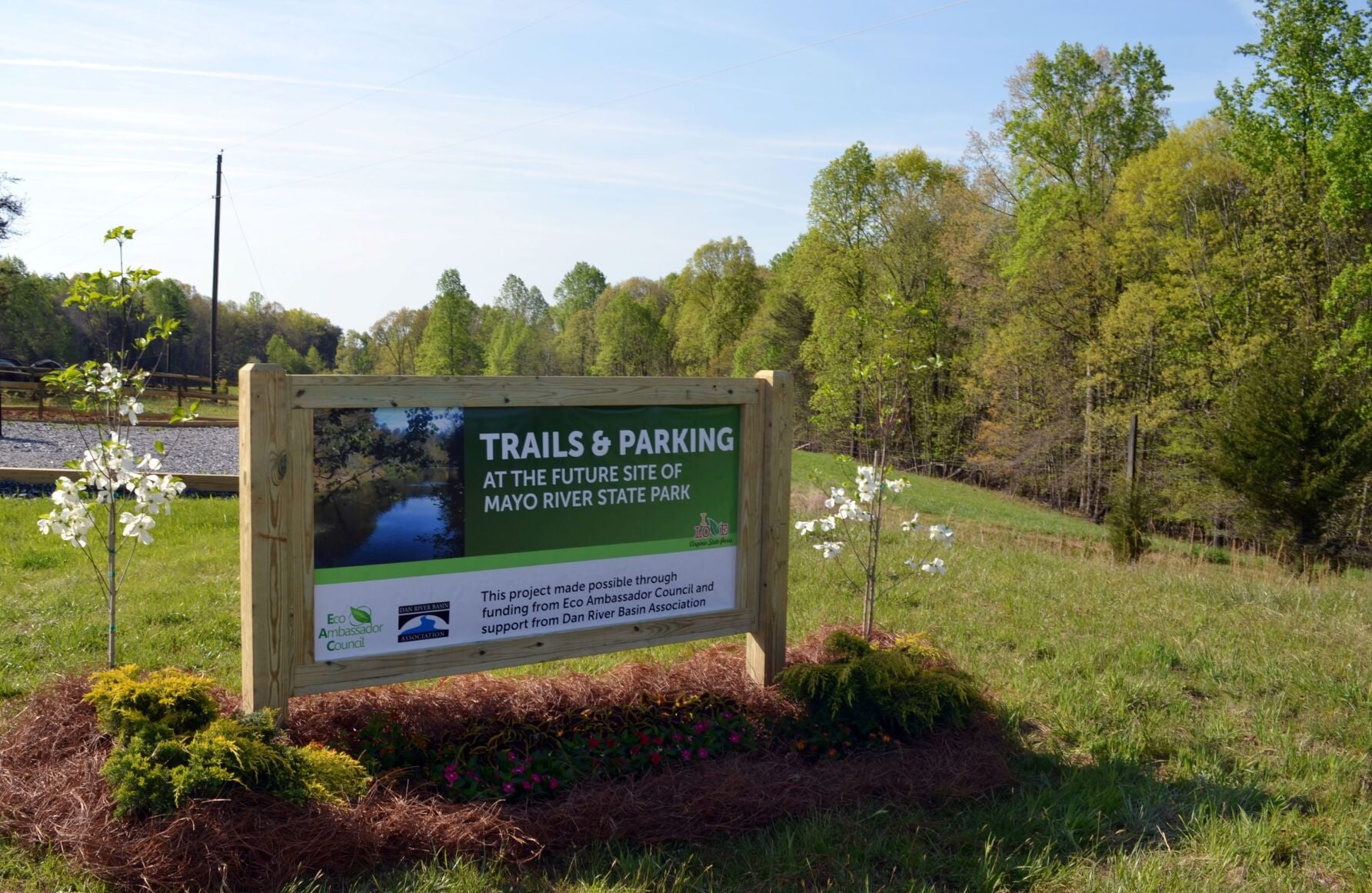
Photos of the future Mayo River State Park.
Photos of the future Mayo River State Park.
Photos of the future Mayo River State Park.
Photos of the future Mayo River State Park.
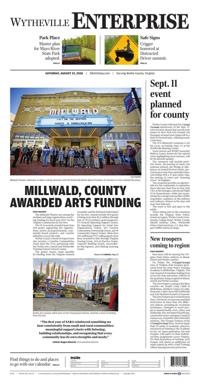
Millwald Theater celebrates a ribbon-cutting ceremony with the Wytheville-Wythe-Bland Chamber of Commerce in this undated file photo.
Wythe Arts Council, which puts on the Chautauqua Festival, received a share of funding from the VCA.
The Millwald Theatre was among the medium and large organizations receiving funding for fiscal year 2027 via the Virginia Commission for the Arts.
The VCA recently awarded more than 500 grants supporting arts organizations, artists, local governments, community-based projects, and creative initiatives across the state.
Wythe County’s Board of Supervisors also receives a Creative Communities Grant from the VCA, partnering with the Wythe Arts Council and Wytheville Training School Cultural Center.
The grants werere made possible by funding from the Virginia General Assembly and the National Endowment for the Arts. Awards include 400 grants totaling more than $5.6 million through four of VCA’s primary grant programs: 173 General Operating Support Grants, 80 Operating Support for Small Arts Organizations Grants, 109 Creative Communities Partnership Grants, and 38 Community Impact Grants. More than 100 additional FY27 rolling grants have been awarded to date through Virginia Touring Grants, Arts in Practice Grants, Capacity Building Grants, Accessibility Microgrants, and Lifelong Learning Grants.
Supported in part by a $2 million one-time state appropriation, as well as interest generated by the Virginia Arts Fund, which is supported by proceeds from Virginia specialty arts license plate and state tax check-offs for the arts, FY27 investments have enabled the VCA to strengthen longstanding programs, increase grant amounts, introduce new funding opportunities and broaden access to state arts support.
“The additional investment in FY27 has given VCA an important opportunity to deepen support for the arts while expanding who and where we reach,” said VCA Board Chair Debbie Garrett. “As someone from a small, rural community, I know how meaningful it is when state resources and opportunities reach places where access may be more limited. With VCA-supported arts activity now reaching 132 of Virginia’s 133 independent cities and counties, we are close to achieving statewide reach. This progress reflects the strength of our partnerships and our commitment to serving communities of every size.”
Demand for VCA support has increased, with 406 applications requesting more than $14.1 million through the four primary grant programs.
To serve the unique needs and challenges of Virginia’s rural and micropolitan communities, the VCA launched the Small and Rural Arts Network (SARA) through a special grant awarded to Small Town/Big Arts and Randolph College. The six-month pilot took place in Region 8 under the leadership of Geoffrey Kershner, with focused engagement in Halifax, Mecklenburg, Charlotte, and Lunenburg counties, areas with minimal VCA grantee presence.
“The first year of SARA reinforced something we hear consistently from small and rural communities: meaningful support starts with listening, building relationships, and recognizing that every community has its own strengths and needs,” said VCA Executive Director Colleen Dugan Messick. “We are grateful for the strong partnership with Small Town/Big Arts and Randolph College that has made this work possible. In Year Two, Regional Captains will help us build stronger connections among artists and arts leaders across rural Virginia and create a network that can support these communities for years to come.”
Building on the momentum of the pilot, SARA’s second year launches this month in Regions 1 and 3. The program will include two in-person workshops in each region, statewide virtual meetings every other month, and a new statewide network of Regional Captains, with one representing each VCA region, to help connect rural artists, arts organizers, and arts organizations within their communities and to the broader SARA network.
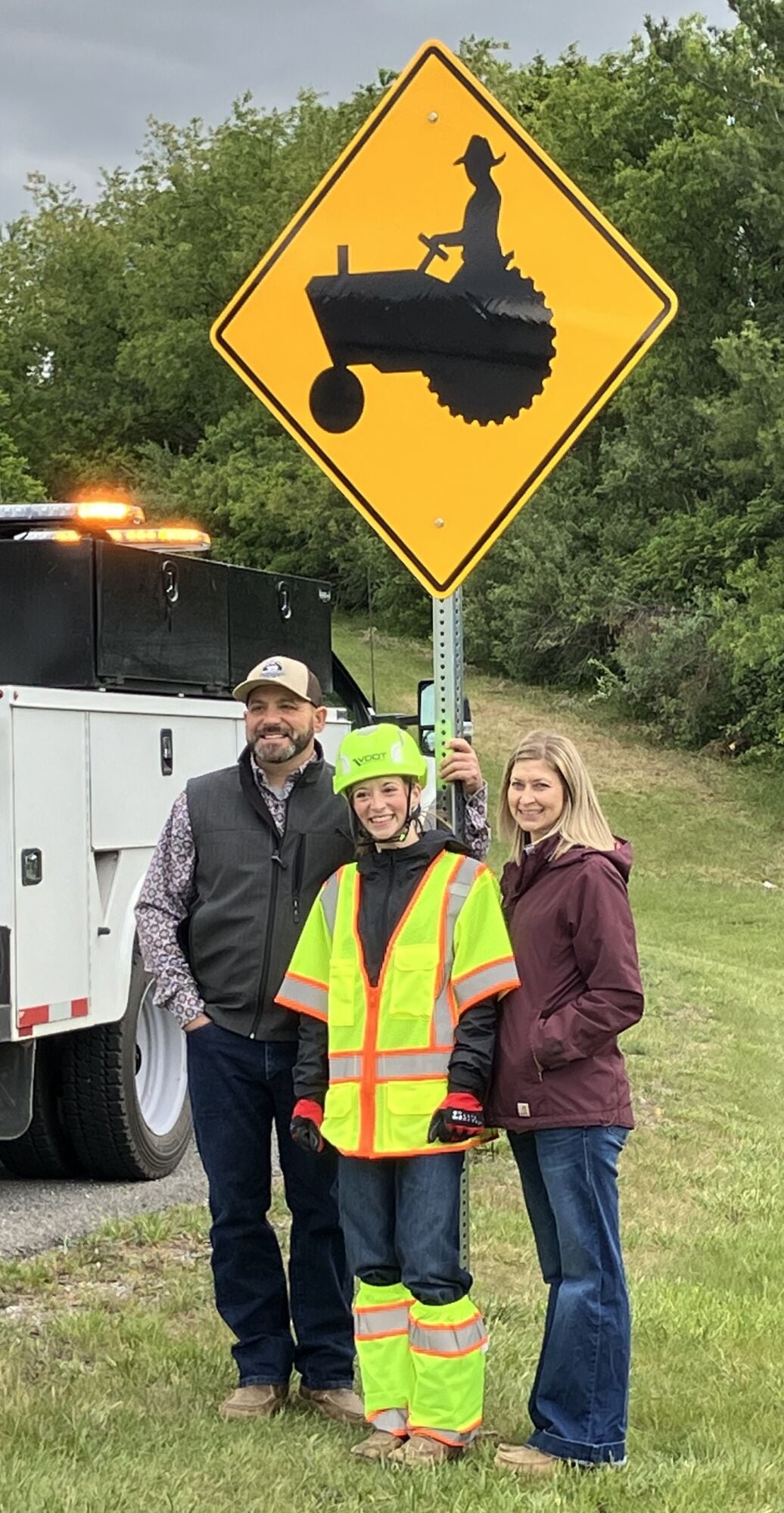
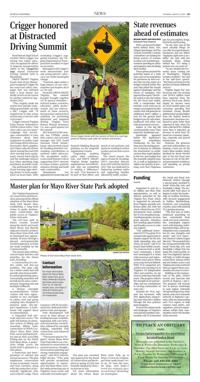
Olivia Crigger stands with her parents in front of a road sign aimed at making roads safer for farmers and drivers.
Olivia Crigger stands with her parents in front of a road sign aimed at making roads safer for farmers and drivers.
Wythe County will mark the 25th anniversary of the Sept. 11, 2001 terrorist attacks that saw the twin towers in New York City leveled, the Pentagon attacked and a plane fall to a field in Pennsylvania, claiming nearly 3,000 lives.
The 9/11 Memorial Ceremony is set for 2 p.m. on Sunday, Sept. 13, at the Wytheville Meeting Center.
Army veteran and WDBJ7 journalist Melissa Gaona, known for her special series highlighting local veterans, will be the keynote speaker.
The ceremony will include patriotic music, the posting of colors, the national anthem, the Pledge of Allegiance, an Armed Services Salute, special musical selections and reflections, concluding with a 21-gun salute, taps, the retiring of colors and "Amazing Grace" on bagpipes.
The ceremony provides an opportunity for the community to remember those who lost their lives in New York City, at the Pentagon, and aboard Flight 93 in Pennsylvania, while also recognizing the courage and sacrifice of first responders, members of the military and ordinary citizens in the days and years that followed.
The event is free and open to the public.
Those taking part in the ceremony include the Virginia State Police, American Legion, Wythe County Community College Band, Wythe County Sheriff Anthony Cline, Wytheville Police Chief Joel Hash, U.S. Rep. Morgan Griffith and local clergy.
New faces will be wearing the Virginia State Police uniform in Bland, Smyth and Wythe counties.
On Friday, the 145th class of Virginia state troopers graduated from the State Police Training Academy in Midlothian, Virginia. The class boasted 45 members hailing from across the state and nation, with for of the graduates being assigned to Bland, Smyth and Wythe counties.
The new troopers coming to the three counties are Joseph Craig Cahill of Midlothian, Matthew Chinn of Cadiz, Kentucky, Caleb Chase Hill of Hillsville and Tyler Matthew Puckett of Tazewell.
The new troopers have received more than 1,300 hours of classroom and field instruction in more than 100 different subjects, including de-escalation techniques, strategies to assist people in mental health crisis, ethics and leadership, fair and impartial policing, constitutional law, emergency medical trauma care, and public and community relations. The Trooper Trainees of the 145th Basic Session began their 29 weeks of academic, physical, and practical training at the Academy on Jan. 26.
Upon graduation, the new troopers will report to their individual duty assignments across Virginia. For their final phase of training, each trooper will spend an additional six weeks paired up with a Field Training Officer learning his new patrol area.