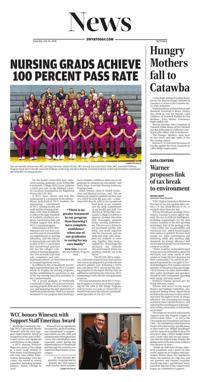

WCC's registered nursing grads again achieve 100% national exam pass rate (copy)
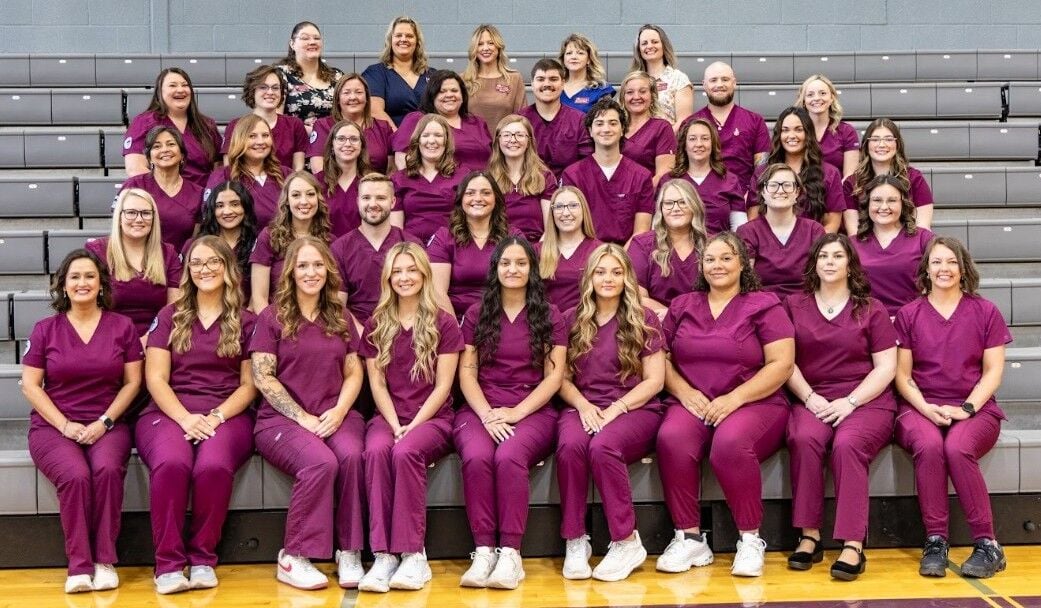
Top row-Danielle Simmerman, WCC Nursing Instructor; Juliana Nichols, WCC Nursing Instructor; Karla Yates, WCC Associate Professor, Program Head; April Lineville, Associate Professor of Nursing; and Alicia Roberts, Associate Professor of Nursing/Simulation Coordinator; and 2026 WCC Nursing graduates.
For the fourth consecutive year, registered nursing graduates from Wytheville Community College (WCC) have achieved a 100% pass rate on the National Council Licensure Examination for Registered Nurses (NCLEX-RN).
A WCC news release said that this achievement is a testament to the extraordinary dedication of WCC students, the unwavering commitment of WCC nursing faculty and staff, and the strong partnerships with clinical affiliates. It reflects the high standards of academic excellence, evidence-based instruction, and student support that define WCC’s nursing program.
Maintaining a 100% first-time pass rate over four consecutive years is a remarkable accomplishment in nursing education, said the release. It demonstrates not only the quality of WCC’s curriculum and instructional practices but also the college’s commitment to preparing graduates who are ready to provide safe, competent, and compassionate patient care from their first day as licensed registered nurses.
In addition to this achievement, according to registerednursing.org, WCC is ranked fourth in Virginia for nursing programs, further establishing its reputation as one of the top nursing education providers in the Commonwealth.
“As a proud graduate of Wytheville Community College, it is an honor to lead a nursing program dedicated to student success and preparing the next generation of healthcare professionals. There is no greater testament to our program than knowing I have complete confidence when one of our graduates is caring for my own family,” said Karla Yates, Associate Nursing Professor, Program Head.
Ewell Vernon, Dean of Health Professions and Medical Services, said, “We are immensely proud to celebrate another year of a 100% NCLEX-RN pass rate—a milestone that directly reflects the exceptional hard work of our students and the deep commitment of our faculty and staff. Our mission at Wytheville Community College is to deliver a rigorous, premier education that thoroughly prepares future nursing professionals. This success is driven by our passionate faculty, who bring real-world expertise into the classroom, and our dedicated staff, who champion our students at every step. Together, they create a supportive, technologically advanced, and clinically rich environment where our amazing students can truly thrive.”
The NCLEX-RN is a rigorous, nationally required exam that ensures new nurses are prepared to provide safe and effective patient care. Achieving a 100% pass rate places WCC among the top nursing programs in the region and the state. In addition to celebrating this milestone, WCC is preparing to welcome the next generation of nurses.
For more information about WCC’s Nursing Program or to learn more about applying for the LPN to RN Bridge Program, visit www.wcc.vccs.edu, or contact WCC’s Health Professions Recruitment and Enrollment Specialist at 276-223-4741.