This content is unavailable. Please contact customer service for more information.
Already a subscriber? Login or Activate your account.
You've reached the end of the standard E-Edition.
This content is unavailable. Please contact customer service for more information.
Nominate agricultural superhero to spotlight on State Fair trading cards (copy) (copy) (copy)
They may not wear capes or fly beside planes, but the state’s agricultural superheroes enrich the lives of all Virginians.
With the public’s help, some of these everyday icons will be immortalized on collectible trading cards at the State Fair of Virginia.
For the fourth year, the public is invited to nominate Virginians working in various agriculture and natural resources professions to appear on the 2026 Ag Superhero Trading Cards.
Twelve ag superheroes selected by a committee will be pictured with their industry-related statistics. Visitors can collect the free cards during the State Fair, which runs from Sept. 25 through Oct. 4. During the State Fair Educational Expo, the trading cards will be distributed to teachers as educational resources, along with related lesson plans and activities.
The heroes behind Virginia’s largest private industry are as varied as the state’s agricultural landscape. The trading cards aim to showcase the diversity of icons spanning the entire food chain—from livestock farmers to crop researchers and rural healthcare providers.
Nominations are accepted through April 15. Click here to nominate your favorite ag superhero. Past nominees may be featured on cards in future years.
To view last year’s Ag Superheroes or for more information, visit statefairva.org and click the “Education” tab.
Sponsorship opportunities to support production and distribution of the trading cards also are available. Call The Meadow Event Park staff at 804-994-2802 to start the conversation.
Words to the Wise
Romans 1 (copy) (copy)
Pastor Cliff Bowman
Bastian Church of God
As we begin this series through the book of Romans, I invite you to walk with me on a journey to discover the richness of God’s grace. Each article will offer a brief reflection on what the Lord reveals in each chapter.
Romans 1 opens our eyes to the greatness of the gospel. It shows us the glory of Jesus Christ and the beautiful way God extends His righteousness to us. It also reminds us that the gospel delivers us from the judgment our sin deserves—an act of mercy only God could provide.
My prayer is that you know Christ as your Savior and are trusting Him daily.
But if you have not yet begun that relationship, the way is simple and full of hope:
• Admit your need: acknowledge that you are a sinner in need of God’s grace.
• Believe that Jesus died for your sins and rose again to give you life.
• Confess your sins to God, seek His forgiveness, and commit yourself to follow Him.
May the Lord use His Word to draw us closer to His heart as we continue this journey together.
Grow more tomatoes (copy) (copy) (copy)
Melinda Myers
Columnist
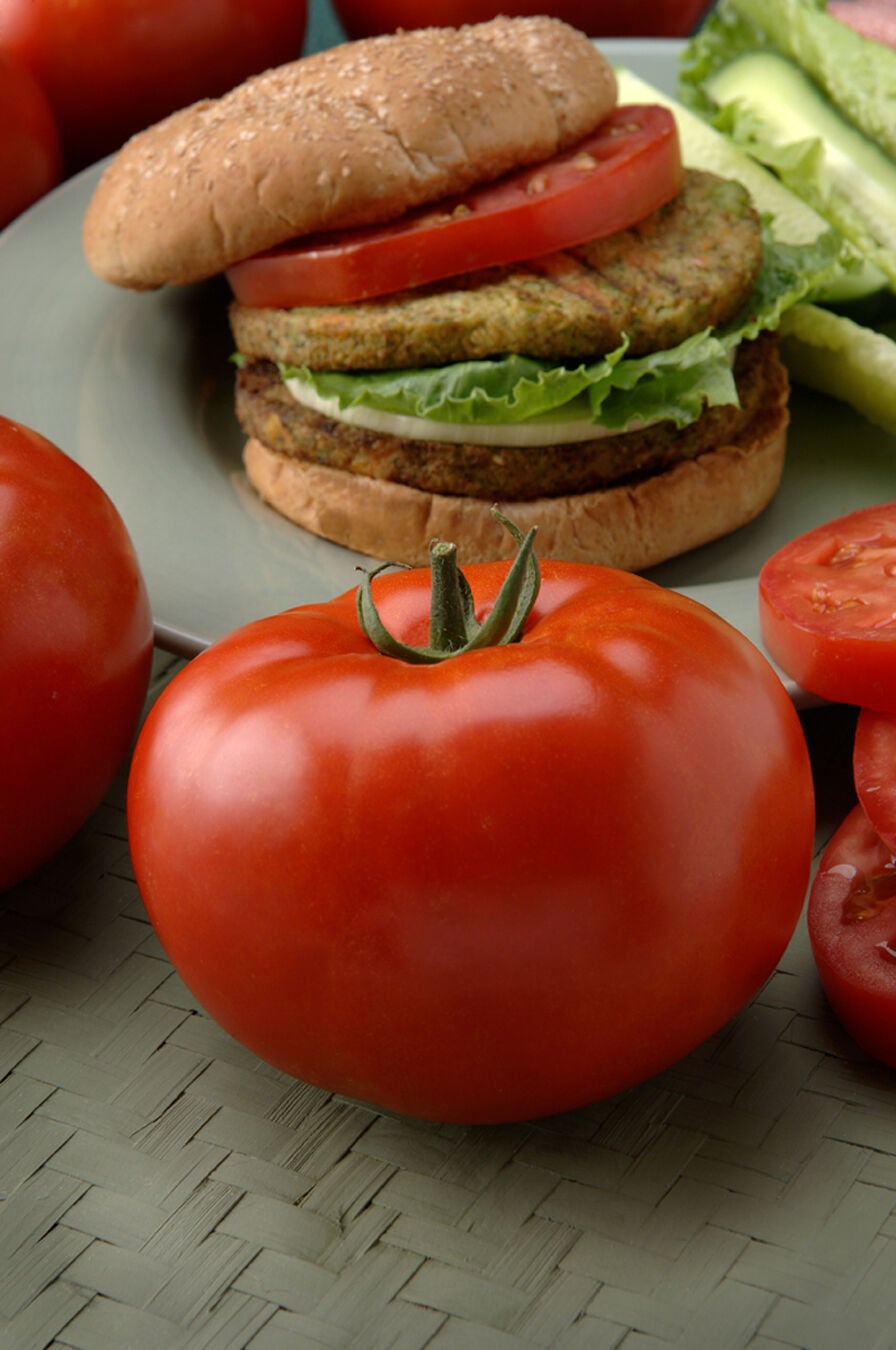
Big Beef tomato has remained one of the most popular red
tomatoes in North America with its 8-to-12-ounce fruit.
SPorter / Photo courtesy of All-America Selections
Enjoy the fresh-from-the-garden flavor of homegrown tomatoes. Grow one or more in a container, a dedicated vegetable garden or plant them with flowers in garden beds.
Purchase transplants from a local garden center if not starting plants from seed at home. Check the tags and select varieties suited to how they will be used. Grow bite-sized cherry, plum or cocktail tomatoes to use in salads, on relish trays, and for snacking. Include a few paste tomatoes, like Romas, with meatier fruit for making sauces and soups. Don’t forget about slicers, like Big Beef, Beefsteak and Better Boy, to enjoy on sandwiches, grilled, or on their own.
Prepare plants that will be moved from under lights indoors or a sunny greenhouse to the growing conditions in the garden. Start the hardening off process one to two weeks prior to planting outdoors. Stop fertilizing the plants and move them outdoors to a shaded location. Each day, increase the amount of direct sun the plants receive. Be sure to cover or move the plants indoors whenever there is a danger of frost.
Once hardened off and the soil is prepared, it’s time to plant. Carefully slide the plant out of the container. Gently loosen the roots of pot-bound transplants to encourage them to grow into the surrounding soil. Remove any flowers or small fruit, allowing the plant to focus its energy on developing a robust root system and a more productive plant.
Plant tall, leggy plants deeper to encourage roots to develop along the buried stem. Dig a trench, remove the lower leaves and set the plant on its side in the trench. Carefully bend the stem upright, then cover the portion in the trench with soil and water.
Set stakes and towers in place at the time of planting to avoid root damage. Training tomatoes keeps the fruit off the ground, reducing insect and disease problems. That means more fruit to harvest and enjoy.
Train tomato plants on to stakes for an earlier, but smaller harvest than those grown in cages. Grow plants with less effort in sturdy towers or cages. There will be more tomatoes to pick, but a bit later with this method. Plants left sprawled on the ground yield the largest harvest, but many fruits are lost to disease, insects and gardeners’ feet.
Shorten the time to harvest and help manage weeds with the help of floating row cover, clear plastic or cloches. Use these to cover the properly prepared planting space a week or two before planting. Once the soil is warm, lightly cultivate the soil to kill any weeds that have sprouted. Do not dig deep, which brings more weed seeds to the surface to begin growing. Use row covers or cloches to protect plants from early season cold temperatures and frost.
Further shorten the time to harvest by planting early ripening varieties, like Early Girl, Fourth of July, and Fantastico. Check the catalog description or plant tags for the number of days between planting and harvest. Growing these or other early ripening varieties means you’ll be enjoying fresh tomatoes sooner.
Always water plants thoroughly when the top few inches of soil are crumbly and moist. Avoid overhead watering which increases the risk of disease. Instead, apply water directly to the soil surface, using a watering wand, soaker hose or drip irrigation. Extend the time between watering and increase success with mulch. Spread a two-inch layer of shredded leaves, weed-free straw, or evergreen needles over the surface around plants. This will conserve water, suppress weeds, and improve the soil as the mulch decomposes.
With proper planting and care there will be a bounty of tasty, garden-fresh tomatoes to harvest and enjoy.
Melinda Myers has written more than 20 gardening books, including the Midwest Gardener’s Handbook, 2nd Edition and Small Space Gardening. She hosts The Great Courses “How to Grow Anything” streaming courses and the nationally syndicated Melinda’s Garden Moment radio program. Myers is a columnist and contributing editor for Birds & Blooms magazine and her website is www.MelindaMyers.com.
Light One Candle
Reflections for Holy Week (copy) (copy) (copy)
Tony Rossi
Columnist
As we enter Holy Week and commemorate the days leading up to and including Jesus’ crucifixion, I want to share a few reflections to ponder from some wise writers:
■ Each Palm Sunday, we recall the image of the crowds praising God and celebrating Jesus as he rode a donkey into Jerusalem. But why did He enter the holy city on an animal considered a “beast of burden” rather than a more regal creature, such as a horse?
Writing in The Tablet, the newspaper of the Diocese of Brooklyn, New York, Rita Piro explained, “The horse was the animal of war and violence, adorned with grandeur, ready to do battle among warriors and kings.
The lowly donkey…was considered the animal of peace, unity, and friendship. The steady, faithful friend of the common man. Any man, king, or peasant alike who came riding on a donkey was seen as a symbol of gentleness, humility, and service.” Piro continued, “The master has need of us, too. Like the donkey of Palm Sunday, we are all called to carry Jesus to others. The way we act, speak, look, and even think must always reflect Jesus, His ways, and His teachings. Whether or not we consider it a burden to do so is up to us.”
■ In Jesus’ day, people wore sandals as they walked the dirt roads, so their feet quickly became filthy. Washing the feet of a guest in your home, therefore, qualified as a dirty job. Yet washing the feet of the apostles is exactly what Jesus did at the Last Supper, asking, “Do you realize what I have done for you?” So, why would the Savior of the world do such a thing?
“What Jesus did stands before us as a defining example of humility and sacrifice, of service and love,” observed Deacon Greg Kandra at TheDeaconsBench.com. “It tells us that to be an apostle of Christ means we must be willing to get down on our knees for another. In one sense, to wash the feet of someone else is to remove the dust and debris and the grit of life—to cleanse, to renew, to restore. But in a deeper sense, it challenges us to something more. It says the Christian life is not about standing above anyone. It is about bending. Giving. Serving. Restoring newness and hope.”
■ Author and spiritual director Becky Eldredge got a phone call from a friend who had suffered greatly in her life. But on this particular day, this friend conveyed a spirit of hope, saying, “Becky, I had a huge ‘aha’ this morning. It matters to Jesus what I have gone through. Every bit of it. It matters to Jesus.”
Writing at IgnatianSpirituality.com, Becky recalled feeling joy for her friend. Becky also thought back to her own ‘aha’ moment while practicing the Spiritual Exercises of St. Ignatius some time ago. She said, “As I hear and pray with the moments of Jesus’ suffering during the Lenten season, my understanding of how much Jesus understands suffering widens. He not only gets physical pain, betrayal, and abandonment, but He also understands being misunderstood, what it feels like not to belong, and what it’s like to forgive…There is something that changes in us when we let the wounds of our lives touch the wounds of Jesus. It is as if Jesus were gazing at us with eyes of love and understanding, inviting us to tell Him everything we are seeing and feeling.”
For free copies of the Christopher News Note The Greatest Among You Will Be Your Servant, write: The Christophers, 264 West 40th Street, Room 603, New York, NY 10018; or e-mail: mail@christophers.org.
Click and hold your mouse button on the page to select the area you wish to save or print.
You can click and drag the clipping box to move it or click and drag in the bottom right corner to resize it.
When you're happy with your selection, click the checkmark icon next to the clipping area to continue.