Virginia officials have been working for years to ban student cellphone use in K-12 classrooms, but enforcing those rules has proved a challenge in some schools.
A bill passed by the General Assembly this year aims to reinforce the state’s push, requiring schools to impose “bell-to-bell” limits on student phone use and tightening what lawmakers say were gaps in earlier policies.
“We intended for phones to be away for the full day,” said Sen. Stella Pekarsky, D-Fairfax, who introduced this year’s bill. “So we went back and made sure the language reflects that — that they should not be used during the school day at all.”
The push comes as school divisions take varied approaches to enforcing phone restrictions, and some struggle with consistency. The measure has passed the state legislature and now heads to Gov. Abigail Spanberger, who has not yet signed it into law.
![]()
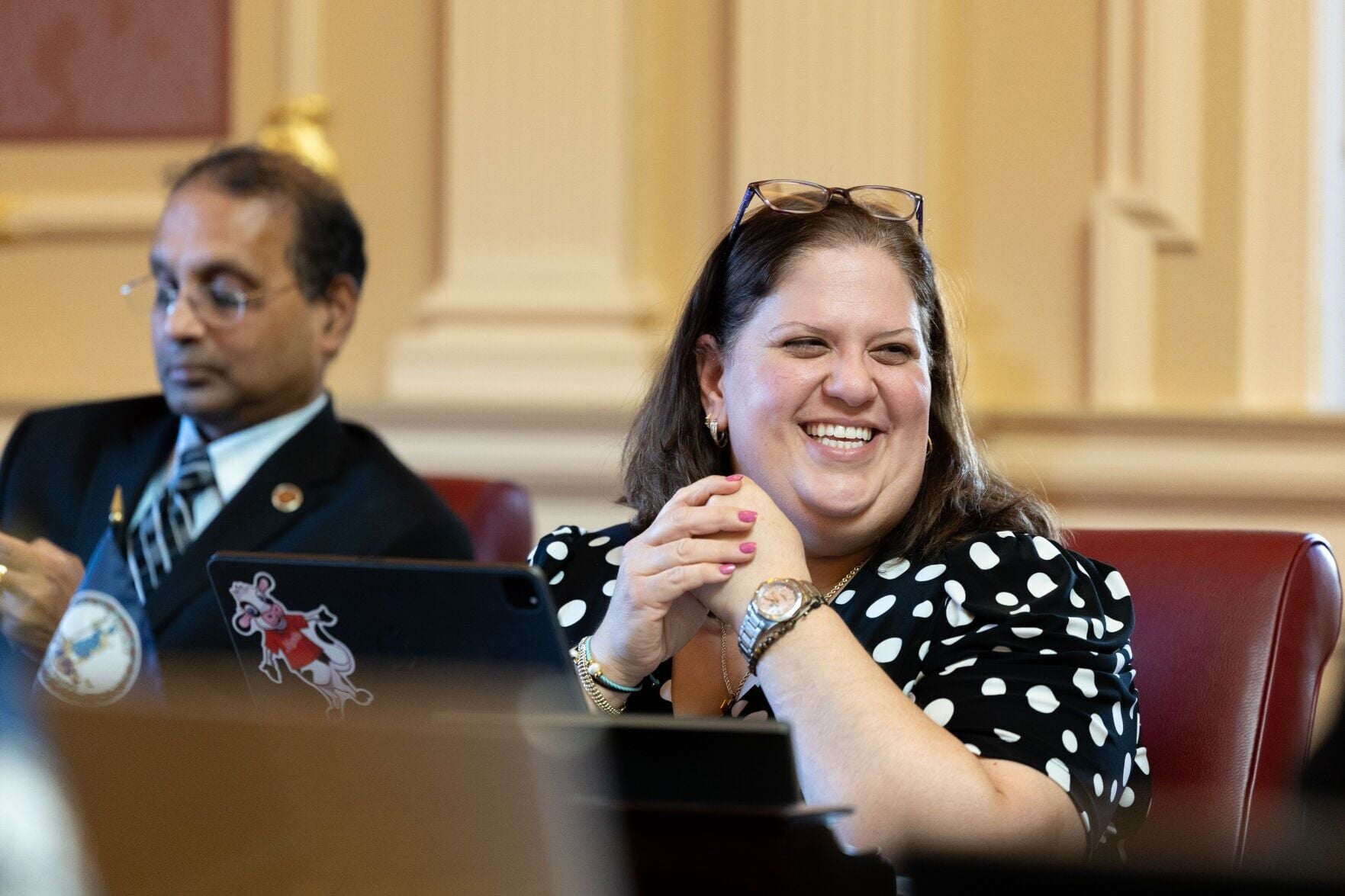
Sen. Stella Pekarsky, D-Fairfax, reacts to a joke on the floor
of the Senate in the Virginia Capitol on March 10. “We intended for
phones to be away for the full day,” said Pekarsky of a bill she
introduced this year. “So we went back and made sure the language
reflects that — that they should not be used during the school day
at all.”
MIKE KROPF, TIMES-DISPATCH
Virginia Republicans propose a gas tax holiday. Democrats blame Trump.
Some schools have allowed phone use in between class time and during lunch, prompting lawmakers to more clearly define expectations.
For students who’ve grown accustomed to using their phones in class over the past 10 years, the change has been difficult to accept. But even some of those who were the most hesitant to the change have benefited.
Kellice Banks, a senior at Armstrong High School in Richmond, said that almost every student in her algebra class passed their exams on the first try because their teacher “enforced the rule like it was a religion.”
“People are, in a way, forced to pay attention,” she said.
And although most students have adapted to class time without their phones, those who haven’t can take up valuable instructional time when they get into disagreements with teachers about putting their phones away.
“Those kids who are going to cause a distraction normally would be subdued with their phone,” Banks said. “But now, without that way to basically self-soothe themselves and entertain themselves, now if they can't get to do what they want to do, it's going to be (an issue for everyone)."
Banks, who is graduating this year, said she hopes to see cellphone restrictions enforced consistently in the future.
“It shouldn't be so hard for us as young people to be able to put it away, to do something else,” she said. “I feel like by doing this, we can help set up younger generations to not be as addicted to the screen, especially during important times like school.”
Across the state, educators say enforcement can be uneven, particularly when responsibility falls on individual teachers.
The official policy for Richmond Public Schools requires students to keep their phones stored throughout the school day, including in hallways and cafeterias, but the rule is not strictly enforced at all schools.
That tension between enforcing rules and maintaining instruction is something lawmakers say schools must address through stronger systems.
![]()
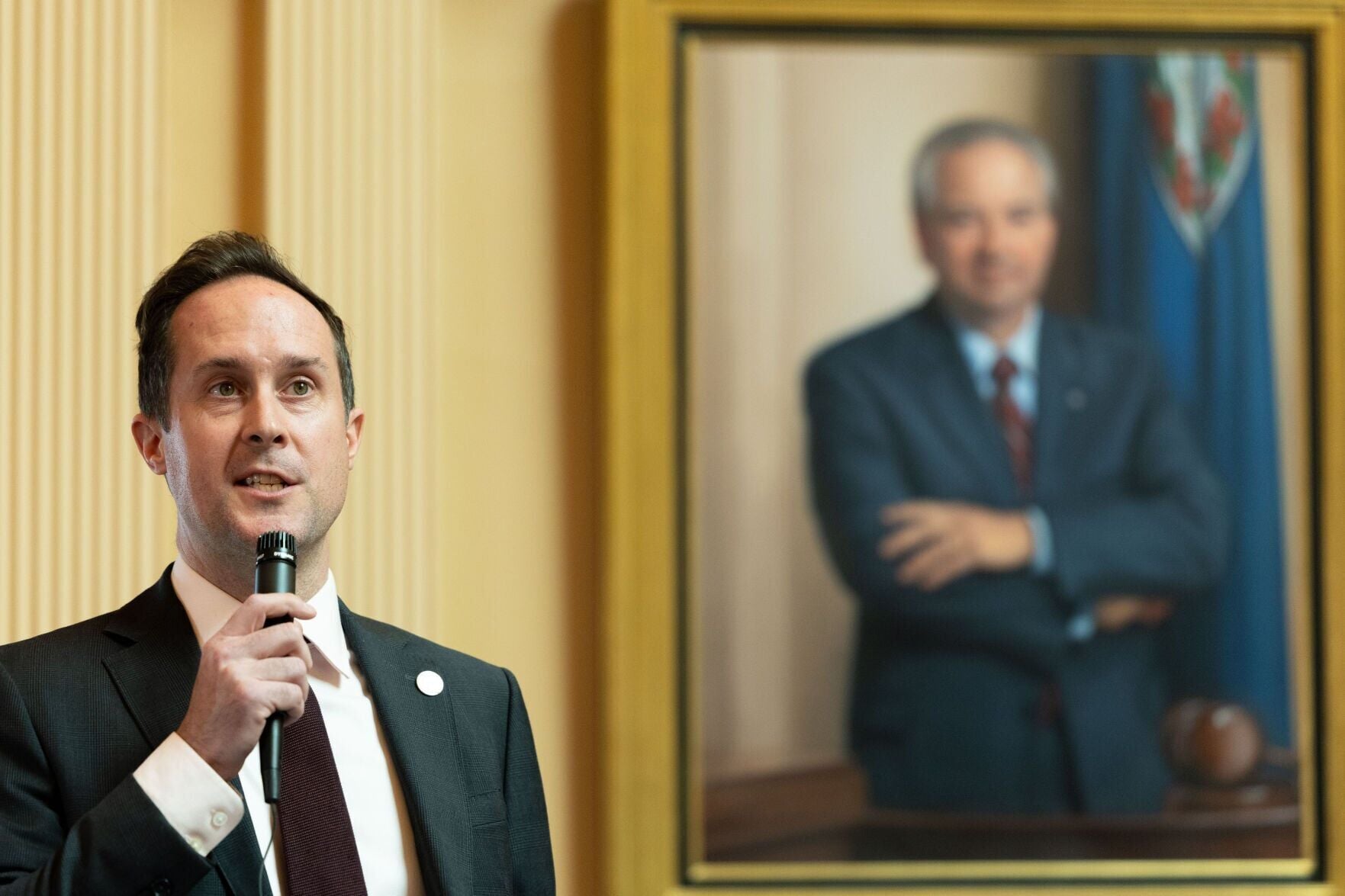
Sen. Schuyler VanValkenburg, D-Henrico, speaks on the floor
of the Senate in the Virginia Capitol on March 10. “Kids can live
without their phones,” VanValkenburg said. “We just have to make it
happen.”
MIKE KROPF, TIMES-DISPATCH
Hanover schools confiscated 1,600 mobile devices last school year
Sen. Schuyler VanValkenburg, D-Henrico, who also teaches high school civics in Henrico County Public Schools, said phone restrictions are most effective when enforcement is handled at the school level.
“If you’re leaving it to the individual teacher to enforce, you’re asking for failure,” he said. “Teachers can’t be the police.”
Pekarsky said the legislation was designed with that concern in mind.
“The burden shouldn’t be on the teacher to police this,” she said. “It has to be supported by administration and implemented schoolwide.”
She said she has heard largely positive feedback from schools that have adopted stricter approaches, though she acknowledged that some have experienced a more difficult transition.
“There was an adjustment period,” Pekarsky said. “But once expectations were clear, students adapted.”
Virginia’s move to strengthen its law comes as schools across the country are rethinking how much technology belongs in the classroom. At least a dozen states have introduced legislation this year to evaluate student screen time or restrict device use amid growing concerns from parents and educators about distraction, social media and the effects of constant connectivity.
VanValkenburg said most schools are making a good-faith effort, but he emphasized that how a policy is implemented can determine whether it succeeds.
“Kids can live without their phones,” VanValkenburg said. “We just have to make it happen.”
Virginia's proposed congressional districts and who is running | Special Report
Former AG Miyares calls on Spanberger to reverse ICE policies in wake of Fairfax stabbing death