
Sacred ground: In his search, Barnette teaches others to care for cemeteries, grave markers

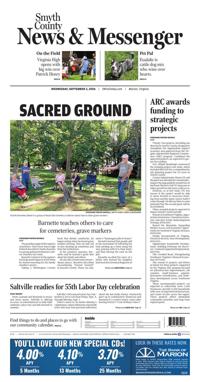
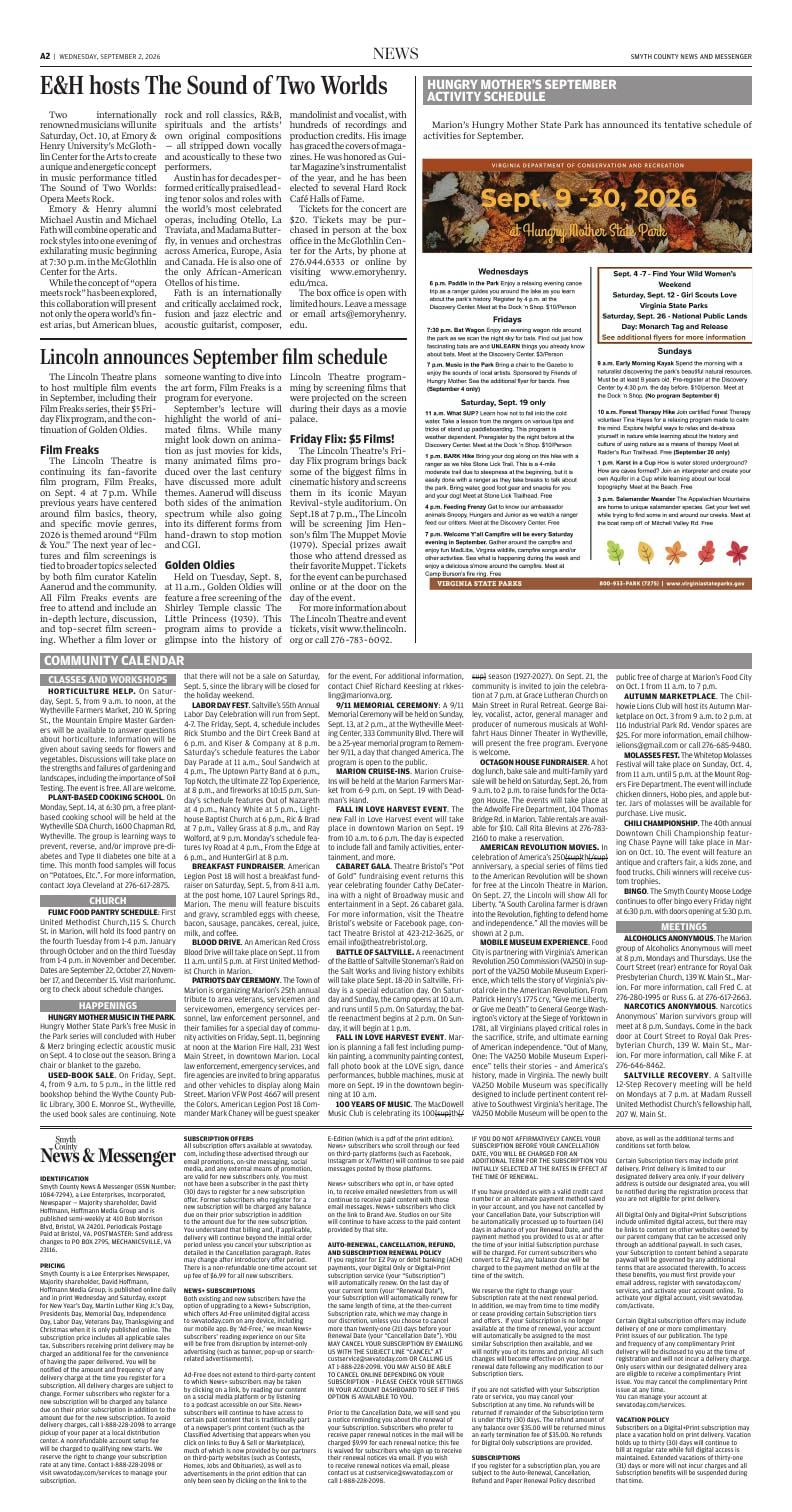
Charlie Barnette talked to a group at Royal Oak Cemetery in Marion about how to clean grave markers.
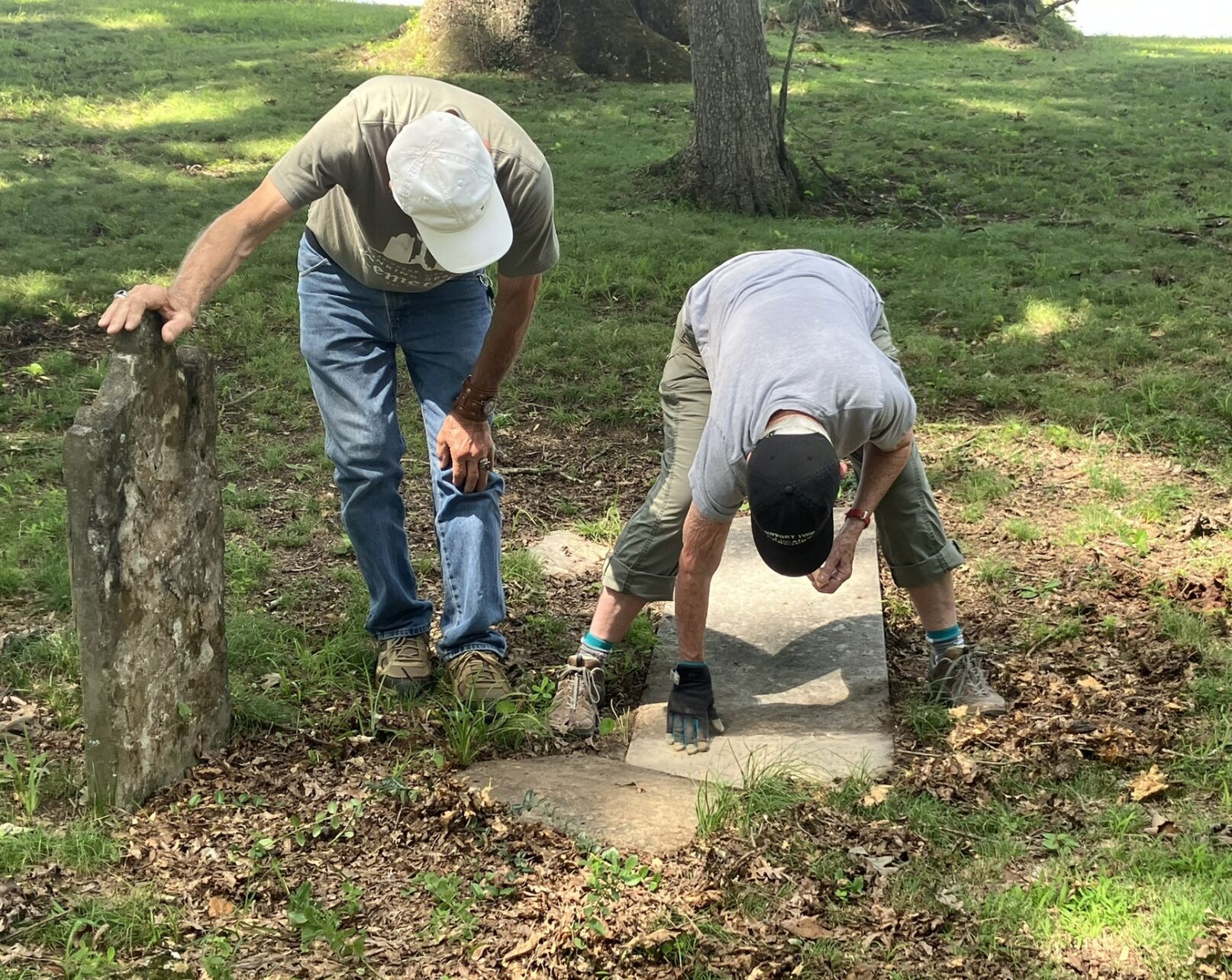
With cleaning, Charlie Barnette and Dr. Diana Hulse were able to read some of the information on this 19th-century grave marker.
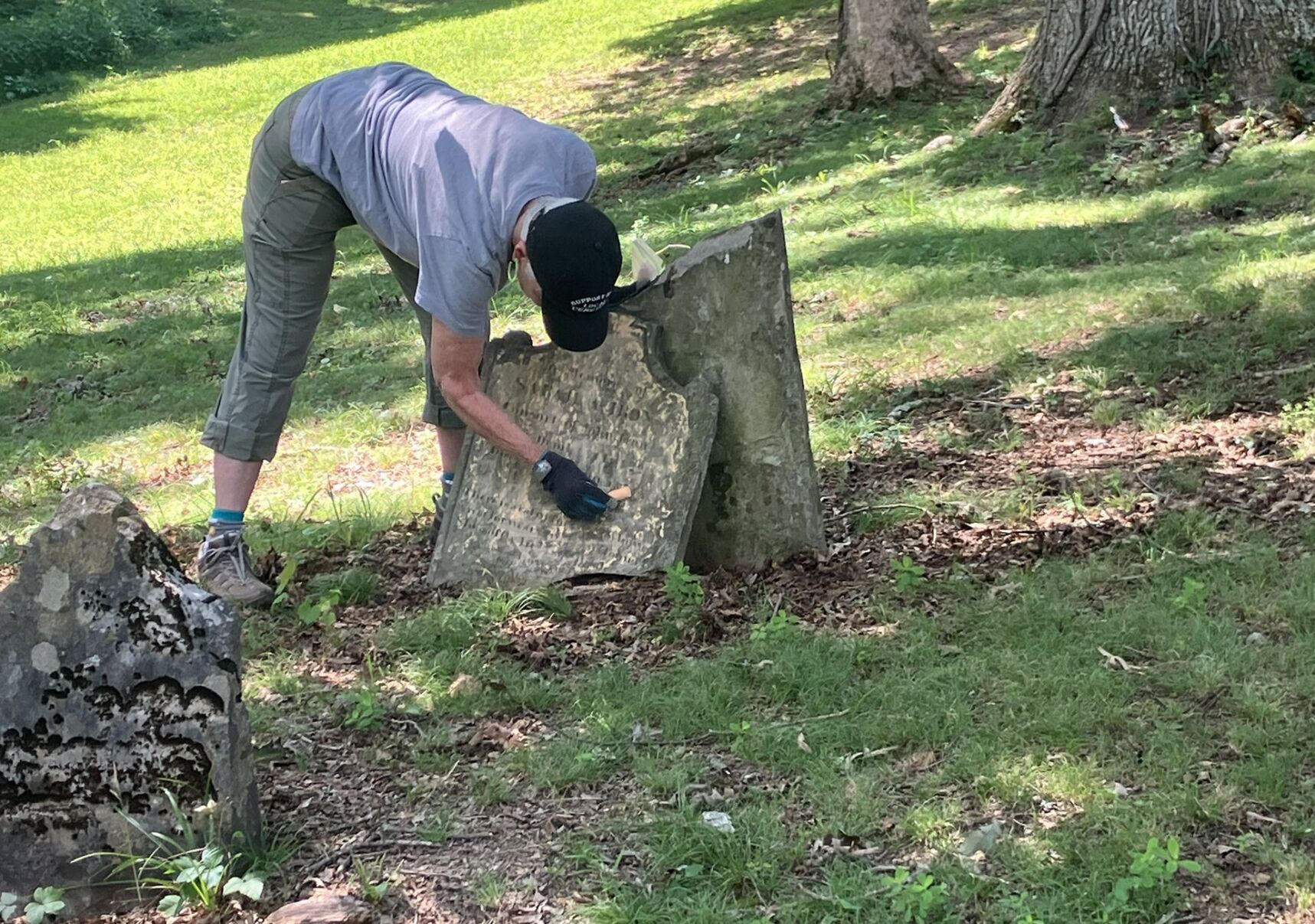
Diana Hulse brings out information on this marker with orange sidewalk chalk.

Charlie Barnette cleans this historic marker with D/2 biological solution.
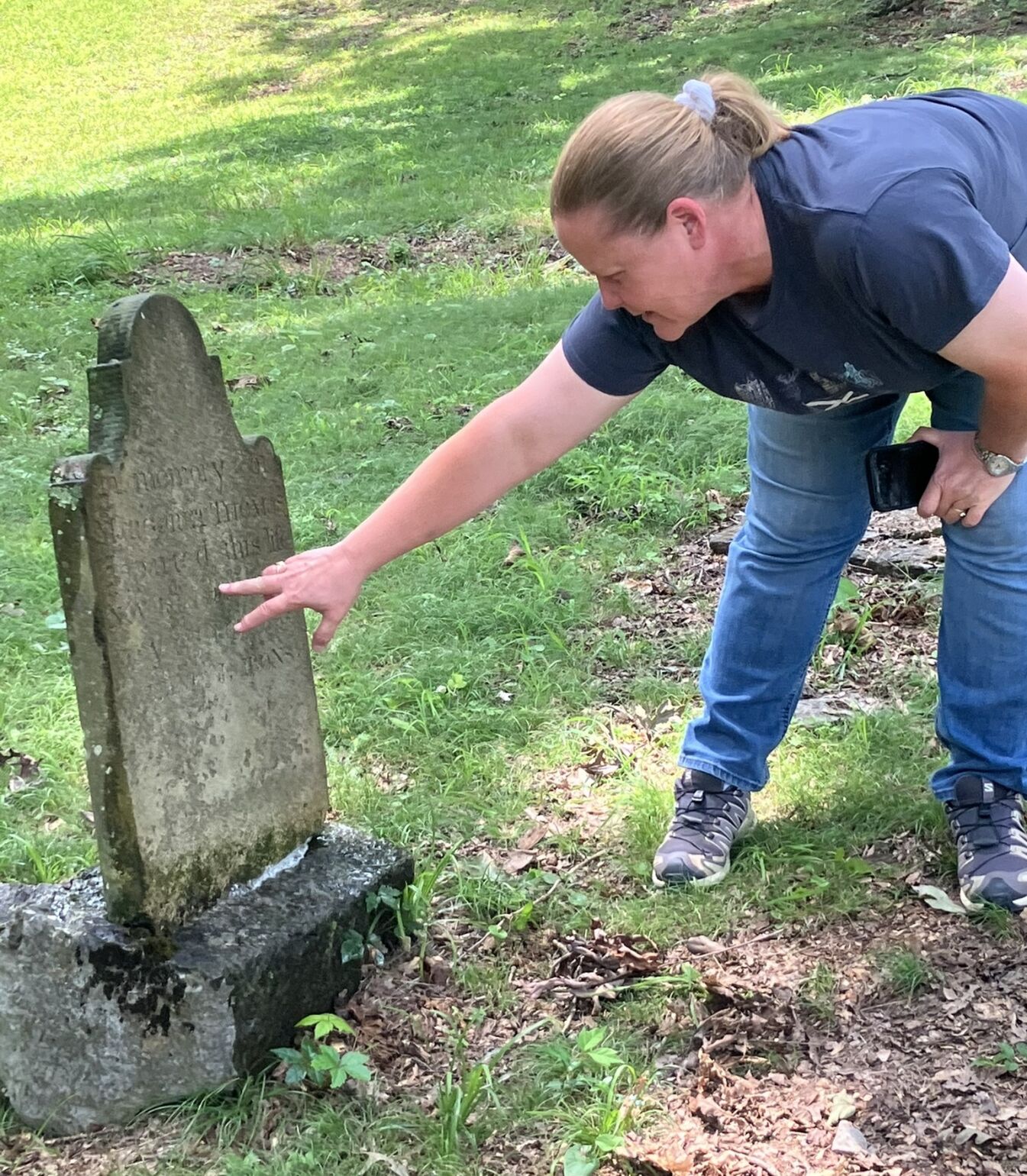
Amanda Baxter reads about the person memorialized with this stone.
The guardian angel of this region’s cemeteries: That’s how Anna Leigh DeBord described Charlie Barnette to a group gathered in Marion’s oldest cemetery last week.
Barnette’s interest in the region’s burial grounds began in 2008 when he started searching for his family member’s graves.
Taking a Washington County book that details cemeteries, he began noting when he found grave markers missing. That, he said, led to also cleaning up cemeteries and then the tombstones.
In his cemetery searches, Barnette said he learned a great deal about his family and others.
He also discovered some extraordinary places. Barnette described encountering “Sacred Ground” in Russell County. There, he said, exists a “humongous pile of stones.”
Barnette learned that people add to the monument by following the trail, picking up a stone along the way, praying with it in their hand, and then leaving the rock on the pile.
Barnette recalled the story of a father who learned his daughter had received a terminal diagnosis of metastasized cancer and had a short time to live. The father completed the walk and spiritual practice day after day. A decade later, the daughter gave a birthday gift to the doctor who diagnosed her.
Curious, Barnette said he wanted to see what was beyond the monument. A little way farther, he found two trees growing together at a burial site.
Today, Barnette, who works with the Washington County Historical Society, continues his search, now looking for lost and abandoned cemeteries.
He also shares his knowledge of caring for grave markers and properly cleaning them.
Last Wednesday, hosted by the Royal Oak chapter of the Daughters of the American Revolution, he offered a free class at Royal Oak Cemetery in Marion.
According to DeBord, a DAR and Smyth County Historical Society leader, 102 individuals are buried in the cemetery that includes the graves of multiple Revolutionary War and Civil War veterans.
Only a small percentage of the graves are now marked. Many of those markers are damaged and most seem unreadable.
However, Barnette and Dr. Diana Hulse showed that with the right care the markers can sometimes still reveal their information.
One practice the pair introduced was covering the information side of a marker with orange sidewalk chalk and then rubbing it, which can make the details easier to read.
For many gravestones, Barnette urged using D/2 biological solution, a biodegradable, non-toxic substance. The substance, he said, is used on national monuments, including the Tomb of the Unknown Solder and Vicksburg National Cemetery markers.
Barnette said it works best in full sunlight and can be used on marble, granite, sandstone and limestone.
He did caution that stones shouldn’t be dry brushed except when they’re covered in a powdery orange fungus. In that case, Barnette and Hulse said a plastic windshield wiper could be used to remove the fungus and that wearing a mask can be beneficial.
D/2 can be ordered online, or cleaning kits are available from the Washinton County Historical Society -- https://www.hswcv.org/cemeteries.php.
The substance, Barnette said, can also help remove the buildup from automobile exhaust. He noted that in a cemetery near Exit 7 in Bristol the markers often appear black.
Those gathered at Royal Oak reflected on the historic cemetery’s state of disrepair.
“It’s really sad,” said Amanda Baxter.
Barnette promised to come back and help clean markers.
DAR members had talked about adding a monument with the names of those buried in the cemetery, but the cost – determined by letter – proved daunting. They're now exploring other possibilities.