The long-running and hard-fought General Assembly battle over skill games is coming down to how much tougher Virginia will be than other states that allow the slot machine-like devices in convenience stores, gas stations and truck stops:
A little tougher or a lot?
Unusual alliances, including some of the General Assembly’s most liberal and most conservative legislators in opposition, face shrinking but still strong enough support for legalization in a bipartisan coalition swayed by arguments that the games are a source of revenue for mom-and-pop convenience stores that would otherwise have to close their doors.
Death by a thousand cuts, as roughly 1,000 bills die in Virginia General Assembly
Skill games differ from slot machines, which are legal in casinos, in that players’ actions, even fairly small ones, as well as chance, can determine a payout. Some states, like Kentucky and Pennsylvania, say that’s a distinction without a difference, and in 2020, the General Assembly also took that line.
But a judge in Greensville County put a hold on enforcing the ban. When the Virginia Supreme Court overturned that in 2023, and the ban took effect, the legislative battle resumed.
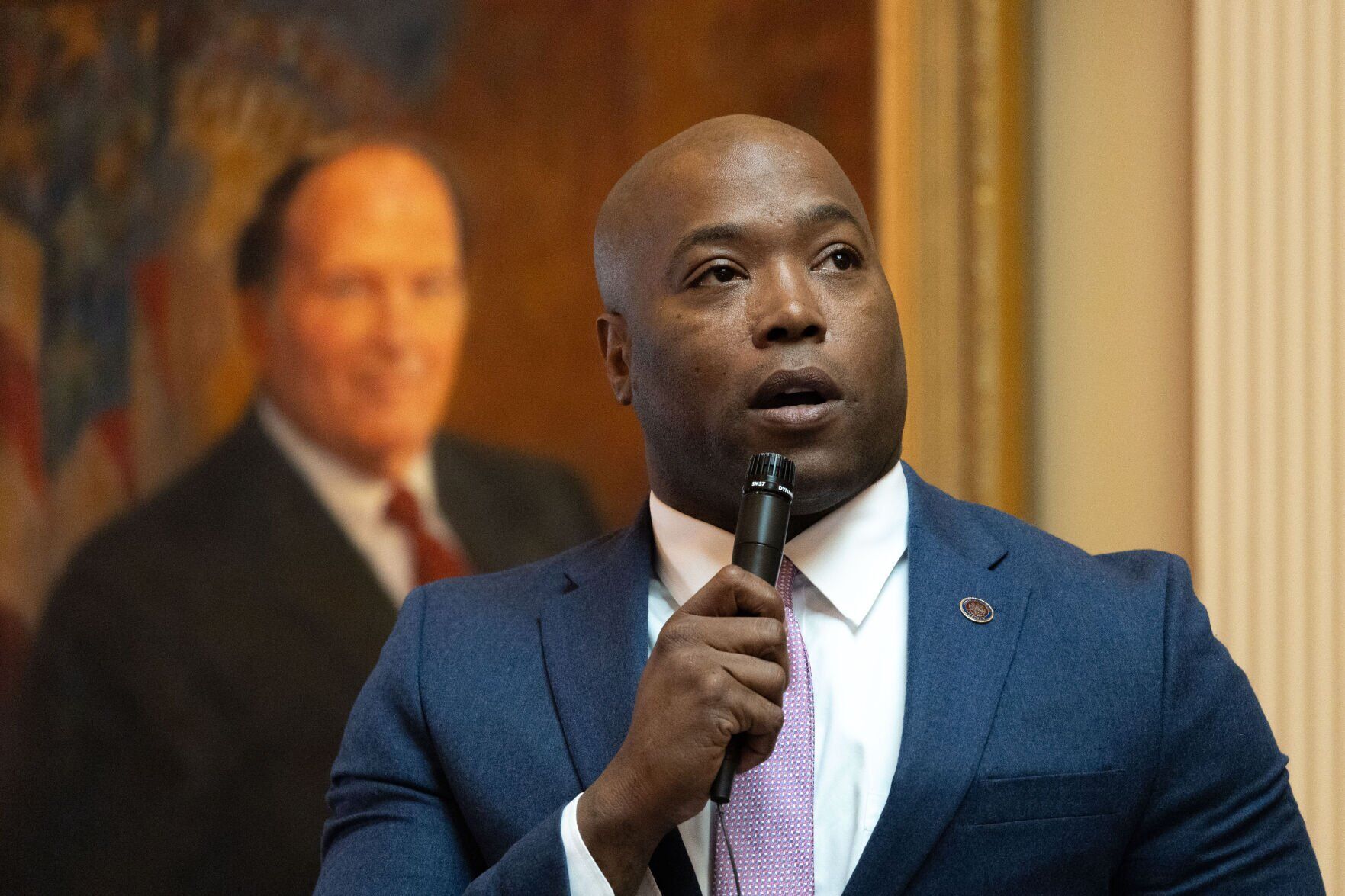
“There are over 90,000 of these games that are illegal that are out there. This bill puts a cap on that,” said state Sen. Aaron Rouse, D-Virginia Beach, arguing for his Senate Bill 661, which sets significantly higher license fees than the laws legalizing the machines in Illinois, Nebraska and Georgia. That's a selling point with Democrats who are worried that state revenues will take a hit from federal job and funding cuts.
![]()
“There are over 90,000 of these games that are illegal that are
out there. This bill puts a cap on that,” said state Sen. Aaron
Rouse, D-Virginia Beach, arguing for his Senate Bill 661.
MIKE KROPF,TIMES-DISPATCH
Rouse's bill caps the number of machines: 35,000 statewide and no more than 4 in a convenience store and 7 in a truck stop; fewer than Illinois’ caps of 6 in stores and 10 in truck stops, and Nebraska’s cap of 15, both in stores and truck stops. Georgia says stores can’t get more than half their revenue from the games.
But the House General Laws Committee, led by Del. Paul Krizek, D-Fairfax, one of the General Assembly’s members who’s been most concerned about gambling addiction, took a harder line.
The committee made extensive edits to a House version (House Bill 1272) of Rouse’s bill. Over the next few weeks, the Senate will likely rewrite the House bill until it looks like Rouse's measure, and the House will do the same to Rouse's bill. A conference committee with members from both bodies will try to reconcile the differences. If they do, and the full House and Senate agree, the issue goes to Gov. Abigail Spanberger. Former Gov. Glenn Youngkin vetoed an earlier proposal.
There's a wide gap to negotiate between the House and the Senate first, however.
The House bill sets a statewide cap of 15,000 machines, and says convenience stores could have no more than 2, and truck stops no more than 5. While Rouse proposed a $250,000 annual license fee for the games’ manufacturers, the House edit calls for a $1 million annual fee.
It would be easier on convenience stores that have been among the biggest backers of Rouse’s efforts, with an initial fee of $3,000 and annual renewals of $125 per machine, rather than Rouse’s $1,000 annual license fee.
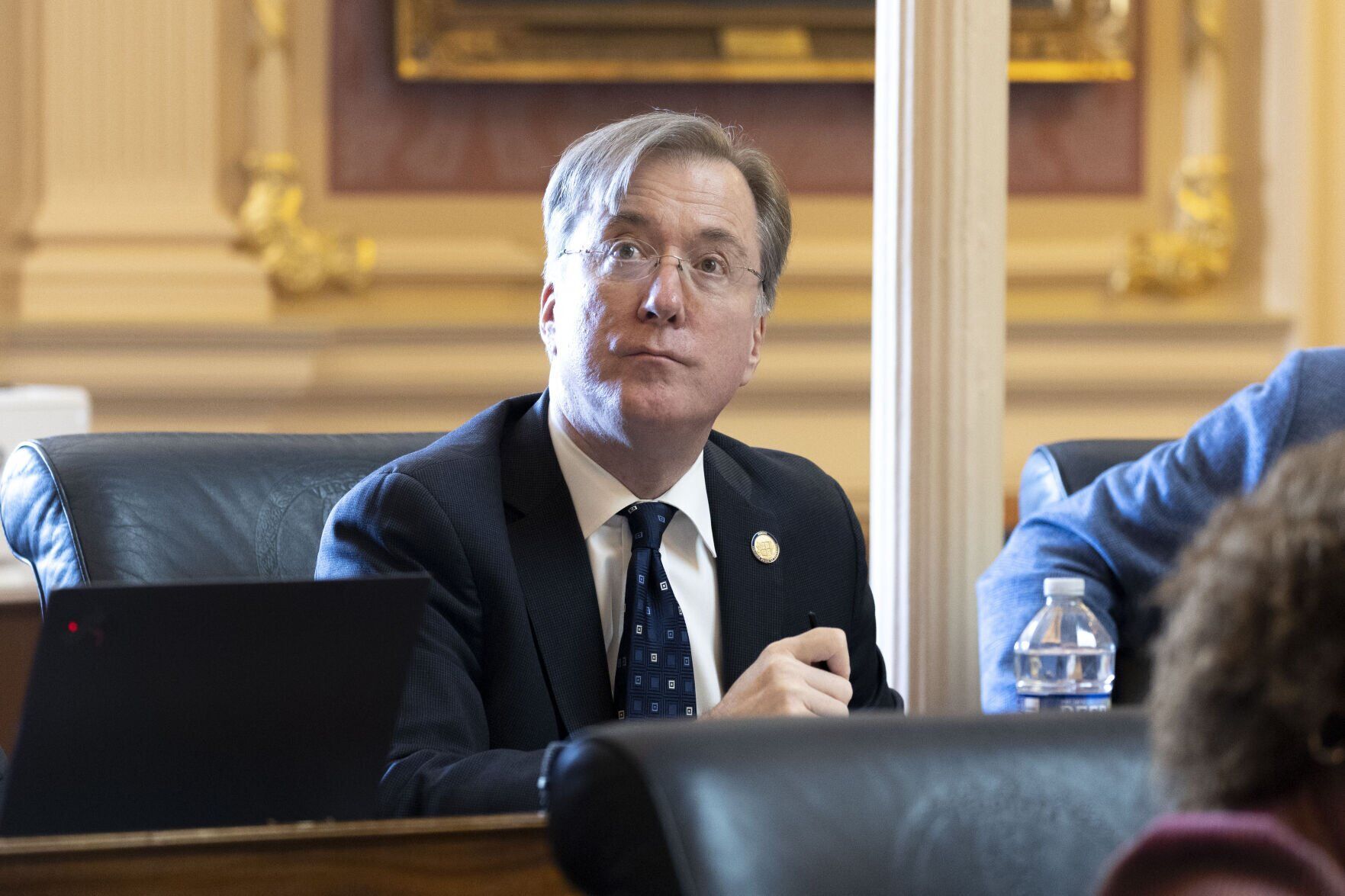
“If they really want to be regulated, then they should embrace the House version,” Krizek said, referring to the manufacturers who’ve been providing the financial and organizational muscle for what’s now a multi-year push for legalization.
Other key provisions in the House bill include a much lower cap on the maximum a player can win: $500 versus $4,000. Both are less than Illinois’ $10,000 jackpot maximum. A bill currently working its way through Missouri’s legislature says the most a player can win is $1,199, one dollar less than the trigger for gaming operators to issue an Internal Revenue Service Form 1099 to a successful gambler.
The House bill also requires machines to pay out at least 84% of the total sums bet. The Senate bill, like legislation in other states, does not set a minimum here.
With smaller payouts and less cash walking out the doors of a convenience store or truck stop, Krizek thinks the House bill tackles two big worries about skill games: that players are magnets for muggers and that the machines can be a way to launder money.
"If this works well, we could think about relaxing in a few years," Krizek said.
![]()
“If they really want to be regulated, then they should embrace
the House version,” said Del. Paul Krizek,
D-Fairfax, referring to the manufacturers who’ve been
providing the financial and organizational muscle for what’s now a
multiyear push for legalization of skill games.
MIKE KROPF, TIMES-DISPATCH
The House bill proposes a 30% tax on skill games revenue, which is more than Rouse’s 25% but less than Illinois’ 35% or the 31% proposed in Missouri’s legislation. It is stiffer than the 13% Georgia says must be paid to the state Lottery, leaving stores and game distributors to split the difference. Nebraska’s tax is 5%.
In addition, the House bill says cities or counties must hold a referendum asking voters whether they’d like to allow skill games before any can be set up. The Senate bill doesn’t require local approval for the games, but allows localities to hold a referendum asking voters whether they would like to prohibit the devices.
The House bill, unlike the Senate, says games can’t be put in stores located within 1,000 feet of any public, private, or parochial school or any child care center. It also requires surveillance equipment and an alarm system to monitor the devices, ticket redemption terminals, electronic identification terminals and the gaming area.
“While the payout is larger for the first bill, the odds are more favorable for the player in the second bill," said Drew Velkey, director of the neuroscience program at Christopher Newport University, who has a special interest in behavioral economics and the psychology of choice and self-control.
"People are actually fairly bad at risk assessment, and they overestimate their likelihood of winning," he said. "They don't believe the mathematics that prove that the $1 bet, $500 payout game actually has a larger albeit still negative expected value than the $5 bet, $4,000 payout game has, so my guess is that they would prefer to play the $5 bet, $4,000 payout game.
"In the end, these games are specifically designed and operated to take people's money away," Velkey said. "The owners would not operate the games if the owners were losing money."
'Right-to-work' repeal dies a quiet death
Legislation to cut electric bills, fund paid family leave passes as measures race to stay alive