Rick Billings went to a faucet in his home and turned it on. No water came out.
He told his peers on the Smyth County Board of Supervisors earlier this month that he understood: Outages do happen. However, then, he said, people started messaging him for details. He had no information to give them.
Eventually, he went back to the faucet. Water flowed, but, Billings said, “It looked like skim milk.” He and his family wondered whether it was safe to drink.
Again, Billings, who is the supervisor for the North Fork District, said, “There’s no information.”
A customer of the Thomas Bridge Water Corp., Billings praised the system’s staff and told the board that everyone loves the system’s water. “It’s just the communication,” he said, adding, “I hear it over and over” from constituents.
The private water system, he said, is stuck in the pre-Internet days.
The last time a boil water notice was issued for the Thomas Bridge system, Billings said he didn’t know about it until he heard it had been lifted.
According to the Virginia Department of Health, the system’s last boil water advisory was issued on Saturday, Feb. 7, at 7:30 a.m. While the waterline break was repaired later that same day, the advisory wasn’t lifted until Feb. 12 “after the Abingdon Field Office confirmed that analyses of collected water samples indicated absence of total coliform bacteria.”
According to the VDH, “public notification of customers was made using local radio, TV (WCYB website…), social media, and door-to-door.” The VDH provided printouts of the WCYB website notice. The News & Messenger has not been able to find a social media account in the water system’s name.
Of communication with customers, Billings said, “I know it can be better.”
Billings asked County Administrator Shawn Utt to offer the Thomas Bridge system the opportunity to use the county’s Nixle alert system, which can send text and/or email messages to those who sign up for notifications.
Utt said he would but noted that he believed that offer had been first extended a few years ago when the Nixle system was first introduced.
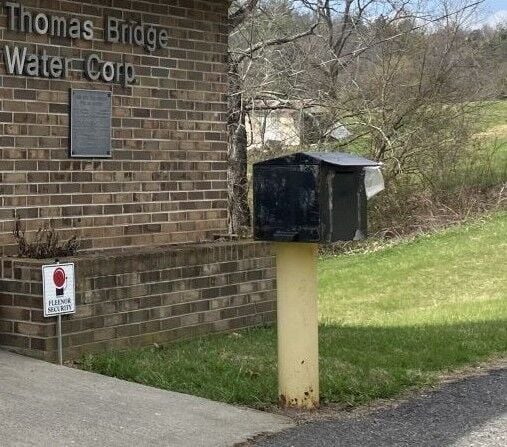
Concerns about the Thomas Bridge water system’s communication aren’t new.
Lori Deel brought them to the supervisors’ attention when she served on the board of supervisors.
Last week, Deel reflected, “With the advances in technology and cell phones being the most common use of communication, it is imperative to properly communicate. When I served on the board of supervisors, we found that using a texting service was a great way to share urgent information such as threats of bad weather and water outages across the county.”
“As a supervisor in the Rye Valley District, and a resident in the TBWC service area, I encouraged the county and TBWC to work together to ensure residents were properly informed of disruptions in water service via the texting system. To my knowledge, TBWC has not taken advantage of that opportunity. I do hope everyone can work together to find the best way to ensure citizens are properly informed in a timely manner,” Deel concluded.
While supervisors have worked with the water system, Thomas Bridge Water Corp. is not an entity of the county government nor is it responsible to the county.
Recently, Joe Copenhaver, the system’s administrator, said they are investigating additional avenues of notification, such as Nixle.
Now, he said some variables about notification exist. If an outage is small and occurs during business hours, the office staff tries to call the impacted customers. If it’s larger, Copenhaver said, the Virginia Department of Health is notified, and they send announcements to WCYB and FM94.
Billings noted that he’s not a regular consumer of either media outlet.
“Our main thing is to fix the leak,” Copenhaver said.
A VDH spokesperson, Tristen G. Franklin, said, “The water system is required to notify customers within 24 hours of an outage or loss of water pressure. Since July 1, 2025, the water system is required to notify the VDH Office of Drinking Water within two hours of a critical equipment failure or malfunction or release of a contaminant….”
He said guidelines for reporting are sent annually to water systems.
Copenhaver said the system follows VDH guidelines.
Franklin reiterated that Thomas Bridge is a private water system that is “registered with the Virginia State Corporation Commission, which must approve any changes in customer rates, but the State Corporation Commission does not monitor compliance with the Virginia Waterworks Regulations.”
Should an individual want to file a complaint about the water system, Franklin said it should be directed to the Virginia Department of Health Office of Drinking Water's Regional Office in Abingdon, which regulates the 17 counties and four independent cities of Southwest Virginia. The main number for the Abingdon Field Office is (276) 676-5650.
Copenhaver estimated that the system has about 1,800 connections. That figure doesn’t correlate to the number of customers, he said, explaining that he has two connections – one for his home and another for his farm.
The water treatment plant’s monthly report said the system serves a population of about 3,600.
According to Copenhaver, the Thomas Bridge Water Corporation was formed around 1965.
It produces, he said, “Some of the best water in the area.”