

New online system streamlines Virginia Tech soil submissions (copy)

Farmers, gardeners and professionals who rely on soil testing can now submit samples and manage their results through a new online system.
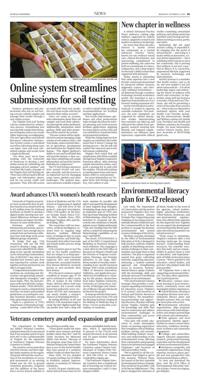
The Virginia Tech Soil Testing Lab has modernized its submission process, streamlining how users provide sample information, pay testing fees and access results while improving recordkeeping. The new Agriculture and Natural Resources Laboratory Information System creates a centralized record for soil testing where users can input, view and track submitted samples and results from a single dashboard.
“For three years we’ve been working with the University of Tennessee to develop a new online system for submitting and managing soil test samples,” said Courtney McCombs, manager of the Virginia Tech Soil Testing Lab. “Now users will not need to fill out paper soil information sheets, and we can accept credit card payments. They will still receive an email with their test results, but now those results will also be stored in their online account.”
Users can create an account, enter information about their soil samples and track their submission through the online dashboard. Additionally, information about gardens, fields and other properties will be saved in the system.
“The new system will be a helpful tool to anyone managing a large volume of soil analyses data,” said Tony Banks, senior assistant director of agriculture, development and innovation for Virginia Farm Bureau. “The digital platform’s ability to save and recall field data will provide farmers a time savings when submitting soil sample information and provide historic field data for comparison.”
The VT Soil Testing Laboratory tests around 50,000 soil samples annually, and the process is an important tool for managing crops, lawns, gardens and other landscapes. The analysis measures nutrients available to plants as well as soil pH while providing recommendations for fertilizer and lime applications.
Test results help farmers, gardeners and other professionals make strategic decisions for nutrient planning and avoid excessive fertilizer applications. Applying too many inputs can be costly and can contribute to runoff and other environmental problems.
While the change improves how samples are submitted, McCombs noted that it doesn’t change the testing process—the lab will still conduct the same tests and results will remain confidential.
Virginia Tech noted that soil sample boxes will still be available through local Virginia Cooperative Extension offices. After entering sample information online, users print a packing list to mail with the samples. The lab will continue accepting paper forms and check, money order or cash payment.
For more information on Virginia Tech’s Soil Testing Laboratory, visit soiltest.vt.edu.