

Cut right packs tight (copy)
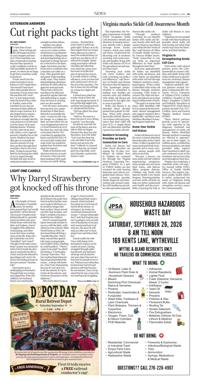
It’s that time of year again. Time to bring out the old forage harvester or corn chopper and have at it! These machines can take a tremendous beating because they operate in acidic conditions and do so with incredible amounts of power. So where do we begin to get these machines ready to perform?
A basic need is for the entire harvester to be in balance so let’s begin there. One remark I hear most often when people discuss harvesters is how many rows the machine will “swallow” or how impressively wide the head of the cutter is. Frankly, some of the machines in our area are awesome in their ability to take in crops; however, it is also important to remember that the ability of the machine to actually take the crop and process it into feed is at the mercy of its most limiting feature. Whether it is the cutter head, feed rolls, knives, cross auger (if present), impellor fan or the spout, whatever the least able piece is to handle the massive amount of crop that can flow through these machines, that is your true limit. Trying to exceed that limit by increasing the width of cut or speed through the field will only result in untimely breakdowns or outright machine failure.
Another area where breakdowns and failure can occur is when routine maintenance is postponed or eliminated. Oiling chains and greasing bearing are as important to forage harvesters as the fuel to run them. Again, harvesters may live in the worst conditions that a machine can suffer on a farm. They generate dust and grime while handling acidic crops. They endure metal fatiguing vibrations and then sit until called on again for seasonal work. These traits call for the machine to be oiled and greased in regular intervals and while doing so, inspections for loose or wearing parts are also needed.
Over the years, harvesters have become very sophisticated but at their heart, their job is essentially the same—to process the crop for storage. As a college student, we were told to set our corn chopping harvesters to a 3/8 inch theoretical cut at the shear bar; and only when a classmate tried to “fix” a machine by gapping the knives and the bar that 3/8 of an inch did I realize that some work was needed to explain how the knives and shear bar interact.
Think of the knives and shear bar in terms of a pair of scissors. Have you ever been burdened with a pair of worn out and ill-fitting scissors… the kind that never meet or match up quite right? If they cut at all, they require that you torque them sideways in order to meet the material being cut and if you are able to cut, it will not be straight. Sharpening your knives without checking and adjusting your shear bar causes your harvester to be like that pair of messed up scissors. It actually reduces cutting efficiency, costs you fuel and puts unnecessary stress on the rest of the machine. The fact is there are two settings on a shear bar: Right and Wrong.
A friend once asked me to take a look at their old pull-type forage harvester. It was producing ragged cuts, and they had sharpened and re-sharpened the knives.
“Did you adjust the shear bar?” I asked.
“Well no. We were in a hurry because it was cutting so poorly” was the reply.
I found my way into the back of the knives and was able to slide my fingers between the shear bar and the knives. Just a bit wide! “Let’s turn the shear bar over and slide it up to the knives and see how she does” I offered. As I passed by later that day, my friend gave me a big smile, wave and a thumbs-up from the tractor’s seat!
Lastly, as machines have become increasingly electronically dependent, keeping them as dry and as dirt free as possible is a premium. The slightest bit of corrosion on the multi-pin connectors of a harvester can cause all sorts of issues. A local mechanic was fussing one day about the control box on a particular brand of harvester that controlled and stopped the feed rolls if metal was detected in the crop. “I just peck on it with my pocketknife, and it works just fine for a while.” Knowing that he would know I was just pulling his leg, I added that “if we hit it hard with a sledgehammer, we’d fix it for good and never have to worry with it again!”
What my friend was doing, knowingly or unknowingly, was knocking the corrosion loose in the control box so that the connectors would make contact again and function properly.
Dad used to always say that the best option on a piece of equipment was a place in the shed to put it in before it ever showed up on the farm. When it comes to electronics on forage harvesters, keeping these hardworking pieces of equipment away not only from excessive moisture but also extreme heat and cold will not only spare you electronics issues, but it will also save you thousands of dollars in lost time chasing problems.
In conclusion, forage harvester are tough, capable machines, but neglecting the details of proper settings and preventive maintenance will add years to your machine’s life and reduce your stress during the harvest season as well. Best wishes for a safe and productive season!
Upcoming Events
Sept. 17--SWVA 4-H Tractor Club.
Sept. 22--VQA Sale.
Sept. 28--VQA Steer Take Up (tentatively.)
Sept. 30--VQA Heifer Take-Up (tentatively).
Oct. 3--IH Days, Benham, Ky.
Oct. 6--Cattleman Board Meeting
Oct.. 8--OGATA FFA Day.
Oct. 10--Hokie Bugfest, Squires Center, Campus.
Nov. 3--VQA Sale.
Nov. 9 & 11--VQA Take-Up.
Dr. Andy Overbay is the agriculture and natural resources extension agent for Smyth County.