
An Old Guy Fall?
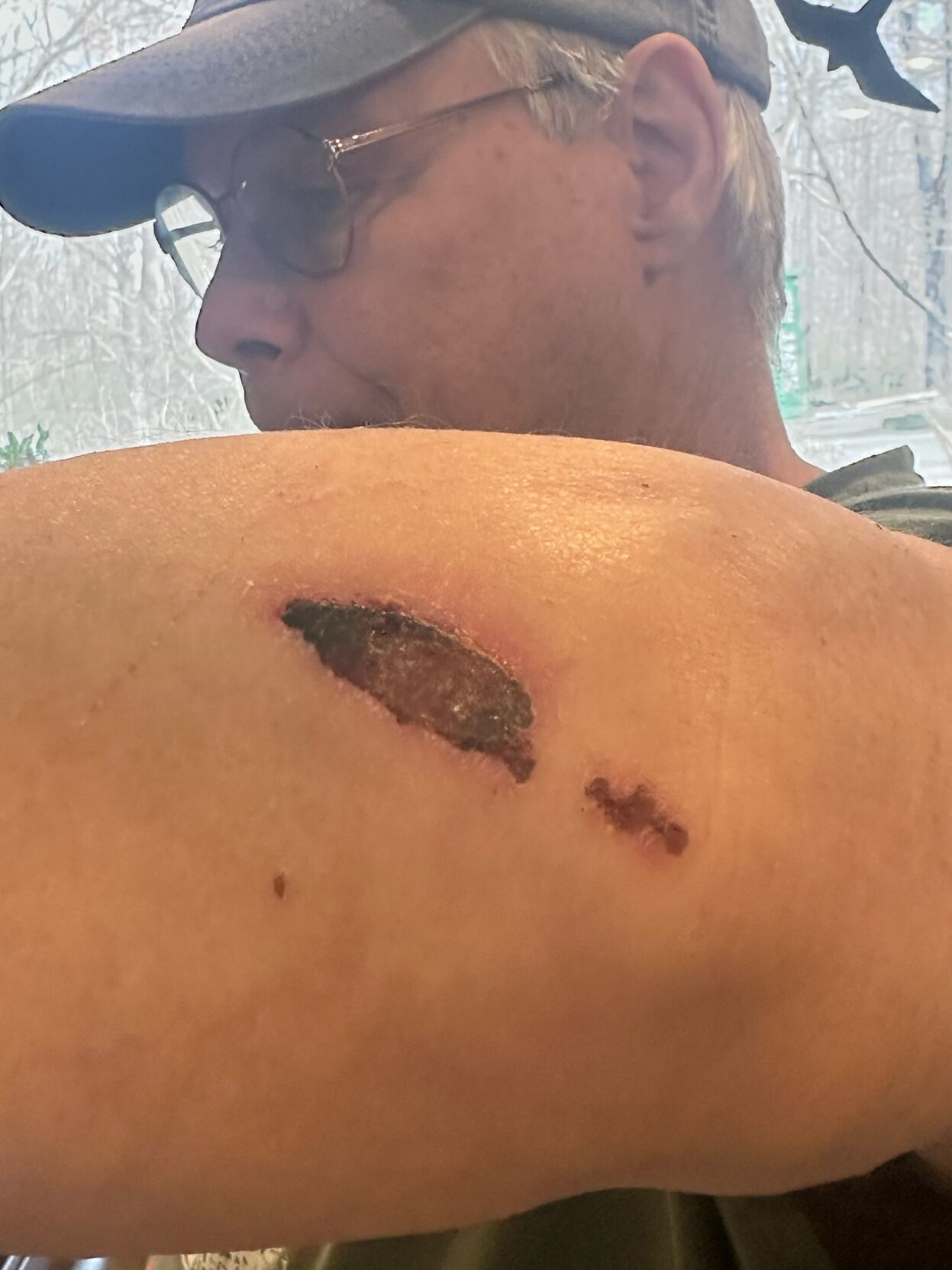
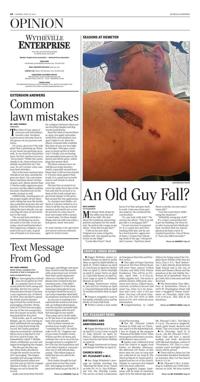
My friend, Brad, drops by the office near the end of my shift. We chat about the workload, interesting patients and plans for the weekend. He notices the scrape on my elbow. “How did you get that?”
“I fell on the new deck. Tripped over some string the workers left. You should see the bruise on my thigh.”
“Looks like it hurt.” Brad leaves it at that and goes back to work. Later one of my partners pops in. He overheard the conversation.
“So, you took a fall, huh?” He surveys the elbow. “Was it an old guy fall or a young guy fall?”
I’m not sure how to respond. Dr. B. is a great doc and I love working with him, but he can be a touch passive-aggressive at times. I suspect he’s throwing shade at my age. I shrug but don’t answer. “And how about those scratches on your arms? Same fall?”
“Got into some briers while using the chainsaw.”
“Definitely young guy stuff.”
It’s a short conversation but it got me thinking. For those of us who’ve passed into Medicare land, we know that our annual physical includes a host of required questions. One of those is “have you fallen recently?” It makes perfect sense for your doctor to ask about falls. As we age, we lose muscle strength, our balance and vision isn’t as good and our bones are more fragile. Not only are we more prone to fall but more at risk for injury. There are also simple things we can do to decrease the risk of fall and injury. An on-line search will give you lots of ideas.
This isn’t a trivial issue. On any given shift, I’ll have two or three patients who’ve suffered a fall and broken a hip, shoulder or ankle or (worse) suffered a brain bleed. Although fractures are rarely fatal, they can lead to significant debility and rehab time. In many cases they’re the event that heralds the start of a rapid decline in function and independence and often lands a person in a long-term care facility – something we all dread. Anyone who practices hospital medicine is reminded of this on a daily basis. Falls are bad, aren’t they, or did my partner’s comment suggest some nuance or even paradox?
One of the best ways to prevent falls is to stay physically active and yet I’m unaware of any physical activity that doesn’t involve at least some risk of a fall. During my annual physicals the fall question often elicits a laugh. I point out that I trout fish, hunt, trap, forage mushrooms and manage forest land in the Appalachian Mountains. I don’t consider myself clumsy or reckless but there’s never been a year in my life that I haven’t fallen multiple times. This year I’ve had three falls – fishing, trapping (mud over ice) and the deck fall - and its only April. My physician is also a fisherman, so I get an eye roll instead of a lecture.
There are plenty of risky lifestyles but one of the riskiest is being sedentary. One of my pet peeves is a patient’s family member (usually an out-of-town daughter) wanting me to tell daddy to stop - take your pick- gardening, fishing, mowing the grass, cutting wood or any other active endeavor. Daughter wants daddy to get in the recliner and never get out. She is sure he’ll be safer and live longer if the doesn’t “take risks”. I can usually maintain my tact while imparting that the worst thing we can do for daddy is take away the activities he loves and make him inactive. I temper that with comments about not taking foolish risks, etc. It works about 80% of the time.
I can’t say that I chose my version of an active lifestyle for health reasons (well… maybe mental health). Being outdoors and active is who I am. It enriches my life and makes me happy. Tripping over a root or slipping on wet shale on occasion goes with the turf. I accept that.
So, Dr B, if I was a little quicker with my retort I would have responded that, yes, its true I’m starting my eighth decade but my falls are still young guys falls…and I’ve got the brier marks to prove it.
And I might also admit that I know the debt is going to come due someday – something will eventually break. It happens to everyone. But my plan for now is to keep falling for as long as I’m able.