

April 7, 2026
Media contact: Emily Bourdon, emily.bourdon@vdh.virginia.gov
RRHD advises district residents of rabid skunk in Orange County
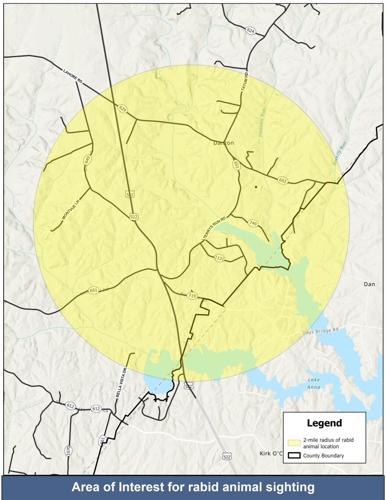
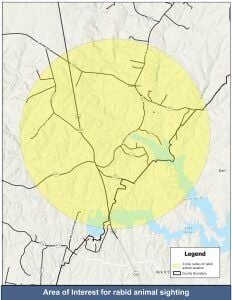
Rabid skunk found in the vicinity of Zachary Taylor Highway and Terrys Run Road
ORANGE, Va. – In order to protect the health of our residents, the Rappahannock-Rapidan Health District (RRHD) is issuing a notice about a skunk that has tested positive for rabies near the vicinity of Zachary Taylor Highway and Terrys Run Road in Orange.
The Orange County Health Department sent the deceased skunk to the Virginia State Lab for rabies testing Friday, April 3. The skunk was reported positive Tuesday, April 7. The health department has contacted all identified individuals who may have had contact with the skunk and has assessed individual needs for rabies post-exposure shots. To help ensure awareness, those residing near the location of the infected animal will receive an additional notice by text message later today.
People are also reading…
The health district encourages all residents to speak with friends, family, co-workers and neighbors, including elderly and disabled contacts, about rabies and the importance of not feeding wildlife and leaving wild animals alone. It is important to keep pets and livestock up to date on their rabies vaccinations. Exposed unvaccinated domestic animals can be isolated for up to six months in strict confinement per the Code of Virginia. If you own a pet or regularly feed or care for feral or farm cats, please make sure you get them vaccinated for rabies. There is no approved post-exposure vaccine or treatment for domestic animals, and rabies is nearly 100% fatal once symptoms begin. Rabies vaccines are inexpensive and highly effective at preventing the spread of rabies.
Individuals bitten or scratched by a wild or unknown animal should report the bite to local animal control and contact their primary health care provider or local health department for further evaluation and medical recommendations. To report an animal bite or possible rabies exposure incident, contact the Orange Environmental Health Office at (540) 672-1093, or Orange Animal Control at (540) 672-1200.
What is rabies?
Rabies is a deadly disease caused by a virus that attacks the central nervous system. The virus is found only in the saliva and brain tissue of an infected mammal (the virus is not found in birds, fish, insects or reptiles) and is most commonly spread when an infected animal bites a human or pet. Less often, virus may also be spread when infected saliva or brain tissue comes into contact with an open wound or mucous membrane (eye, mouth, nose).
Symptoms of the virus in animals include abnormal behaviors such as difficulty swallowing (causing fear of drinking aka “hydrophobia” and foaming around the mouth), poor balance, paralysis and seizures. Some, but not all, rabid animals can become aggressive and attack. Once symptoms of rabies begin, the illness progresses quickly and is nearly 100% fatal within a couple of days. In Virginia, the virus is most commonly identified in “high risk” wild animals such as bats, foxes, raccoons and skunks.
Rabies is occasionally found in domestic animals (dogs, cats and livestock), with nearly all due to no vaccination history and exposure to the virus. Examples of this include imported dogs from rabies-endemic countries and unmanaged feral cat colonies. Annual counts of laboratory-confirmed rabies cases in Virginia by county are available for 2025 at www.vdh.virginia.gov/content/uploads/sites/208/2025/04/2025-1st-QTR-POS.pdf.
Steps to prevent the spread of rabies
To protect pets and their owners from rabies, Virginia law requires that all dogs and cats four months of age and older be vaccinated for rabies by a licensed veterinarian, and that vaccinations be kept current. Low-cost rabies vaccination clinics are available throughout the area and can be found by searching “low cost rabies vaccinations near me” on your smartphone or internet-enabled device.
Additional steps to protect against rabies exposure
- Make your home less inviting to wildlife. Do not feed stray or wild animals, and make sure to feed pets indoors.
- Store garbage and pet food indoors if possible. If trash and pet food are stored outside make sure that the container is secure and animal proof.
- Teach children to avoid all contact with wild or stray animals.
- Do not handle, attempt to care for or dispose of sick, injured or dead animals. Contact animal control or the non-emergency police number for assistance.
- Keep wild animals such as bats out of your home by capping chimneys with screens and blocking openings in attics. Unlocked dog doors and open windows without screens can also be inviting to wildlife.
- If you observe any stray or sick-looking animals in the area, do not attempt to catch or kill them. Contact your local animal control for assistance.
- If a bat is found indoors and may have had contact with someone, do not release it. Call animal control for assistance. A health department public health nurse or environmental health specialist will contact you to determine whether the bat needs to be tested for rabies.
- If you are bitten by a wild or stray animal do not panic. Wash the wounds thoroughly with warm soapy water and contact animal control, your doctor or the local Rappahannock-Rapidan Health District office for further recommendations.


