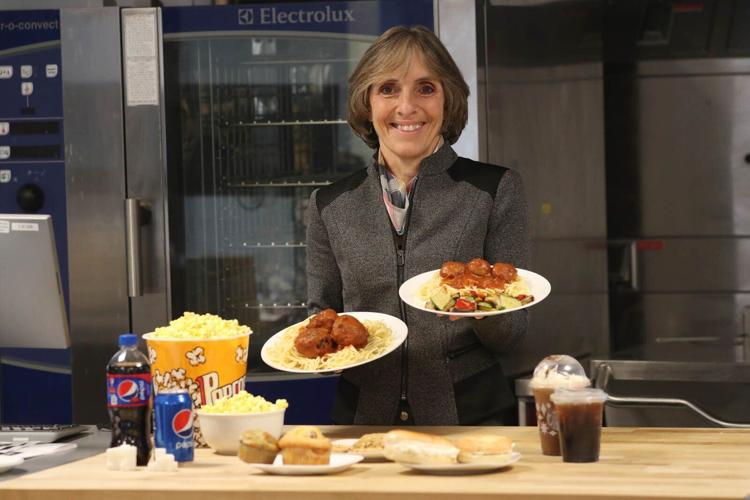
Portion sizes in the U.S. have grown during the last two decades, helping to explain growing waistlines, says Carol DeNysschen, professor and chair of the Department of Health, Nutrition and Dietetics at SUNY Buffalo State.
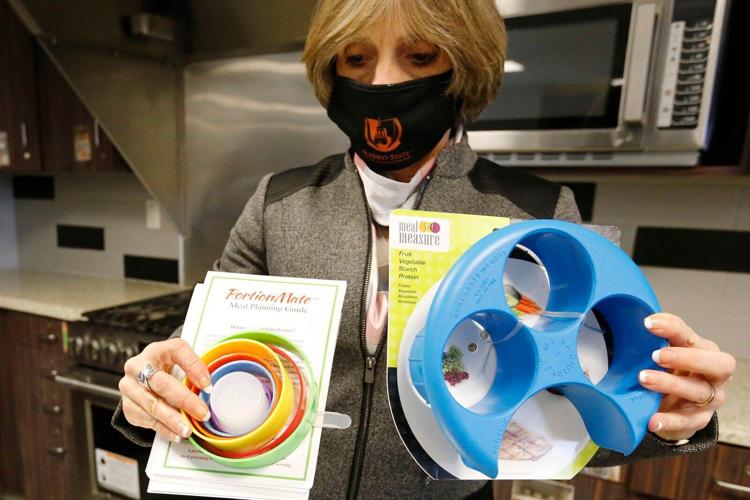
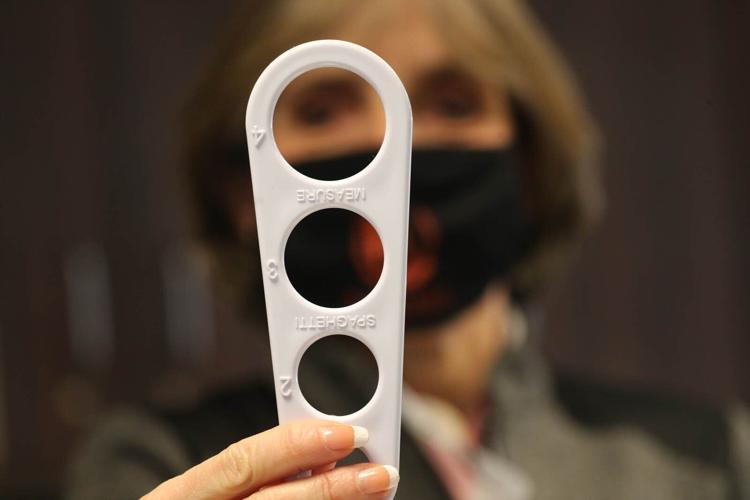
Carol DeNysschen, professor and chair of the Department of Health, Nutrition and Dietetics at SUNY Buffalo State, shows different devices that help measure recommended food serving sizes.
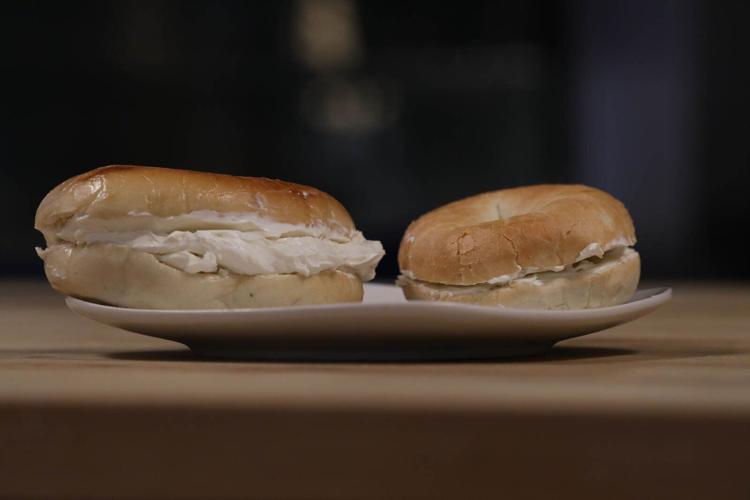
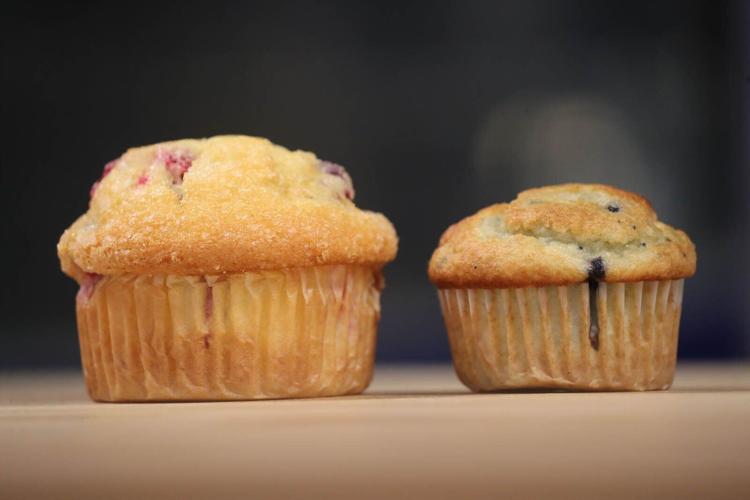
Carol DeNysschen, professor and chair of the Department of Health, Nutrition and Dietetics at SUNY Buffalo State, calls today's common 500-calorie muffin "essentially cake without the frosting."
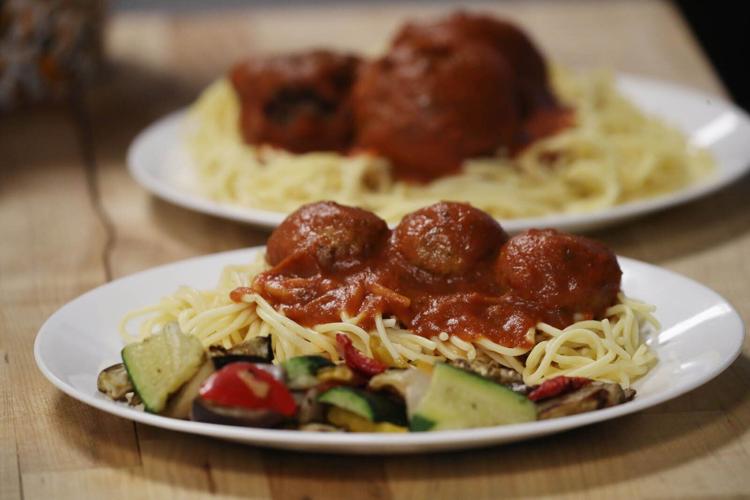
Two plates of spaghetti: One with one cup of pasta and three small meatballs, near, and the other with two cups of pasta and three large meatballs. The smaller size of protein and carbs leaves room for roasted vegetables and a more balanced meal.
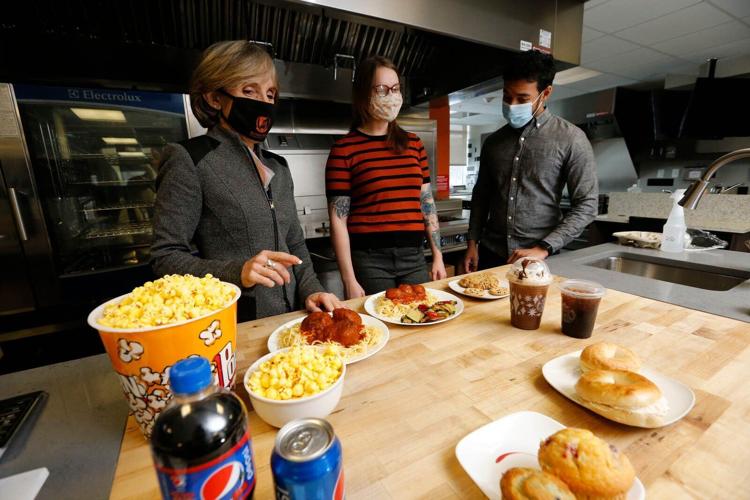
Carol DeNysschen, professor and chair of the Department of Health, Nutrition & Dietetics at SUNY Buffalo State shows students in a campus teaching kitchen about the importance of portion sizes for various foods.
Portion sizes in the U.S. have grown during the last two decades, helping to explain growing waistlines, says Carol DeNysschen, professor and chair of the Department of Health, Nutrition and Dietetics at SUNY Buffalo State.
Carol DeNysschen, professor and chair of the Department of Health, Nutrition & Dietetics at SUNY Buffalo State shows students in a campus teaching kitchen about the importance of portion sizes for various foods.
Two plates of spaghetti: One with one cup of pasta and three small meatballs, near, and the other with two cups of pasta and three large meatballs. The smaller size of protein and carbs leaves room for roasted vegetables and a more balanced meal.
Carol DeNysschen, professor and chair of the Department of Health, Nutrition and Dietetics at SUNY Buffalo State, shows different devices that help measure recommended food serving sizes.
Carol DeNysschen, professor and chair of the Department of Health, Nutrition and Dietetics at SUNY Buffalo State, calls today's common 500-calorie muffin "essentially cake without the frosting."