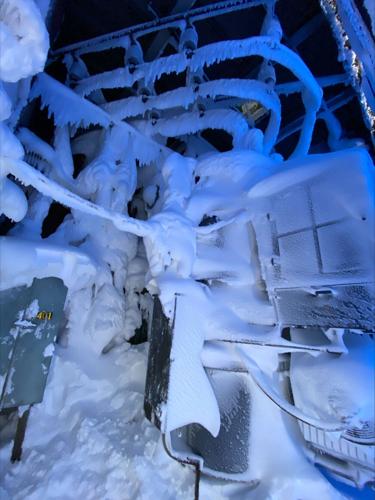
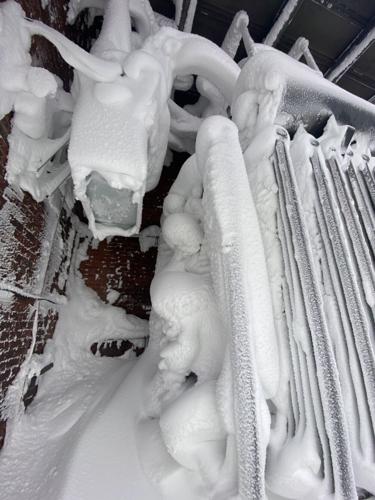
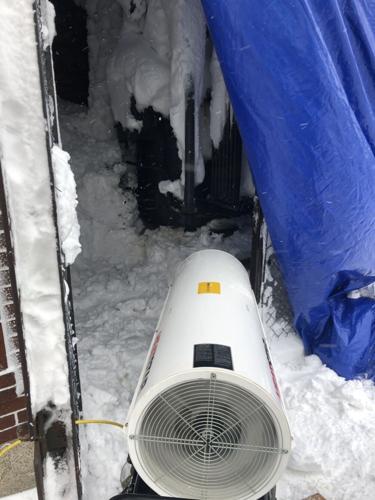
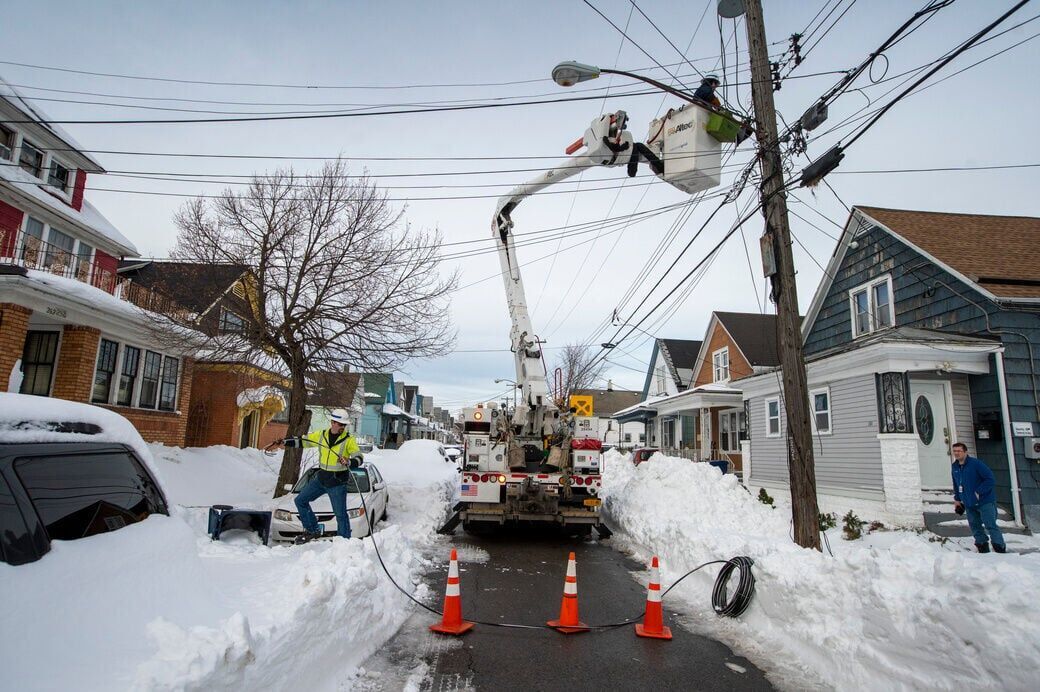
Snow and ice accumulated on National Grid electrical equipment in this substation on Elk Street during the December 2022 blizzard in Buffalo.
Provided
Before it could repower its Elk Street substation following the December 2022 blizzard, National Grid had to thaw out the equipment, which was buried in snow and ice.
Provided
National Grid crews used powerful heaters to thaw out the electrical equipment in its Elk Street substation, which was buried in snow and ice during the December 2022 blizzard.
ALBANY – National Grid revealed this week that its four substations that shut down during the historic blizzard that paralyzed Western New York in December, causing thousands to lose power, were designed to hold up against the worst of summer weather, but not unprecedented and extreme cold weather conditions.
The blizzard that swept through Buffalo Niagara late last month caused widespread devastation and prompted serious questions about why, in key ways, the municipal response was lacking.
"We’ve never had this. Even though we get snow in Buffalo, from November to March, we’ve never had it blow to the degree it did," said Kenneth Kujawa, National Grid regional director for Western New York.
Looking back at weather bulletins, meteorological data, briefings from local officials and firsthand accounts, here's how the Buffalo Blizzard of 2022 unfolded.
Before it could repower its Elk Street substation following the December 2022 blizzard, National Grid had to thaw out the equipment, which was buried in snow and ice.
National Grid crews used powerful heaters to thaw out the electrical equipment in its Elk Street substation, which was buried in snow and ice during the December 2022 blizzard.