JAMIE JIANG and JULIA VAZ
MIT Graduate Program in Science Writing
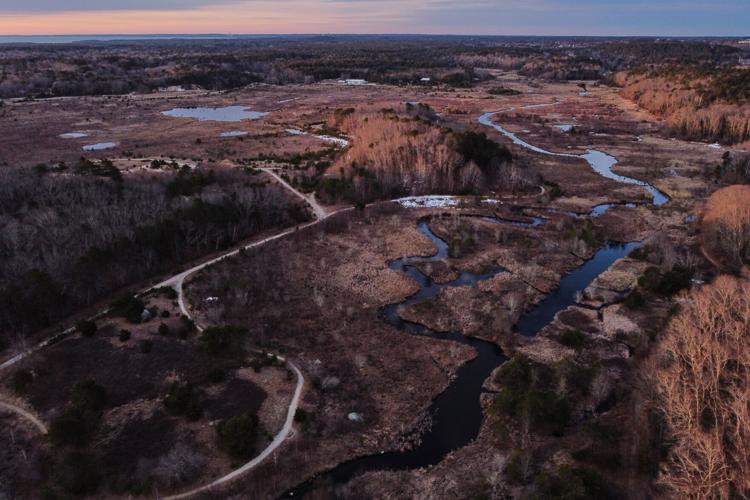
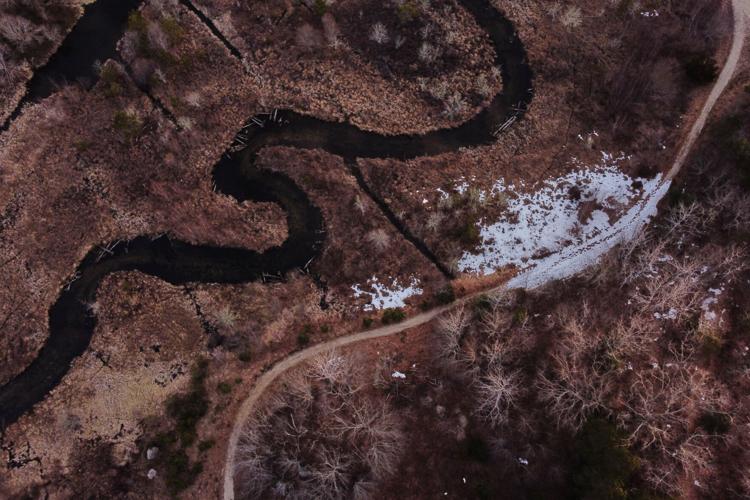
PLYMOUTH, Mass. — Glorianna Davenport looks out at hundreds of acres of protected wetlands that were once her family's cranberry farms. In her hands are laminated pictures of striking red cranberry bogs fed by razor-straight water channels. It's hard to believe the land where she stands — full of sinuous streams, wildlife, moss and tall trees — once looked so different.
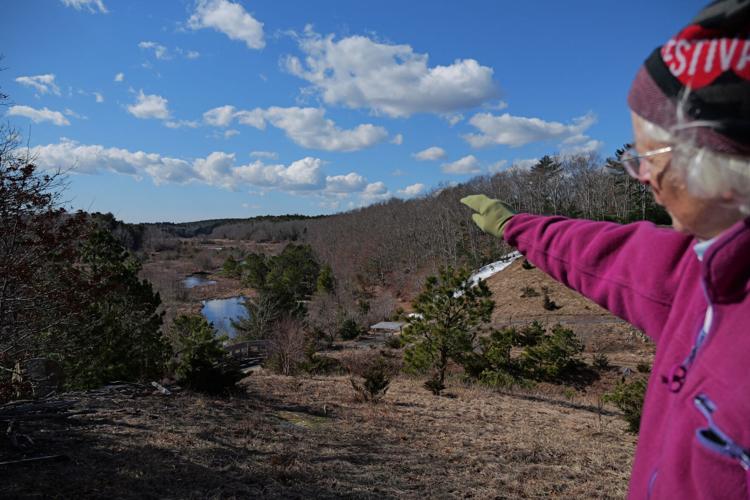
Glorianna Davenport, founder of the Living Observatory, overlooks a stream cutting through Tidmarsh Wildlife Sanctuary on March 14 in Plymouth, Mass. The largest restored wetlands in Massachusetts now cover hundreds of acres of what used to be cranberry farms.
Julia Vaz, MIT Graduate Program in Science Writing
This story is a collaboration between the MIT Graduate Program in Science Writing and The Associated Press.
The Associated Press' climate and environmental coverage receives financial support from multiple private foundations. AP is solely responsible for all content. Find AP's standards for working with philanthropies, a list of supporters and funded coverage areas at AP.org.
Glorianna Davenport, founder of the Living Observatory, overlooks a stream cutting through Tidmarsh Wildlife Sanctuary on March 14 in Plymouth, Mass. The largest restored wetlands in Massachusetts now cover hundreds of acres of what used to be cranberry farms.
Julia Vaz, MIT Graduate Program in Science Writing