

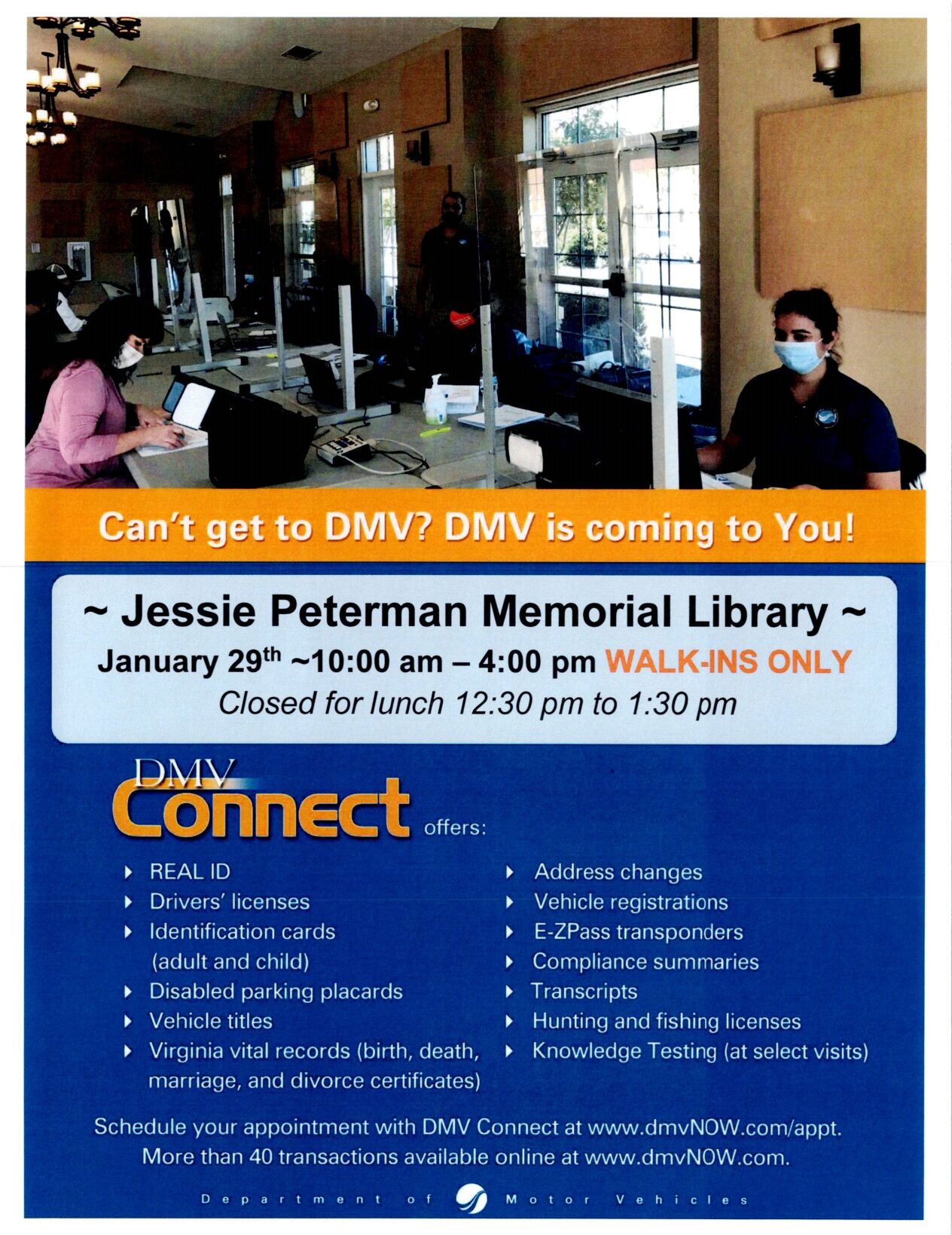
The DMV is returning to the library coming up.
The DMV is returning to the library coming up.
The DMV is returning to the library coming up.
The DMV is returning to the library coming up.
SHAWSVILLE — Montgomery County residents crowded into the Meadowbrook Community Center on Tuesday to learn more about — and in some cases voice opposition to — a proposed expansion of the Mountain Valley Pipeline’s capacity.
The project, called MVP Boost, would add a new compressor station in the Lafayette area of eastern Montgomery County on land already owned by the company. It would also increase the horsepower at three existing compressor stations in West Virginia along the 303-mile natural gas pipeline that became operational in June 2024.
If completed, the upgrades would expand the pipeline’s capacity from up to 2 billion cubic feet of natural gas per day to as much as 2.6 billion cubic feet per day.
“We put MVP mainline into service in June of 2024, within six months, the project was operating at its full capacity,” said Shawn Day, a spokesperson for the project. “We received expressions of interest for additional capacity on the MVP main line, and the MVP Boost is our response to that request — it just leverages the existing infrastructure by adding compression.”
The proposed compressor station in Montgomery County would be similar in appearance to others along the pipeline’s route, including the Bradshaw Compressor Station, which is slated for upgrades under MVP Boost. That station currently uses four gas turbines generating roughly 89,600 horsepower to push gas through the 303-mile pipeline.
About 70 people attended the meeting Tuesday, filing through the community center to view informational exhibits and ask questions of MVP representatives. Among them was Montgomery County Board of Supervisors member Steve Fijalkowski, who represents the district where the new compressor station would be built.
“The first thing is that we have no control over it — that's number one,” Fijalkowski said, citing the fact that the Board of Supervisors has no regulatory authority over the project.
“I don't really have an opinion on it. I'm not for it or against it,” he added. “At some point we're gonna develop some kind of energy that doesn't require fossil fuels. But until then, natural gas is our best bet because it's the least polluting of all the fossil fuels.”
Fijalkowski also said he expects a data center may want to locate in Montgomery County in the future and power companies would have to "find the electricity to supply it."
Eric Sichau, president of the Roanoke Regional Chamber of Commerce echoed similar thoughts, saying a data center or manufacturing company may be attracted by the pipelines availability.
“I think the key with the main line, and with the Boost project, there's economic development opportunities as companies are looking to grow or start,” Sichau said. “What boxes need to be checked for them to say, yes we're going to come to Roanoke, or Montgomery — natural gas is one of those boxes.”
Economic development prospects were not the focus for many attendees, a large contingent of whom raised concerns about safety, environmental impact, maintenance and noise associated with the project.
Joshua Vana, director of ARTivism Virginia, a nonprofit that works with artists and activists opposing fossil fuel development, said the pipeline “should never have been built in the first place.”
“It's completely incompatible with the landscape,” Vana said. “Trying to boost the capacity, and ship more gas through this thing, the question that comes to my mind is, what could possibly go wrong?”
Vana said Mountain Valley “cannot be trusted” and called the pipeline’s completion a failure of regulatory oversight.
“The only thing that this project promises, in my mind, is an incredible amount of air pollution,” he said, referring to emissions from the engines that power compressor stations. He added that the stations would also generate significant noise.
Vana said safety was another concern, citing a section of the pipeline that ruptured in the Bent Mountain area during hydrostatic testing in May 2024. He alleged that insufficient oversight, combined with additional pressure from the proposed station, would increase the risk of an accident.
“If there is any discussion whatsoever about adding capacity or adding pressure in addition to what they're already operating at, that's extremely dangerous,” he said. “If anyone has been tracking the issues around a possible blast zone with this project — we're talking about like a quarter mile radius of total incineration.”
Crystal Mello, who also opposes the project, said she believes it is designed to attract data centers to Montgomery County.
“It would be nothing for a data center to come in here and throw money to property owners, and they would sell out, and that end of Elliston would no longer be agricultural,” she said.
“I've knocked on many doors a lot of times, it's the first time they're hearing about this project,” Mello added. “We're worried about adding to the project, they still have problems on their main line.”
Ethan Hunt (540) 381-1678
Floyd County residents privacy concerns over automated license plate readers dominated part of the latest Board of Supervisors meeting, prompting renewed scrutiny of surveillance technology even as the county advanced new land-use rules.
A Locust Grove resident warned the board about the growing reach of Flock Safety’s automated license plate readers, noting that four cameras now monitor every entrance and exit to the county. The resident highlighted national concerns about Flock’s integration of facial recognition, drones and audio tracking, some of which have triggered legal challenges in other areas.
Flock Safety has been at the center of privacy concerns, along with other surveillance systems. News reports from around the country, including some from Virginia, criticize Flock Safety for sharing information with federal agencies. In Virginia, an American Civil Liberties Union report says that plate reader data were shared with ICE enforcement, and in Texas reports claim readers were used to locate people who had accessed an abortion. A Norfolk Circuit Court ruled in 2024 that data collected from Flock’s plate readers constitutes a search under the Fourth Amendment and couldn’t be used in evidence in a criminal case without a warrant, according to news reports. An Appeals court overturned that decision earlier this year.
Board Chair Joe Turman said that while he understands privacy concerns, but believes the readers are useful especially for AMBER or other alerts for endangered citizens.
Locust Grove Supervisor Levi Cox said he used to have a reader in his police car and recovered multiple stolen vehicles with it.
The ACLU said that using license plate readers to locate stolen cars, for AMBER Alerts and for toll collection isn’t objectionable, according to a 2022 release from the organization.
Sheriff Brian Craig said there is a long trail of data for what’s being watched.
“You can’t watch it to watch who is coming through town,” Craig said. “It’s a big misconception with it.”
The sheriff said the company only keeps the data between 20 and 22 days, after which it’s purged.
“An easy solution is if you don’t want it to capture your license place, don’t drive,” Cox said.
Turman re-iterated that like everything else, the plate readers have advantages and disadvantages.
In other news, following extended debate, supervisors voted to approve a revised land division ordinance. The updated rules aim to streamline how property can be divided while addressing longstanding rural zoning conflicts.

Boq
Boq
The Virginia Department of Education last week launched its much-awaited new K-12 school accountability system. It is the first look at the product of one of Gov. Glenn Youngkin’s main goals in education: create a system that accurately depicts how each school is doing.
Instead of the old system, which deemed the overwhelming majority of schools “accredited,” the new system publicly ranks each Virginia school in one of four performance categories. Statewide, about 23% of schools are “distinguished.” The plurality — 42% — are “on track,” while 22% are “off track” and 12% are labeled “needs intensive support.”
In Floyd County, schools ranged from Off Track to Distinguished. All schools in Floyd County are fully accredited.
Unlike the old system, the new school accountability system is based largely on measures such as the annual Standards of Learning tests and other academic measures. Many schools that were fully accredited under the old system are now rated "needs intensive support."
State Superintendent of Public Instruction Emily Anne Gullickson said the new school accountability system fulfills Youngkin’s goal of a system that accurately represents how Virginia schools are doing.
“One of the goals on this system was to really focus on every student, and this system really sees and values every single student,” Gullickson said in an interview Tuesday.
One major new aspect of the system is that is does not allow any set of students to be left behind. If a certain subgroup of students are performing poorly, a school automatically gets bumped down a ranking. So, under the new system, it is in schools' best interest to not let any groups fall behind.
"This is a system that really focuses on those that are furthest from opportunity," Gullickson said.
"There was this pendulum where we as a nation ... lowered expectations. And to me, this is not a partisan issue. We in Virginia have proudly said every child matters."
Gullickson also noted that Tuesday’s launch isn’t the end — it’s the beginning of a new era.
“We’re not done,” Gullcikson said. “This is a snapshot in time, and what's exciting is we now have more information to act upon and move the needle for even more students.”
Two county elementary schools are Off Track – Check Elementary, with a score of 81.6, and Floyd Elementary, with a score of 79.3.
Two other elementary schools are listed as On Track – Indian Valley Elementary, with a score of 85.5, and Willis Elementary, with a score of 87.
Floyd County High was listed as Distinguished, with a score of 96.7.
Supervisors on Nov. 18, adopted an ordinance to repeal the existing subdivision ordinance and enact the new land division ordinance, which will take effect Jan. 1, 2026.
Any plat receiving preliminary approval under the existing subdivision ordinance between July 1, 2025, and Dec. 31, 2025, will remain valid for six months from the date of the preliminary approval. If the plat is not submitted for final approval within six months, it must be reviewed and approved under the new land division ordinance regulations.
Plats preliminarily approved prior to July 1 that are not submitted for final approval within the six-month timeframe may be required to undergo resubmission for review and preliminary approval if submitted before Dec. 31. Any plat not submitted for final approval by Dec. 31 must be reviewed and approved under the land division ordinance.
You can find the existing ordinance and the new land division ordinance at www.floydcova.gov/code-of-ordinances.