
Legislate carefully amid data center 'frenzy,' Virginia experts say (copy) (copy) (copy)
Amid the data center "frenzy," state lawmakers must think carefully about the ramifications of legislation, authorities on different sides of the issue said Thursday.
Six panelists with different perspectives - from the environment and renewables to the data center industry, manufacturing and Dominion Energy - took part in a discussion Thursday at the Virginia Press Association's Day in the Capital, held this year at Maymont.
Richmond Times-Dispatch reporter Dave Ress, who moderated the panel, asked about potential legislation that would let utilities delay connecting customers that need more than 90 megawatts — enough to power 22,500 homes — if necessary to avoid overloading the grid.
That raises questions about the authority to delay hookups for customers using less than 90 megawatts, said Cliona Robb, an energy lawyer at ThompsonMcMullan.
"I worry about unintended consequences," she said. "I think naturally we're seeing that delay happen," she added, citing the lag time to hook up data centers to the grid, which different panelists said can take up to five or even seven years.
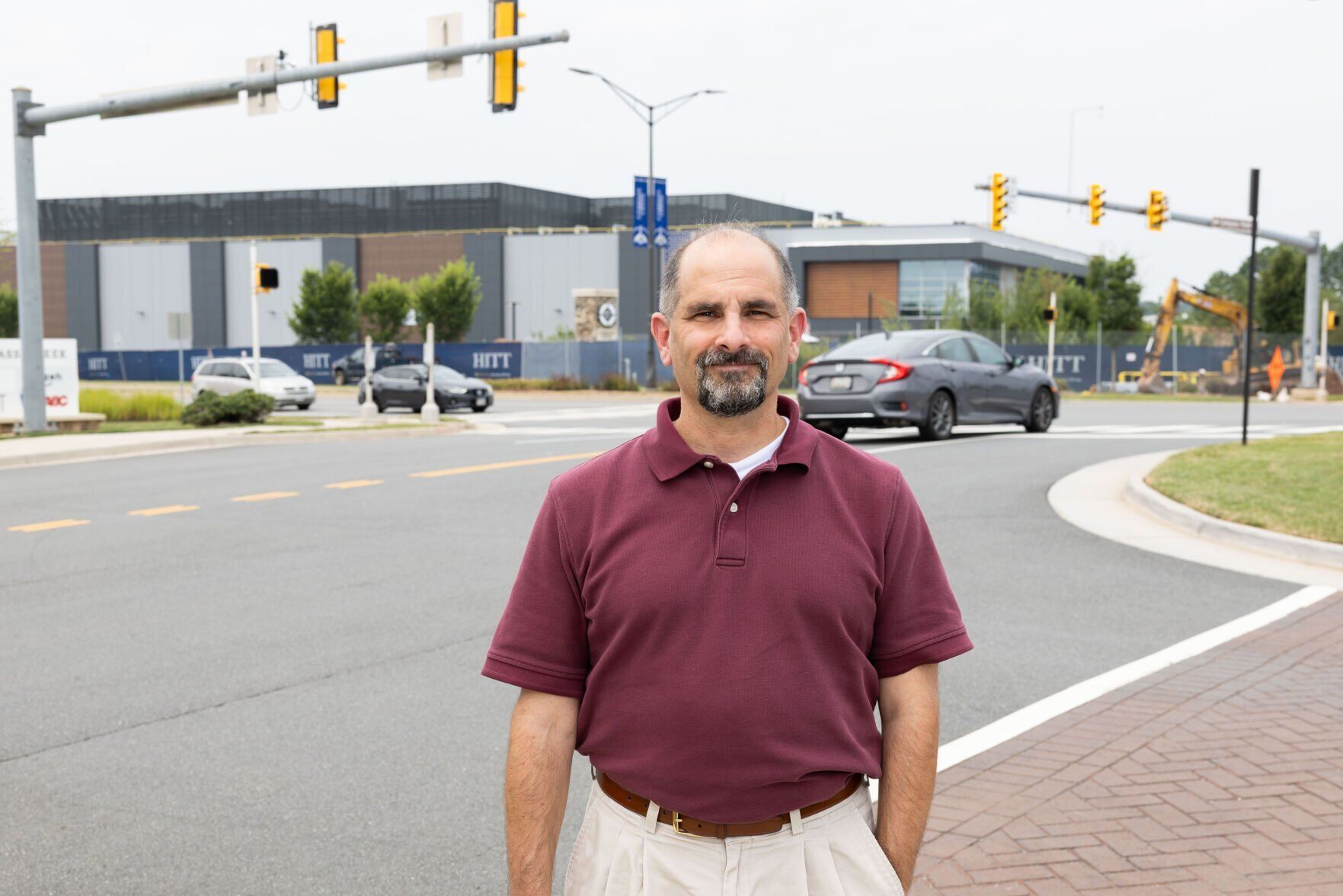
Josh Levi of the Data Center Coalition said the average household now has 21 connected devices.
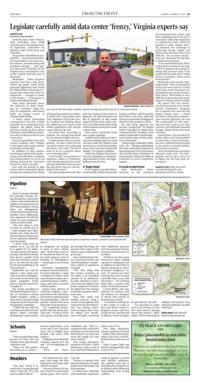
Josh Levi, president of the Data Center Coalition, said "Virginia is the largest data center market nationally and globally."
In addition to data centers, onshoring of advanced manufacturing, electrification of vehicles and advancements in AI are all driving demand for electricity across the country, he said.
Levi said the growth in data centers reflects tremendous global demand. He said about two-thirds of the global population is online, of which 45% came online since 2018. Members of the Data Center Coalition are thinking about the additional one-third of the world's population that will get connected next, he said.
He noted that, according to Deloitte, the average household has 21 connected digital devices.
As data centers drive economic growth, "we don't want to be in a position where we're rationing electrons," Levi said. "We don't want to be in a position where we're rationing data."
Scott Gaskill, vice president of regulatory affairs at Dominion, said "the demand growth is real" and that while data centers are not the only driver, they are "the elephant in the room."
He said Dominion hit an all-time peak last summer of just under 25 gigawatts. He said Dominion now has 47 gigawatts of data center requests in the queue under contract and a little under half of that is either already connected or under construction.
Data centers' electricity needs pose a major challenge
Gaskill said Dominion is meeting and exceeding targets for wind and solar under the Virginia Clean Economy Act, but that renewables alone can't meet the load growth reliably. "It's a physics problem."
Under the Virginia Clean Economy Act, Dominion is to stop burning fossil fuels by 2045, and Appalachian Power by 2050.
A 'huge issue'
Evan Vaughan, executive director of the Mid-Atlantic Renewable Energy Coalition, said the quicker that utility-scale solar, wind and batteries can be built and deployed, the better off consumers will be.
He said siting approval has become "a huge issue" in Virginia in that "basically two-thirds of the commonwealth's localities have made it impossible to build large-scale wind or solar or battery projects at this point."
Citing energy challenges, Robb, with the ThompsonMcMullan law firm, noted that Dominion is importing about 30% of its power. She said she believes Dominion "is unreasonably stifling the ability of customers to access competitive supply."
Crucial projections
Nate Benforado, senior attorney at the Southern Environmental Law Center, said that regulating electricity and a monopoly utility like Dominion is complicated work. With the growth of data centers driving demand, the challenge of projecting energy supply and demand has become even more difficult. Yet accurate projections are vital given the lag time to build infrastructure.
"If we overbuild the grid, that's really bad for customers," he said. "They're going to be paying for things that we don't need. If we underbuild the grid, that's really bad for customers. There could be blackouts."
Benforado said another challenge in this "data center kind of frenzy that we're now in" is that some data center developers are pitching the same project in multiple states. That makes it very difficult to determine how much capacity Virginia needs to build.
He noted that the Southern Environmental Law Center backed Dominion's proposal for a separate rate class for the largest energy users - which the State Corporation Commission recently approved. He said the components of that separate rate class, such as a 14-year contract and minimum demand charges, likely will provide more certainty.
Rachel Jones, vice president of public affairs and sustainability at AdvanSix, a chemical manufacturer, said Benforado touched on key points of predictability, protections and price.
As for the big picture on energy demand, Jones said: "It's happening, and it's up to all of us to figure out the best path for everyone."