
Seasons at Demeter: Olive Trees, Knives and Kinship (copy) (copy)
There’s one place on the planet where you can call someone a Cretan and it’s a compliment. Yes, I realize that, even though they’re pronounced the same, Cretan – a person from Crete – and cretin – a mentally dull person (from a French word meaning hypothyroid) – have totally different meanings. Still, it’s a shock the first few times you hear someone call themselves a Cretan and smile.
Crete is the third stop on our Mediterranean cruise. Millie and Tim invited us along and we couldn’t say no. Our first stops in Naples and Sicily were pleasant but graffiti, disrepair and a sense of something past its prime were everywhere. I’m not sure I will go back to Italy.
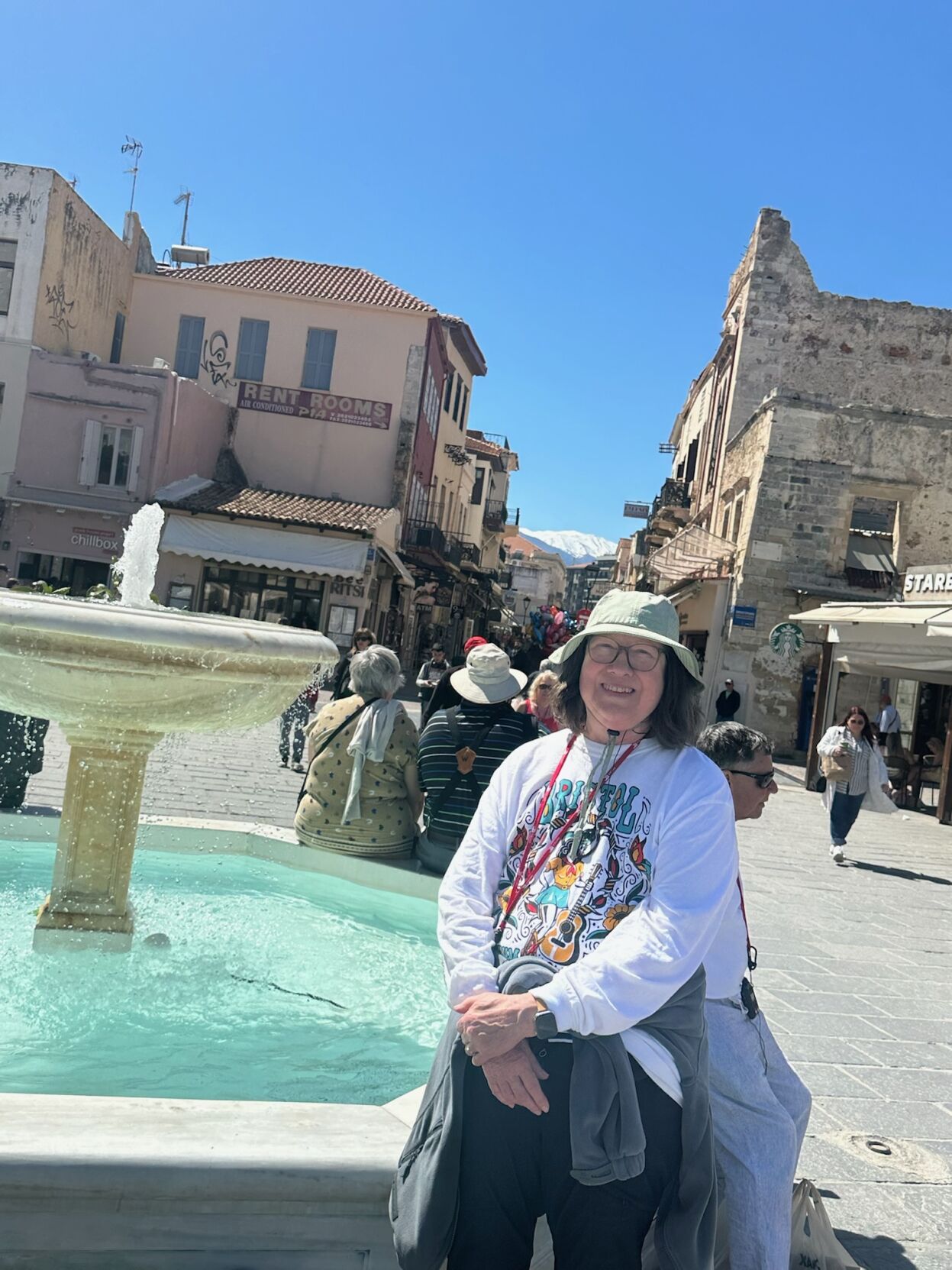
Crete is different. Chania, Crete’s largest city, has been inhabited for over 5000 years. The “Old City” and harbor sit across a bustling boulevard from the modern portion of the city. Though ancient, the old city is clean and vibrant. The shop owners are friendly and helpful. The harbor with its sparkling blue water, boutique hotels and open-air restaurants is marvelous. A snowcapped mountain rises beyond the city and the weather is perfect. Much of Crete’s fresh water comes from mountain snowpack.
Our tour guide has lived her whole life on the island and her family has owned land for generations. “We don’t sell land, its our life.” She’s a walking encyclopedia and tells us more about the island than I can recount in a dozen columns, so I’ll hit the high notes. Given there are ruins everywhere, many current structures are built on stilts over existing ruins or directly on top on the old structures – the government archaeologists decide which. In its long history, Crete has been occupied by multiple empires (Roman, Greek, Byzantine, Ottoman, Phoenician, etc.). Both Britian and Germany occupied it for a time during WW-II (there was a Battle of Crete). Its currently a part of Greece – which Cretans prefer.
Crete has 600,000 residents and 32 million olive trees. An olive tree takes seven years to bear and can live for centuries. “We’d never cut down an olive tree.” The preferred olive is the koronecki, which is small but makes great oil. Olives can’t be eaten directly from the tree. They must be soaked in water for two weeks to remove the bitter taste. Our guide owns a grove of trees. Olives are harvested in the fall. They go to a co-op where they’re pressed into oil. She keeps the best oil (extra virgin relates to the pH of the oil, not the first harvest) and sells the rest. She uses thirty liters of olive oil each year, substituting oil for butter in most cooking. “If you want to buy oil, pay no attention to fancy labels, just get the best price. It all comes from the same place.”
Near the end of the tour, we get some free time to browse the shops. There are several knife shops around. The knives have unique designs and appear well made. I’m sorely tempted but we must pass a metal detector to get back on the ship and I’m not sure how Viking will handle that. I ask our guide if knife making is a common craft in Crete.
“Oh yes! Everyone in Crete carries a knife. We need them to process animals and for self-defense. They’re a symbol of our freedom. Cretan knives have a “V” carved in the end of the handle. That keeps the thumb from slipping off the handle during use. A gift of a knife is a symbol of love and friendship.” The tour ends too soon and we board a bus back to the ship. As we sail out of Souda Bay we’re treated to more blue water, sunshine and snow-capped mountains. The view is beautiful.
I enjoy travel (in moderation) but I love where I live and haven’t visited anyplace I’d prefer over our Appalachians. Yet on a smallish island 5000 miles away from home, I find mountains and meet folks who have a deep connection to the land, love their trees, appreciate a well-crafted blade and are protective of their freedom to carry one. Whether warranted or not, I feel a sense of kinship. This seems like a pretty good place and if given the chance, I wouldn’t mind coming back and lingering a bit longer.
And if that ever comes to pass, I intend to buy a knife.