

Budget impasse really about power, direction of Democratic Party, political scientists say (copy) (copy)
Compromise — the thing that’s eluding Virginia with the budget impasse — often takes face-saving for each side, but so far it looks elusive.
The impasse, on its face, is over a longstanding, $1.9 billion a year tax exemption for data centers that Senate Finance Committee chair Louise Lucas, D-Portsmouth, wants to do away with, a move that budget writers in the House of Delegates have rejected and that her fellow Democrat Gov. Abigail Spanberger says will undermine the state’s business climate.
But it’s really about power and the direction of the Democratic Party, political scientists say.
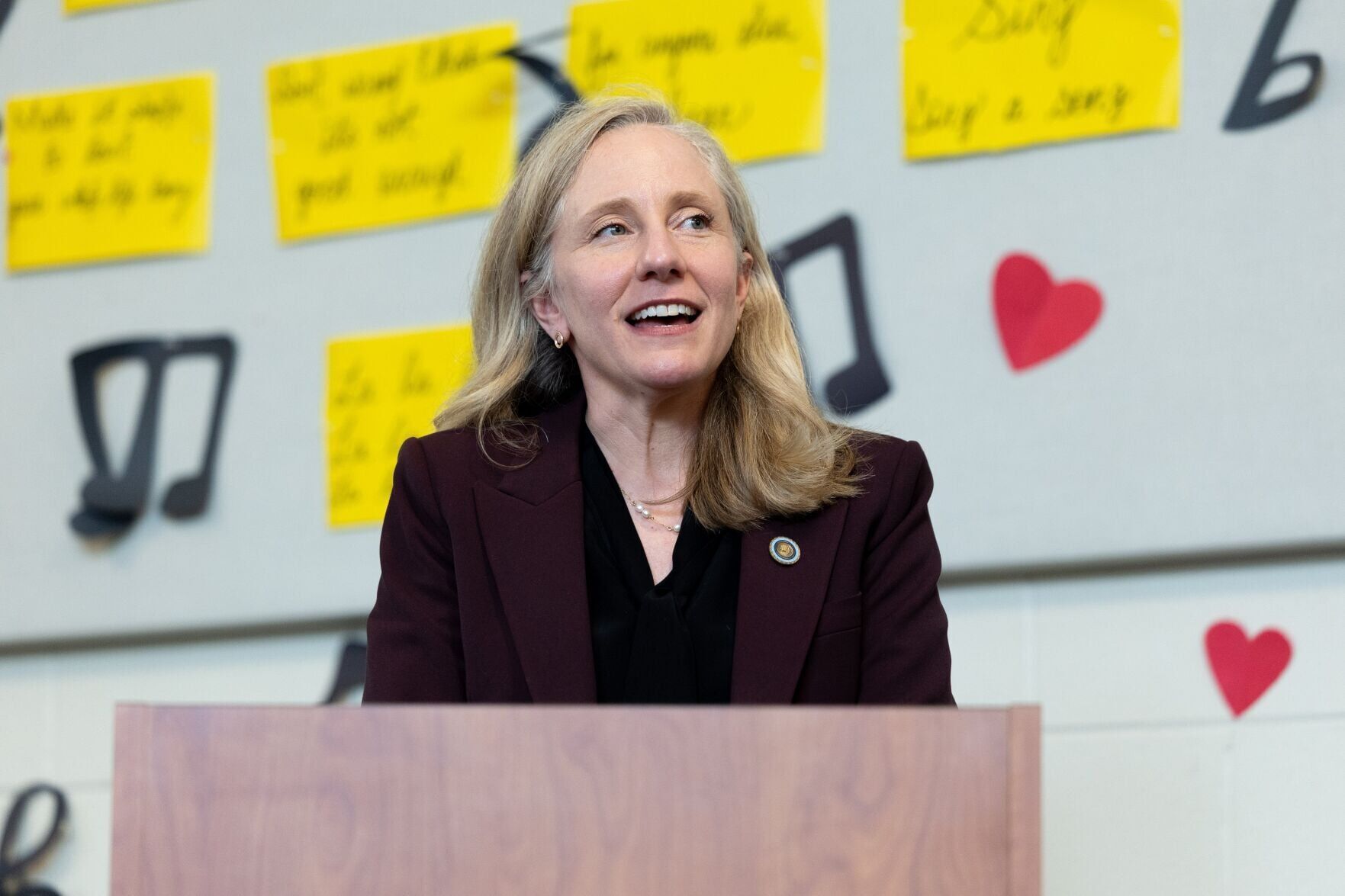
Gov. Abigail Spanberger says ending the tax exemption for data centers will undermine the state’s business climate.
Virginia revenue forecast brightens, Spanberger says
Boosting the temperature is Spanberger’s vetoes of bills, including some top priorities of Senate Majority Leader Scott Surovell, D-Fairfax, such as authorization for a casino at Tysons Corner and expanding unions’ ability to negotiate wages and work conditions for government employees. Spanberger also vetoed measures to open and tax a legal retail market for marijuana and a heavily-lobbied bill to legalize and tax slot-machine-like skill games.
So when Spanberger said last week there was a way to close the $1 billion gap between the spending Lucas and Surovell and the rest of the Senate Democrats want and what the Democratic majority in the House of Delegates proposed, a potentially face-saving way to break through the impasse, the two powerful senators shrugged it off.
Lucas was blunt, texting “&$!#%”.
After walking out early on a meeting with Spanberger and House Appropriations Committee chair Luke Torian, D-Prince William on Friday, Lucas followed up with a post on X:
"Just when I thought Chairman Torian and I were getting close to agreeing on a budget, we had a meeting with Data Center Diva this morning and she agrees with Amazon Don who doesn’t want to impact the richest corporations in the country," Lucas tweeted, apparently referring to Spanberger and Speaker Don Scott, D-Portsmouth.
In a more formal statement late Friday, Lucas said "the Governor and the House decided they did not want to alter the freeloading policy for data centers," adding that she's tried to find a compromise.
“I guess publishing an optimistic revenue reforecast is one way to deal with money vetoed out of our budget,” said Surovell, who noted that Spanberger hadn’t given legislators a heads-up about a revised estimate of state tax revenue that could close the gap without ending the data center exemption.
He earlier complained that Spanberger has not been consulting with the General Assembly before proposing amendments and vetoing measures — some of which came when the General Assembly rejected her proposals without even bothering to vote.
“Taxing data centers? Tysons casino? Protecting business climate? These are policy issues, but are they also felt as personal slights?” said John McGlennon, a political scientist at the College of William and Mary.
There may be a Democratic trifecta: a governor who’s a Democrat and Democratic majorities in the House and Senate, but “state legislative politics is not just about party control. Institutional position and leadership preferences and priorities matter,” McGlennon said.
“Institutionally, it is not just legislature versus executive but often also chamber versus chamber. Right now, we may be seeing all of this at work,” McGlennon said.
“But if this was just an issue of money, perhaps it wouldn’t be hard to resolve,” he added.
Resolving budget issues is normally relatively straightforward, said Stephen Farnsworth, a University of Mary Washington political scientist.
“You could just split the difference and then resume the fight in year two or year three,” he said. “How is there not a compromise here?”
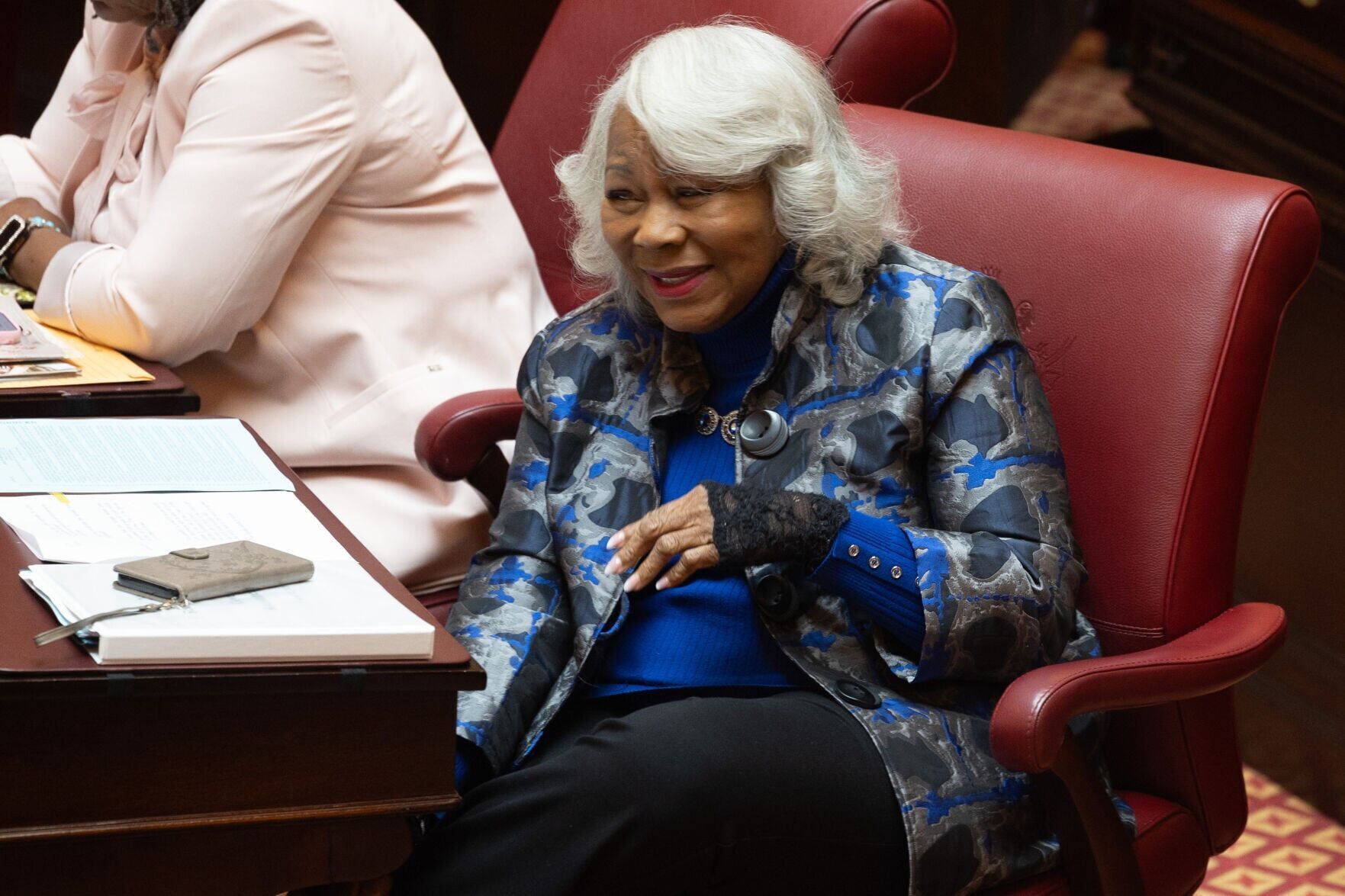
Senate Finance Chair Louise Lucas, D-Portsmouth, champions doing away with a longstanding, $1.9 billion a year tax exemption for data centers in the next two-year state budget.
The answer, he said, is the issue of data centers.
Lucas “is riding a pretty powerful wave of public opinion on this issue,” Farnsworth said, adding that in recent months opposition to data centers has soared, whether when developers seek new ones or as voters see rising electricity bills and blame the electricity-hungry data centers.
“Taking the data center side of this dispute is a challenge facing any Democratic politician right now,” he said.
And what Democrats feel about where the party should be is very much the issue behind the budget impasse, political scientists say.
“It is clear that a lot of Democrats have been skeptical of the centrist definition of the Democratic Party offered by the governor,” Farnsworth said.
“The Democratic left did not offer an alternative to Spanberger in the primary, and it is clear that the struggle to define the party will continue," he said.
It’s not necessarily a bad thing, said Mark Rozell, dean of the Schar School of Policy and Government at George Mason University
“Interbranch conflict is a sign of a well-functioning system. To those who say the within-party conflict between the branches in Richmond is a sign of dysfunction, I ask whether they prefer the federal model of nearly complete legislative deference to a president of the same party?” Rozell said.
“The legislative branch is supposed to challenge the executive and uphold its constitutional role as a countervailing power," Rozell said.
"The Democrats in Virginia are taking seriously that role rather than rubber-stamping a governor of the same party. Let the conflicts play out, and they will land at some compromise where everyone gets something of what they wanted, and they can all claim victory at that point and move on,” he said.
Still, Democratic leaders in the General Assembly seem to have a different view on what a Democratic trifecta means than the governor does, said Olusoji Akomolafe, head of the political science department at Norfolk State University.
And the stakes are all about power.
“The central question, then, is how far each side is willing to go to protect its position. For now, that remains unsettled,” he said.
Akomolafe thinks an open rift is unlikely.
“At this stage, neither side has fully prevailed, and the outcome will likely hinge on negotiation rather than confrontation,” he said.
“If there is ultimately a winner, the outcome will be measured less by the final budget numbers than by which side succeeds in defining the dominant governing model moving forward” – a centrist model anchored on a governor or one where the agenda is shaped by legislative leaders who are around longer than any one-term Virginia governor can be.
It may all come down to timing – both the deadline for coming up with the two-year budget necessary to keep state government running after July 1 and next year’s elections for the House and Senate, said William and Mary’s McGlennon.
One timing question, he said, is “Will the executive have time to negotiate or amend?”
The other is whether other differences between the governor and legislature, including cannabis, collective bargaining and a proposed cap on prescription drug prices, can be resolved in time for the 2027 session.
That matters because there are a lot of first-term House members, “and House leadership will want them to be able to show results rather than explain inability to legislate,” he said.
Democratic senators, meanwhile, see room to expand their 21-19 majority.
“The challenge will be to satisfy institutional imperatives while allowing all to feel like they are the winner,” McGlennon said.
Spanberger: Reviving vetoed bills in a budget would be an 'abuse of the process'
Spanberger: Amendments, vetoes are part of the job as Virginia's governor

Read the stories from the Richmond Times-Dispatch's three-day series on data centers and the key issues they pose.
Dave Ress (804) 649-6948
Related

Richmond Times-Dispatch reporters discuss the county and statewide politics of data centers.