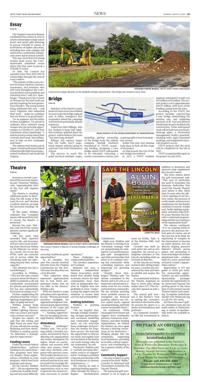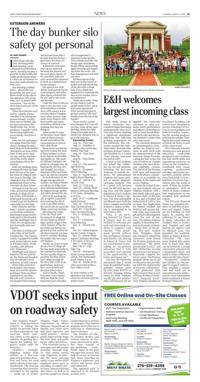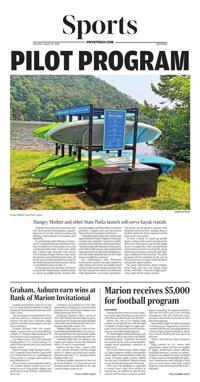

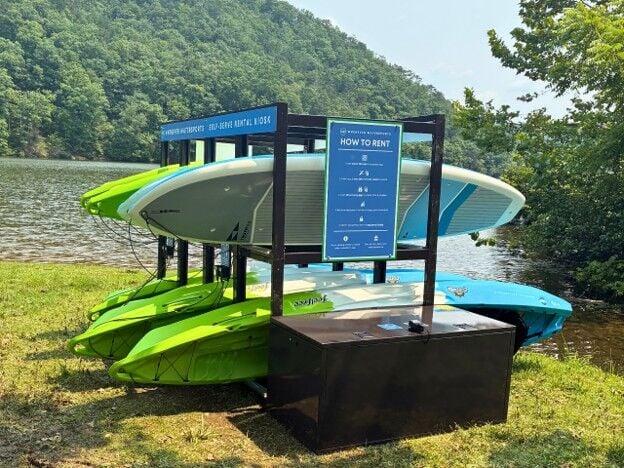
Hungry Mother State Park’s kiosk.
Hungry Mother State Park’s kiosk.
Hungry Mother State Park’s kiosk.
Hungry Mother State Park’s kiosk.
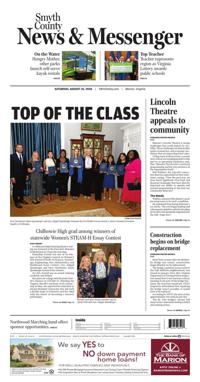
First Gentleman Adam Spanberger and Gov. Abigail Spanberger honored the 10 STEAM-H essay winners, which included Emmaline Dowell, of Chilhowie.
Winners and their family members got to spend time with Gov. Abigail Spanberger.
A Chilhowie High School graduate’s writing was honored at the Executive Mansion in Richmond on Thursday morning.
Emmaline Dowell was one of 10 winners of the Virginia Council on Women’s 15th Annual STEAM-H (Science, Technology, Engineering, Arts, Mathematics, and Healthcare) Essay Contest. Gov. Abigail Spanberger and First Gentleman Adam Spanberger honored the winners.
At CHS, Dowell was an award-winning academic and athlete.
Her plans for college well illustrate Dowell’s interest in STEAM-H. Winning the Virginia Sheriff's Institute (VSI) scholarship in May, she reported her intention to attend Bluefield University this fall with a double major in Forensics and Pre-Med with the intent of becoming a forensic pathologist.
The Virginia Council on Women established the contest in 2012 to award scholarships to high school junior and senior girls planning to pursue STEAM-H careers at institutions of higher education, including four-year colleges and universities, community colleges, and career and technical schools.
This year, more than 300 young women from across the Commonwealth submitted essays about why they want to pursue a STEAM-H career.
To date, the Council has awarded more than $225,000 in scholarships through this annual essay contest.
“The winners of this essay contest are future scientists, teachers, researchers, and inventors who will work throughout the Commonwealth to solve problems and transform lives,” said Gov. Spanberger. “Thank you to the Council on Women for the hard work you put into inspiring the next generation of leaders. The young women being celebrated this year — and every Virginian who submitted their work — make me confident that our future is in good hands.”
“As an engineer and the father of three daughters, I’m proud to celebrate these talented young women who are pursuing opportunities in STEAM-H,” said First Gentleman Adam Spanberger. “I look forward to seeing where their curiosity, hard work, and willingness to take on new challenges lead them.”
The winners were broken out by region. Dowell and Kamori Dillard of Martinsville High School represented Southwest and Southside Virginia.
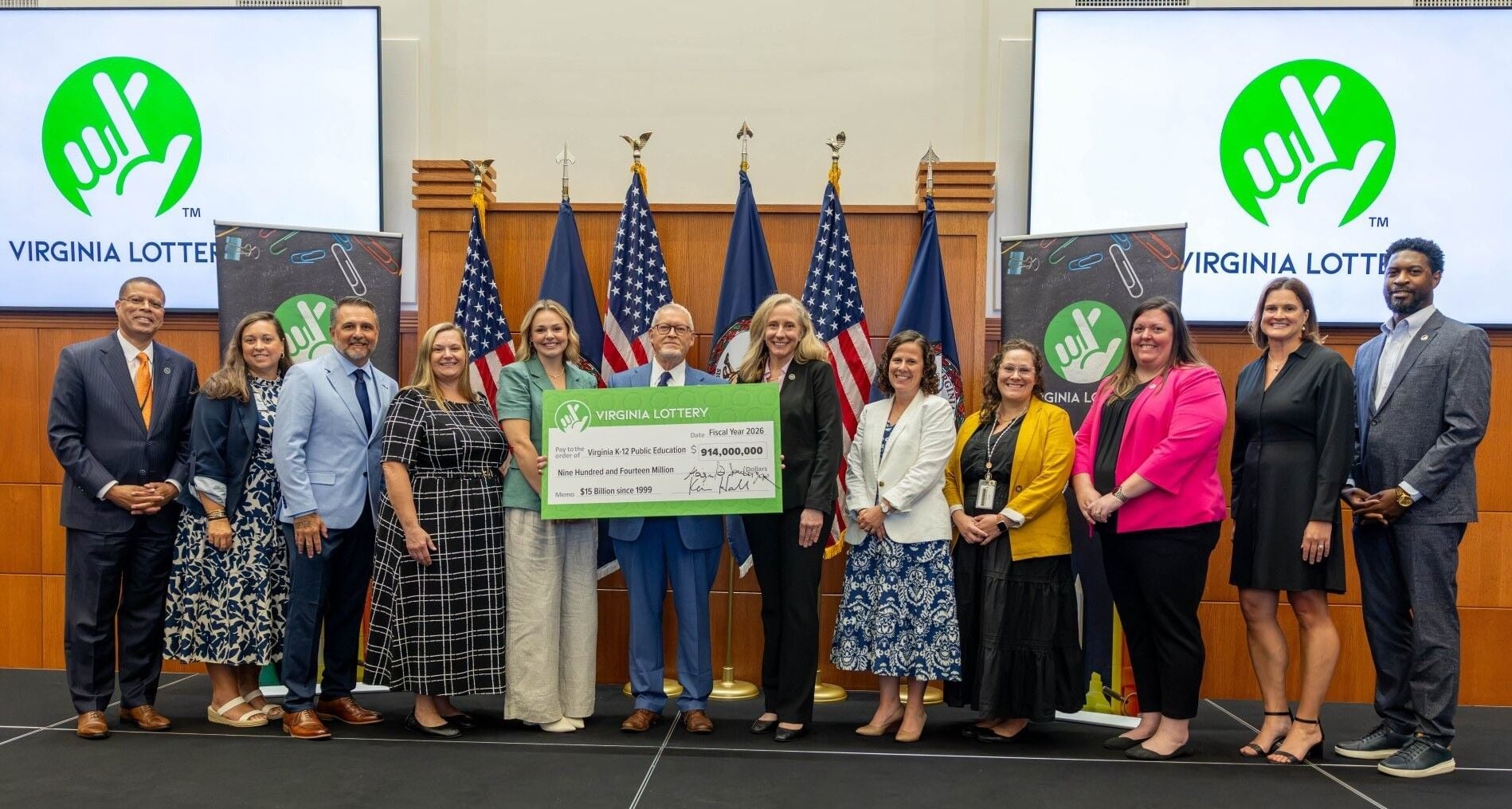
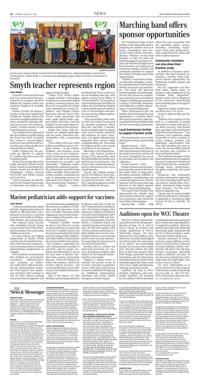
Smyth County teacher Hunter Trivette (third from left) joined Gov. Abigail Spanberger and Secretary of Education Dr. Jeffrey Smith in a ceremony acknowledging Virginia Lottery's financial contribution to education.
Smyth County teacher Hunter Trivette (third from left) joined Gov. Abigail Spanberger and Secretary of Education Dr. Jeffrey Smith in a ceremony acknowledging Virginia Lottery's financial contribution to education.
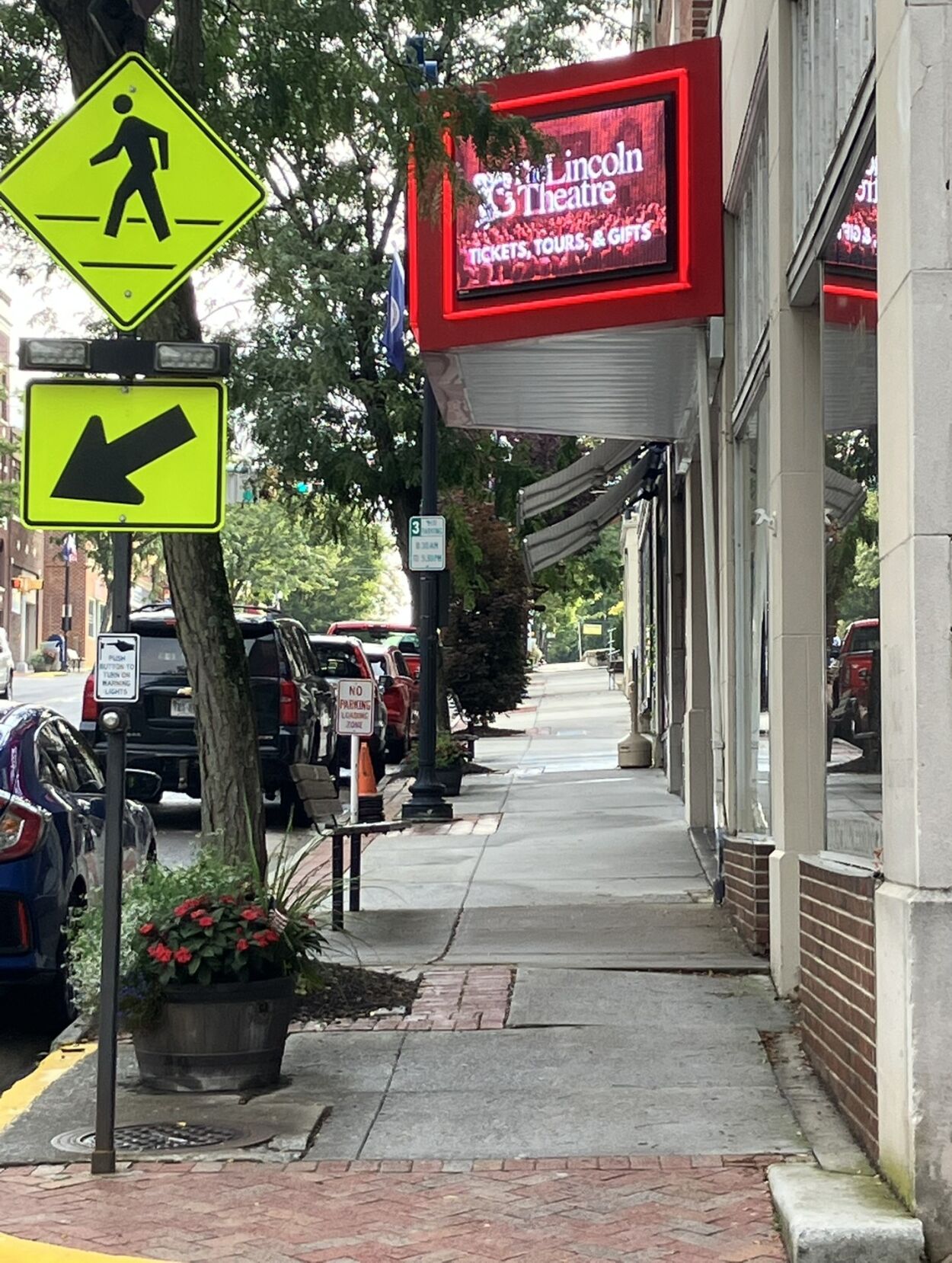
Marion’s Lincoln Theatre is facing challenges that could impact its viability. Those challenges include facility needs, revenue loss, and economic conditions that are impacting ticket sales.
Citing some of those issues, a recent news release encouraging people to take part in an upcoming fundraiser said, they “threaten The Lincoln’s continued programming and the very existence of the organization itself.”
Bob Watkins, the Lincoln’s executive director, expounded on that statement, saying, “Over the past year, we have faced significant structural and financial challenges that have directly impacted our ability to operate and present programming at the level our community deserves.”
The Needs
Watkins said one of the theatre’s most pressing issues is its roof’s condition.
He explained that during February’s ice storm, “the roof began leaking and subsequent rainfall resulted in flooding in the attic that gradually migrated into the side-stage area.”
Insurance covered a portion of the necessary repairs, he said. “However,” Watkins said, “approximately 60% of the roof still requires repair.”
The theatre is awaiting additional quotes to determine the full scope of the need, its cost, and “develop a realistic plan for securing the necessary funding,” he said.
At this point, Watkins estimates that “complete repairs will exceed $150,000 to ensure the theatre is protected.”
Beyond the roof, Watkins said, the HVAC system presents another significant challenge.
“All five units have exceeded their expected service life, and insurance will not cover issues resulting from Hurricane Helene or the February ice storm. As a result, two of our five HVAC units are currently out of service, while the remaining units are operating beyond their normal capacity.”
This situation has had a twofold impact.
According to Watkins, “This has not only created concerns about the theatre’s ability to maintain a safe and comfortable environment for patrons and performers but has also substantially increased our energy costs.”
Further complicating the situation is that the “venue's lighting is beginning to show signs of aging and wear.”
Watkins praised Shaly Farmer, the theatre’s “skilled Lighting Director, who can correct and repair some of these concerns.”
Despite her repairs, he said that the wiring and light board are more than 20 years old and are causing flickering and have shorts. Watkins is seeking quotes “to determine a strategic plan for replacement.”
Funding Losses
Under the current federal administration, national funding to arts and humanities programs have been cut sharply. Those organizations contribute to state programs, which fund local programs and venues.
For the Lincoln, Watkins said, “…We are experiencing a reduction in public funding and increased difficulty accessing traditional grant opportunities.”
As an example, last year The Lincoln received $20,000 from the Virginia Commission for the Arts. This year, the allocation was cut to $10,000.
“This reduction alone represents approximately two to four fewer programmed events that we can offer at the theatre,” Watkins said.
With the theatre’s scope and nature of its operations, he said, “We have also found ourselves ineligible for Appalachian Regional Commission grant opportunities because of the scope and nature of our operations.”
“… Funding opportunities are becoming increasingly limited,” Watkins said.
Attendance
“These challenges,” Watkins said, “are occurring within a broader economic environment that is affecting arts organizations and venues throughout the region. Based on conversations and research with other area venues, ticket sales have declined compared with previous years. The broader decline in economic activity, coupled with reduced tourism in our area, has made it increasingly difficult for community-based organizations such as ours to generate the earned revenue necessary to sustain operations.”
These challenges are compounded inflation.
The Lincoln’s experience isn’t isolated.
Released last year, a National Independent Venue Association study found that despite being economic drivers for their communities more than 66% of independent theatres in Virginia were not profitable in 2024, “underscoring the urgent need for solutions to ensure their survival and sustainability.”
Seeking Solutions
Watkins is pushing forward.
“We are hopeful that, through strategic fundraising, stronger partnerships, and increased marketing and community engagement, we can overcome these challenges and position the theatre for long-term success. We welcome the opportunity to discuss our needs and explore how an investment in the theatre can create lasting value for our community,” he said.
The theatre, Watkins said, is “actively pursuing alternative sources of support” and is “working to establish corporate partnerships with local businesses to sponsor performances….”
The Lincoln, he said, is exploring funding opportunities through the Tobacco Region Revitalization Commission.
Right now, Watkins said the theatre is striving to be “extremely strategic with our programming by seeking low-cost performances, gate-split arrangements, and other partnerships that allow us to continue serving the community while controlling expenses and improving our operating margins.”
“Despite these challenges,” Watkins said, “we remain committed to the theatre and to its role as an important cultural and economic asset for our county and downtown community. We are actively pursuing every available avenue to strengthen our financial position, address our critical capital needs, expand our programming, and build a more sustainable future.”
He continued, “With meaningful investment and support from community partners, businesses, foundations, and other funding organizations, we believe the theatre can once again become a thriving cornerstone of our downtown — bringing people into the community, supporting local businesses, providing accessible cultural experiences, and contributing to the economic vitality of the region.”
Community Support
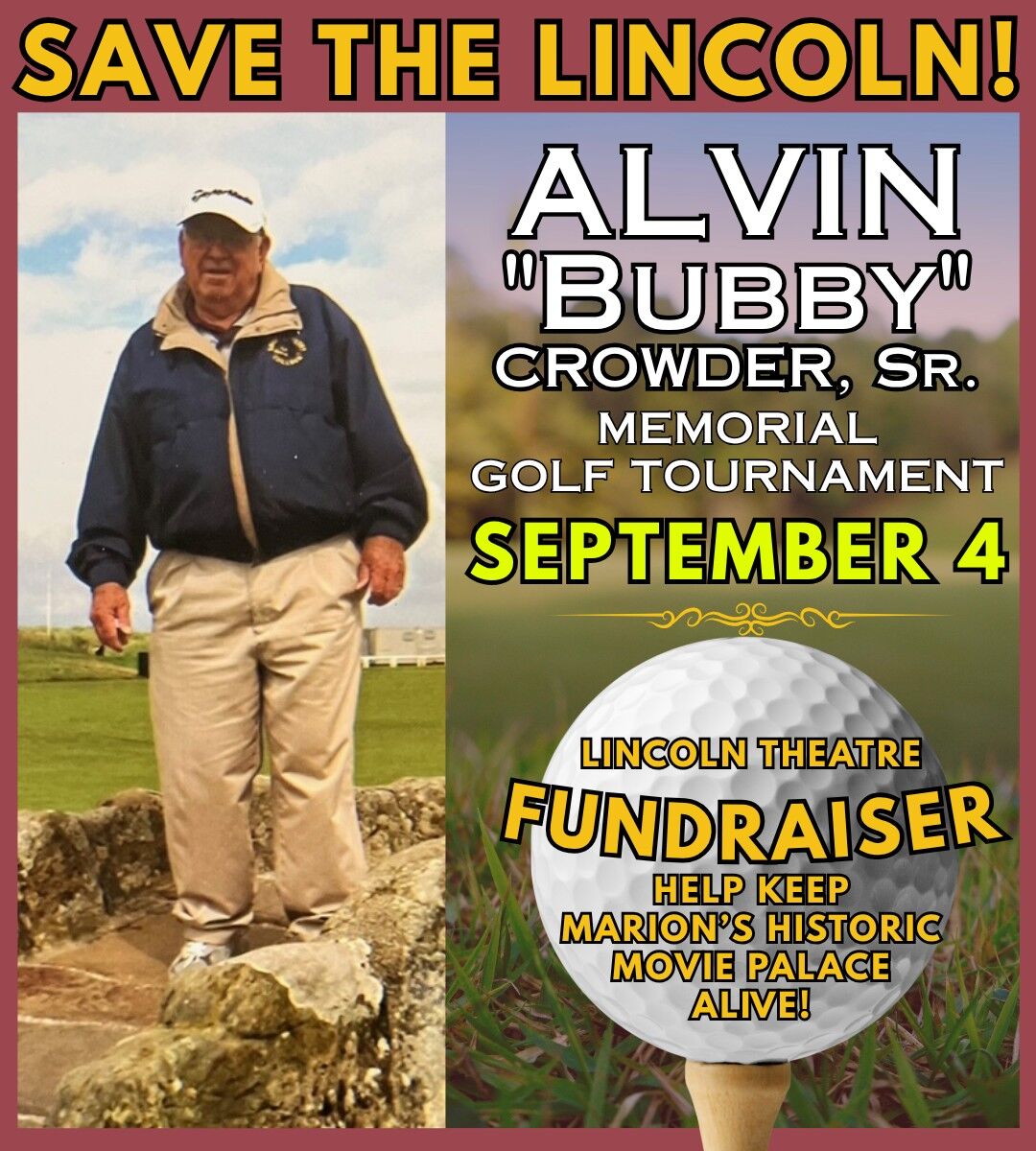
One way to help is to play a round at the Alvin “Bubby” Crowder Sr. Memorial Golf Tournament, hosted by The Lincoln Theatre.
The memorial golf tournament is set to begin at noon on Friday, Sept. 4, at the Holston Hills Golf Course.
Crowder was both an avid sports fan and an arts supporter. He served as a longtime volunteer at The Lincoln, including stints on its board of directors.
As the Lincoln was being restored after sitting empty for years, Crowder also volunteered his time and labor to rebuild and reopen the theatre.
As a community endeavor, the Theatre reopened on May 15, 2004, after sitting empty since 1977. The Lincoln first opened on July 1, 1929.
The annual golf tourney is the theatre’s “way of uniting Mr. Crowder’s devotion to the theatre with his passion for sports as a means of remembrance and gratitude.”
As a nonprofit, fundraisers like the tournament in addition to donations and sponsors help supplement the Lincoln’s needs.
The news release about the golf tournament said, “This year in particular, the need to remember the immense dedication that saved The Lincoln Theatre once before is dire. More than 20 years after the official re-opening of our historic venue, the pressure of costly repairs and necessary maintenance for the theater continues to mount. A leaky roof, faulty lighting equipment, and many other facility issues threaten The Lincoln’s continued programming and the very existence of the organization itself.”
The release continued, “It is an ongoing battle to preserve the precious historic gem of a venue, one of the very last of its kind. By registering to compete in the tournament or become an event sponsor, you are directly helping preserve Marion’s historic movie palace and preventing it from returning to its former abandoned state – a hollow shell of a once-prized hub of Smyth County’s Appalachian culture.”
Registration is $75 per golfer or $300 per team. Tee sponsorship opportunities are also available. Sponsorship packages include the opportunity to be showcased beyond the putting green to the more than 15,000 annual Lincoln Theatre visitors and counting. To register, individuals should visit thelincoln.org or call 276-783-6092.
For those who aren’t golfers, donations may also be made online at thelincoln.org. A variety of membership levels are available to donors.
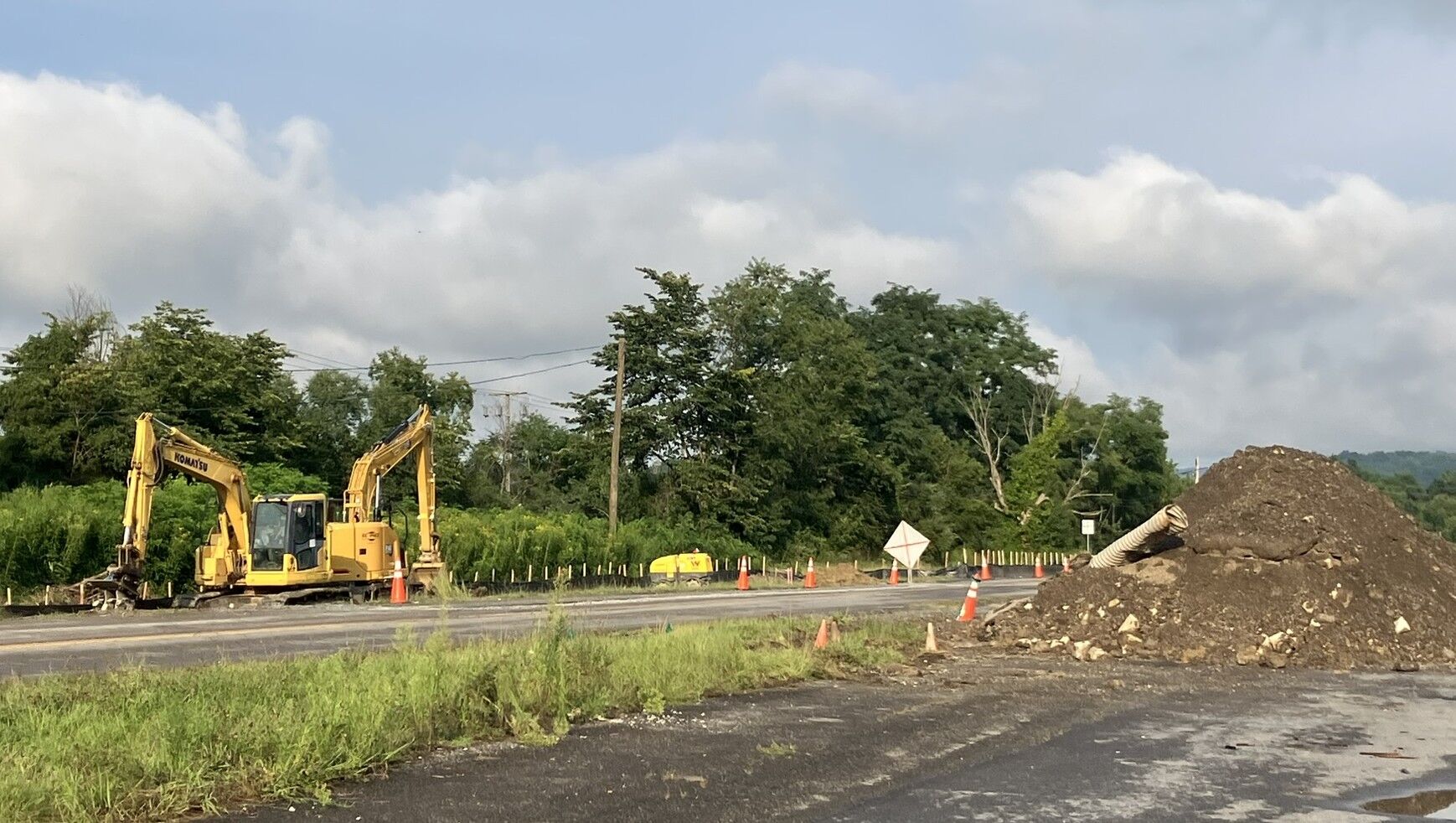
More than 12 years after the McMullin Bridge was closed, construction began Monday on its replacement.
The bridge, a primary access route to the Hall Addition neighborhood, was closed in January 2014 after Virginia Department of Transportation inspectors found that it was fracture critical, meaning if one part of the bridge fractured, the structure would fail. VDOT inspectors determined that repairing the bridge wasn’t possible. It would have to be replaced.
According to VDOT, the area carries approximately 950 vehicles per day.
The Rt. 660 bridge’s closure left many in the community feeling isolated and seeking action. Members of the Smyth County Board of Supervisors have lobbied for years to get the bridge replaced and, at times, emergency first responders joined the campaign worried about potentially delayed responses.
Supervisor Rick Billings, who has worked to keep Hall Addition residents updated about the project, said he believes this news “has been long awaited”.
Billings did express hopes that the traffic won’t negatively impact vehicles going to and from Oak Point Elementary School.
The process to reach this point involved multiple stages, including getting ownership of the bridge from the railway company Norfolk Southern transferred to VDOT, acquiring funding, designing a new bridge, which VDOT said needed to be relocated, relocating a county convenience station, and acquiring right of way from property owners.
Earlier this year, tree clearing took place to kick off this stage of the project.
As time passed, the cost of the new bridge skyrocketed.
In 2017, a VDOT resident engineer estimated it would cost $4.5 million to $5 million. The current project cost is approximately $24.87 million, with most of the funding coming from the state.
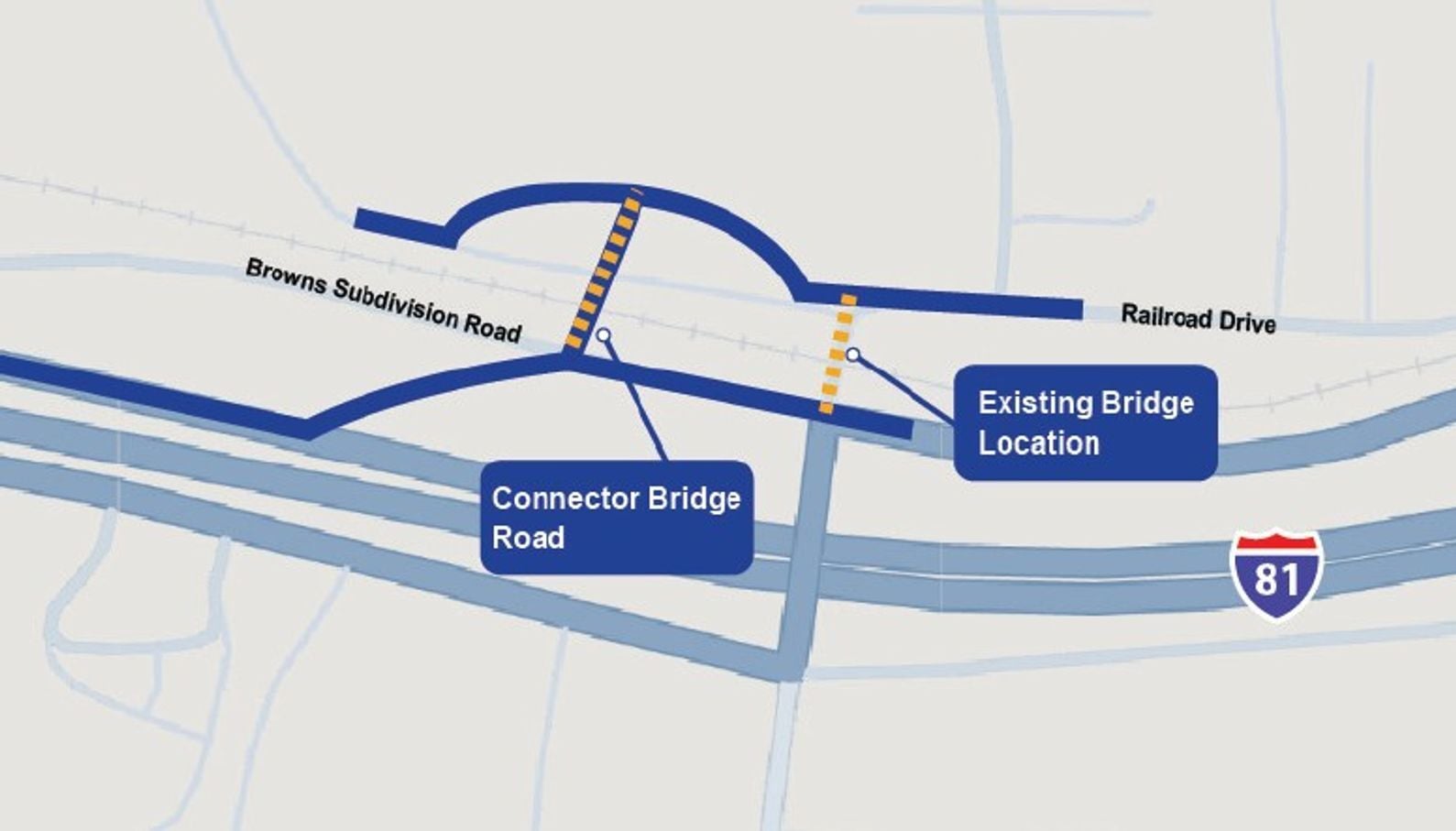
According to the VDOT, the project includes constructing a new bridge, demolishing the existing one, and realigning portions of Rt. 660 and Browns Subdivision Road to facilitate the construction. Other anticipated work will include new pavement, drainage pipes, a stormwater management facility, guardrail, retaining walls, signs, pavement markings, and realignment of private property access.
VDOT projects that the work will be completed in the fall of 2027.
VDOT accepted public input on the project in early 2025.