


Virginia Tech ends identity-based graduation ceremonies after federal DEI guidance (copy)
BLACKSBURG — Virginia Tech ended its decades-long tradition of identity-based graduation achievement ceremonies last month, joining several large universities that have taken a similar step amid President Donald Trump’s push to eliminate diversity, equity and inclusion practices on college campuses.
The decision, posted on the university’s website Jan. 26, said Virginia Tech is following “guidance from the U.S. Department of Education’s Office for Civil Rights, which states that federal civil rights law prohibits using race in decisions related to graduation ceremonies and cautions that such practices may be perceived as segregation.”
The discontinuation — which applies to all identity-based achievement ceremonies, not only those related to race — comes a year after the Board of Visitors affirmed that the university would comply with DEI-related federal directives and guidance.
The decision to end the ceremonies was made administratively following the board action.
“Any action taken by a university that even suggests preference or exclusion to any protected group, even for good intention, could be considered a violation of current civil rights law,” Virginia Tech spokesperson Mark Owzcarski wrote.
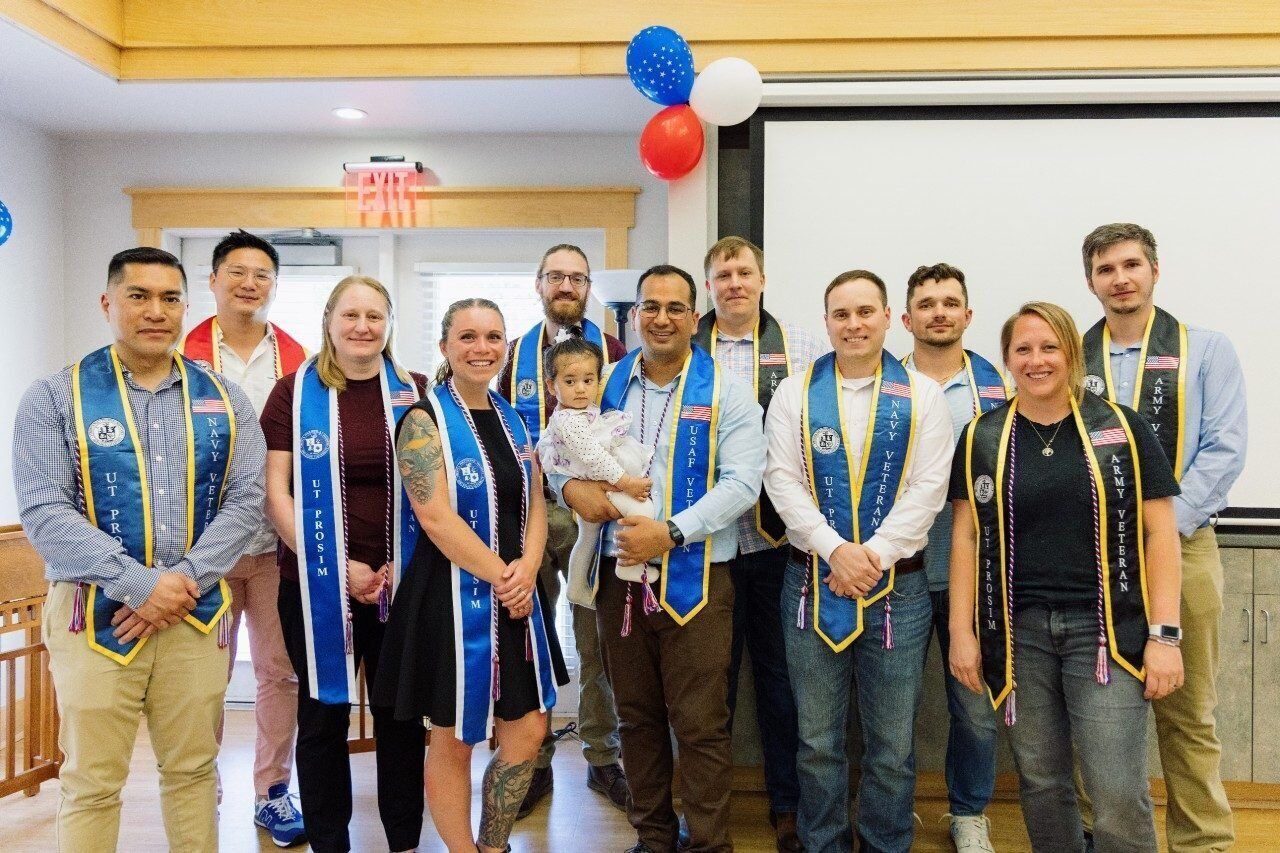
Student veteran graduates wear the stoles representing their military service at the 2023 Veteran Achievement Ceremony.
Identity-based graduation achievement ceremonies did not replace traditional commencement for participating students and were intended to recognize and honor students’ cultural backgrounds and life experiences.
More than a dozen campus groups hosted the events, ranging from veteran and first-generation graduates to Jewish, Hispanic and Black students.
The ceremonies were popular, drawing more than 400 students in 2024 to the Hispanic, indigenous, Asian Pacific Islander Desi American, Black and LGBTQ events alone.
As part of the change, Virginia Tech also now prohibits university-affiliated student organizations from using money collected through student fees to fund these kinds of graduation ceremonies.
While students may still organize off-campus celebrations — something the university does not have the authority to restrict — university-affiliated groups cannot use fee-supported funding for such events.

A student crosses the stage at the LGTBQ achievement ceremony in 2024.
'Unsettling' move, says former ceremony participant
The move follows earlier changes to DEI-related programs at Virginia Tech.
More than a year ago, after Trump issued an executive order targeting DEI efforts across public institutions, the Board of Visitors voted to close several living-learning communities for underrepresented students on the predominantly white campus and shuttered the Office for Inclusive Strategy and Excellence, which organized DEI initiatives.
In November, an audit revealed the university had cut $8.4 million from DEI related programs.
Harvard, Notre Dame, the University of Kentucky and several other large universities have also ended identity-based ceremonies, but the practice has not been universally eliminated across higher education.
Tristan Reeves, now a Virginia Tech graduate student who participated in the university’s LGBTQ graduation achievement ceremony as an undergraduate, described the prohibition on using student-fee funding for the ceremonies as “unsettling.”
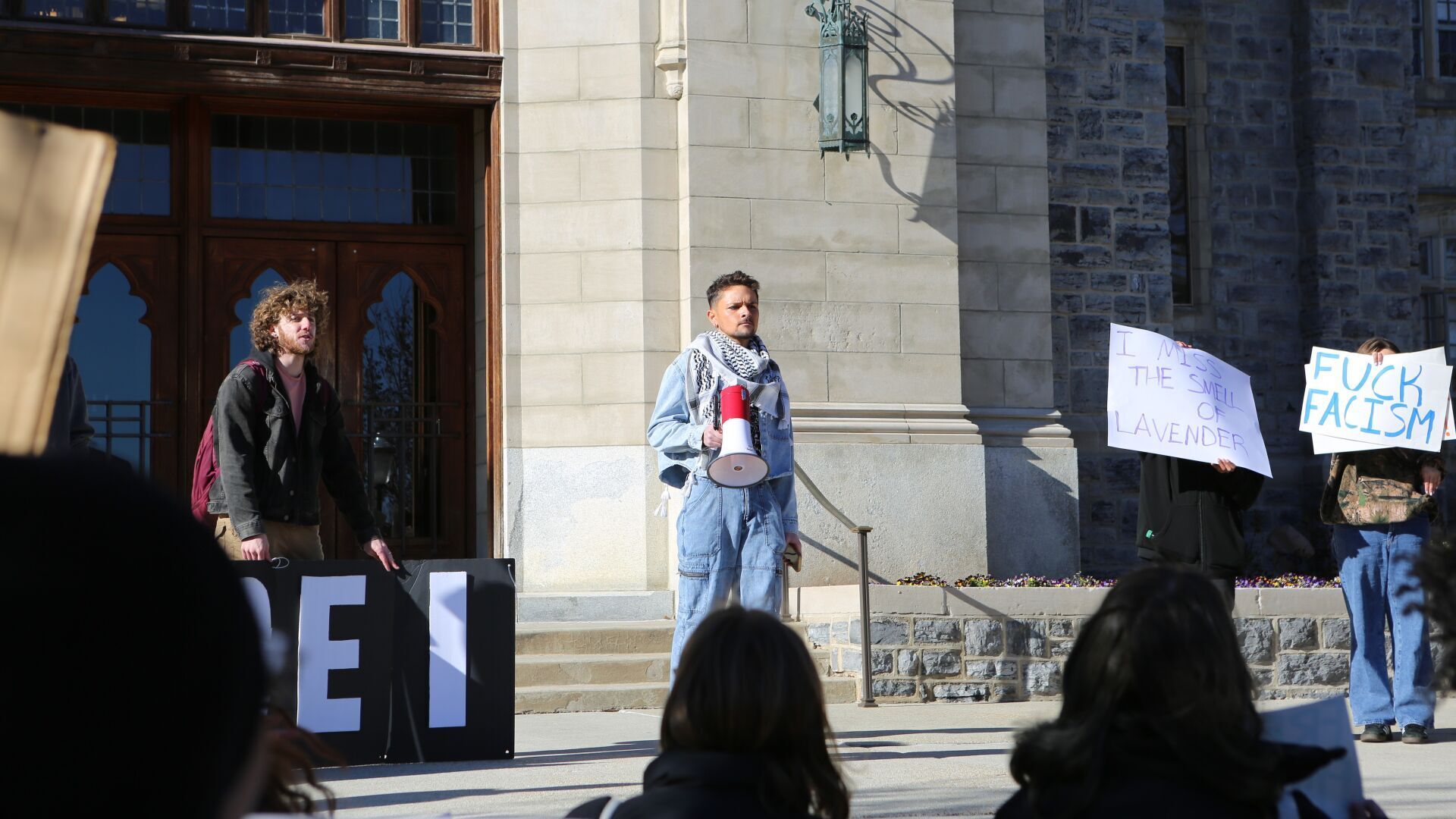
Tristan Reeves stands during a protest against the university's change to DEI policies in November.
“I'm truly just trying to wrap my mind around the lawfulness of how the very activity fees that we are paying into we're now not even able to utilize them in the way that we see fit,” Reeves said, emphasizing that the funds come from students, not the federal government.
The ceremonies were open to all students and reflected the identities of the communities they honored. For example, the Donning of the Kente honored Black students with events that included the placing of a ceremonial Kente cloth stole.
Quoted in a university article highlighting graduation achievement ceremonies in 2024, Tanya Rogers, the Black Cultural Center’s assistant director, described the ceremony as “empowering.”
“I hope that the students walk away feeling loved, celebrated, and embraced by their campus, recognized and appreciated for who they are,” Rogers said at the time.

A student is pictured during a Donning of the Kente ceremony in 2025.
Reeves described his experience at a graduation achievement ceremony as a culmination of his college journey.
“From the LGBTQ perspective, having been called slurs, having received death threats, these achievement ceremonies are a representation and acknowledgement of the students around you who may have had similar experiences and similar barriers, and yet, you all got to the same spot,” he said.
Owzcarski wrote that the university affirms the dignity and value of every person, supports each person’s right to express their thoughts freely and values human diversity, adding, “we reject all forms of prejudice and discrimination.”
“Virginia Tech recognizes the very personal nature of this national conversation,” he wrote. “The university will continue to seek ways to celebrate academic accomplishments of all our students in ways that are consistent with current law and board action.”
Ethan Hunt (540) 381-1678