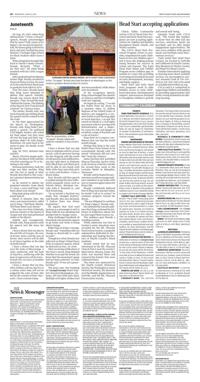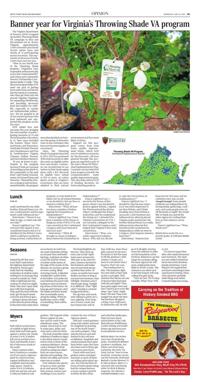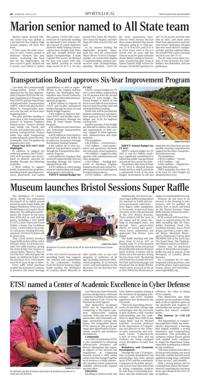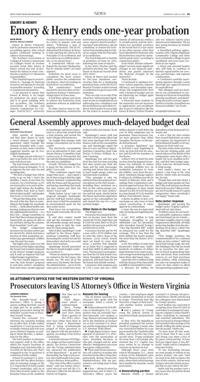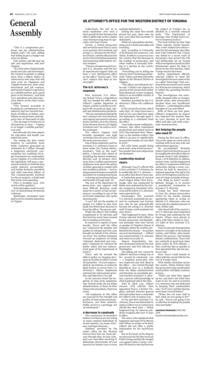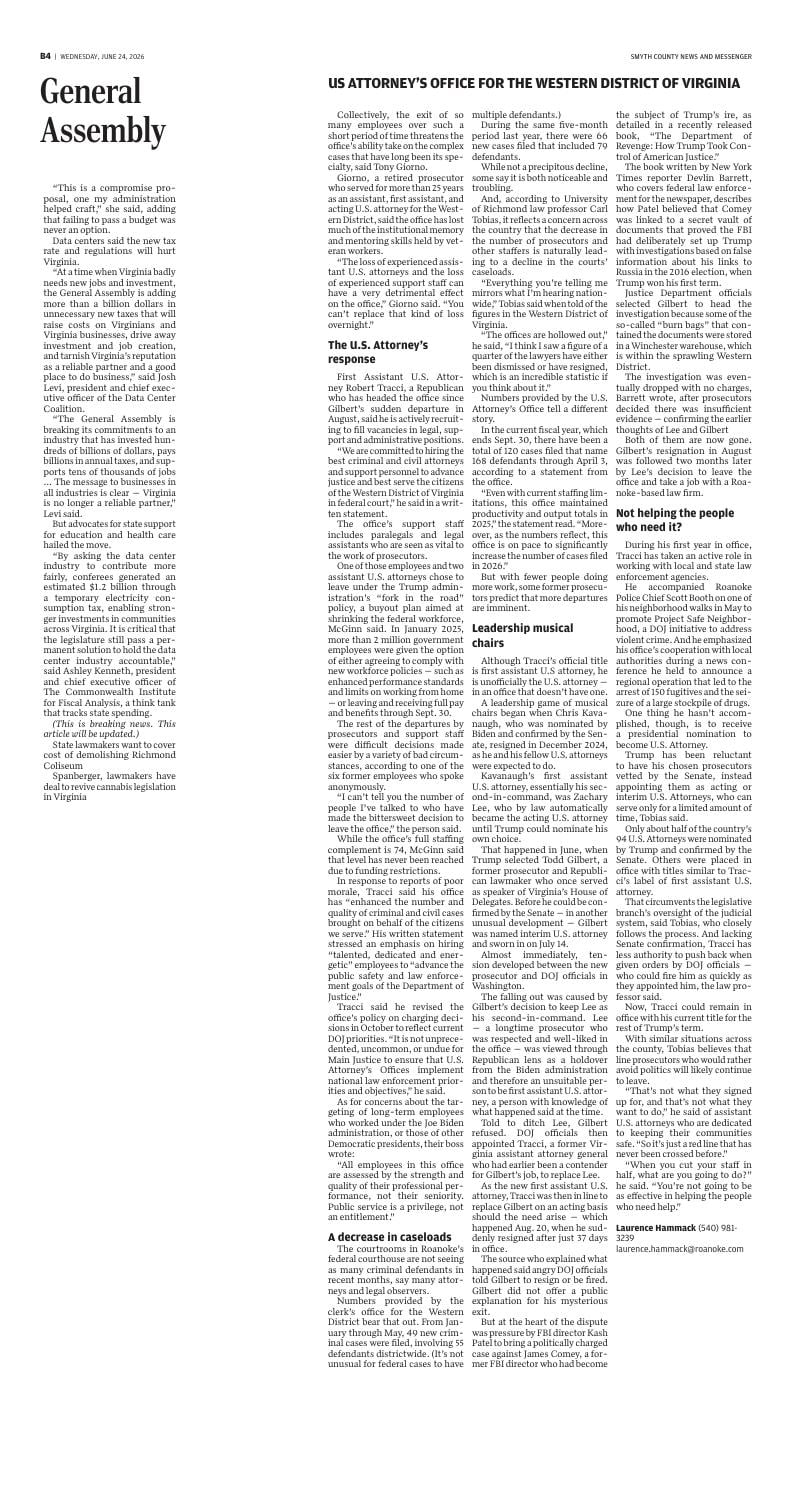


Buttonbush Cephalanthus has flowers that turn into spherical fruit that persist through winter.
Buttonbush Cephalanthus has flowers that turn into spherical fruit that persist through winter.
Buttonbush Cephalanthus has flowers that turn into spherical fruit that persist through winter.
Buttonbush Cephalanthus has flowers that turn into spherical fruit that persist through winter.
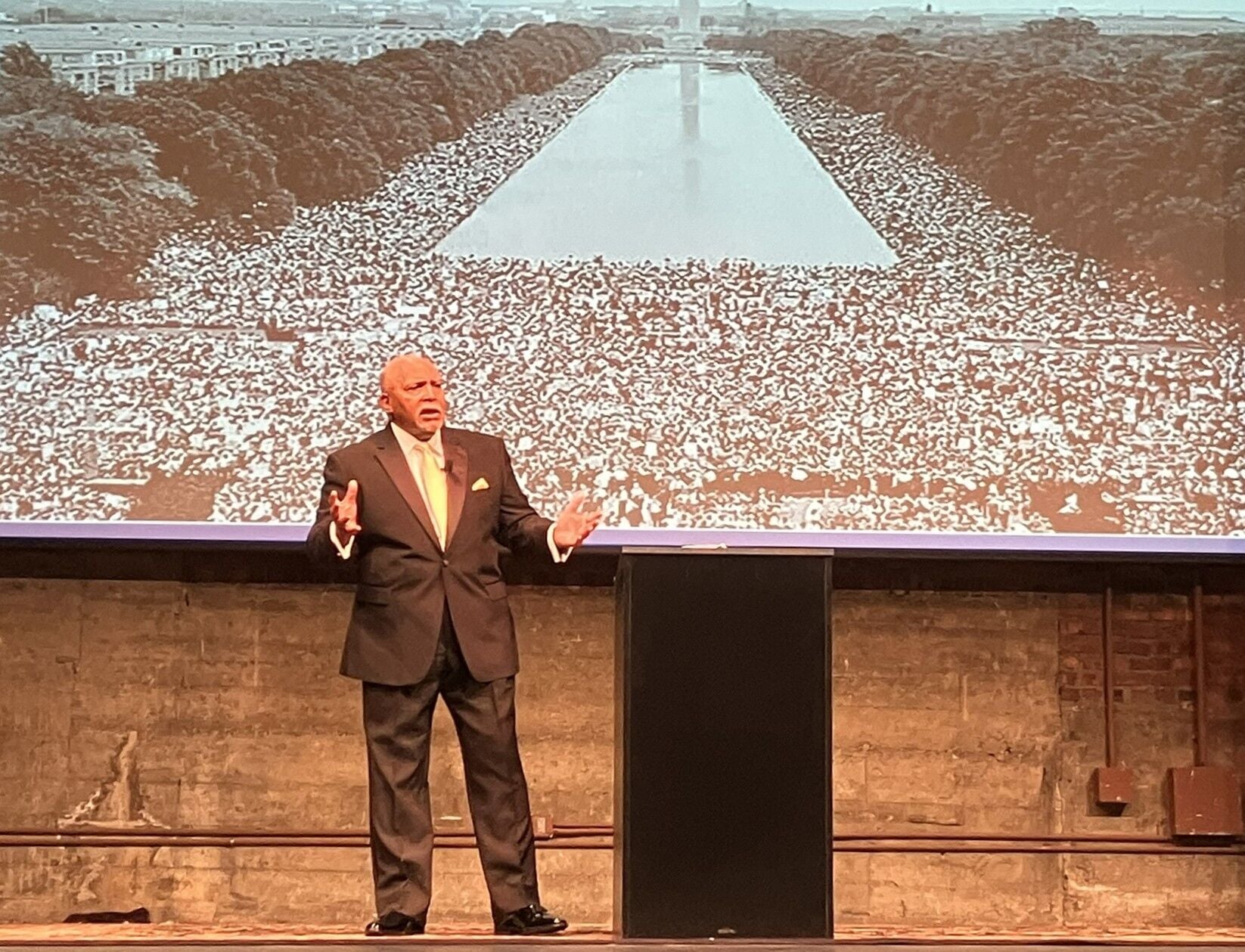
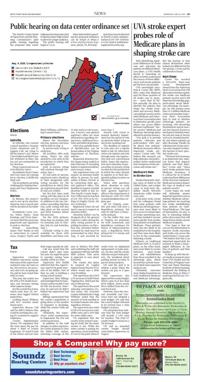
During a Sunday presentation at Marion's Lincoln Theatre, Arthur “Scrapper” Broady brought his perspective to Martin Luther King's "I Have a Dream Speech".
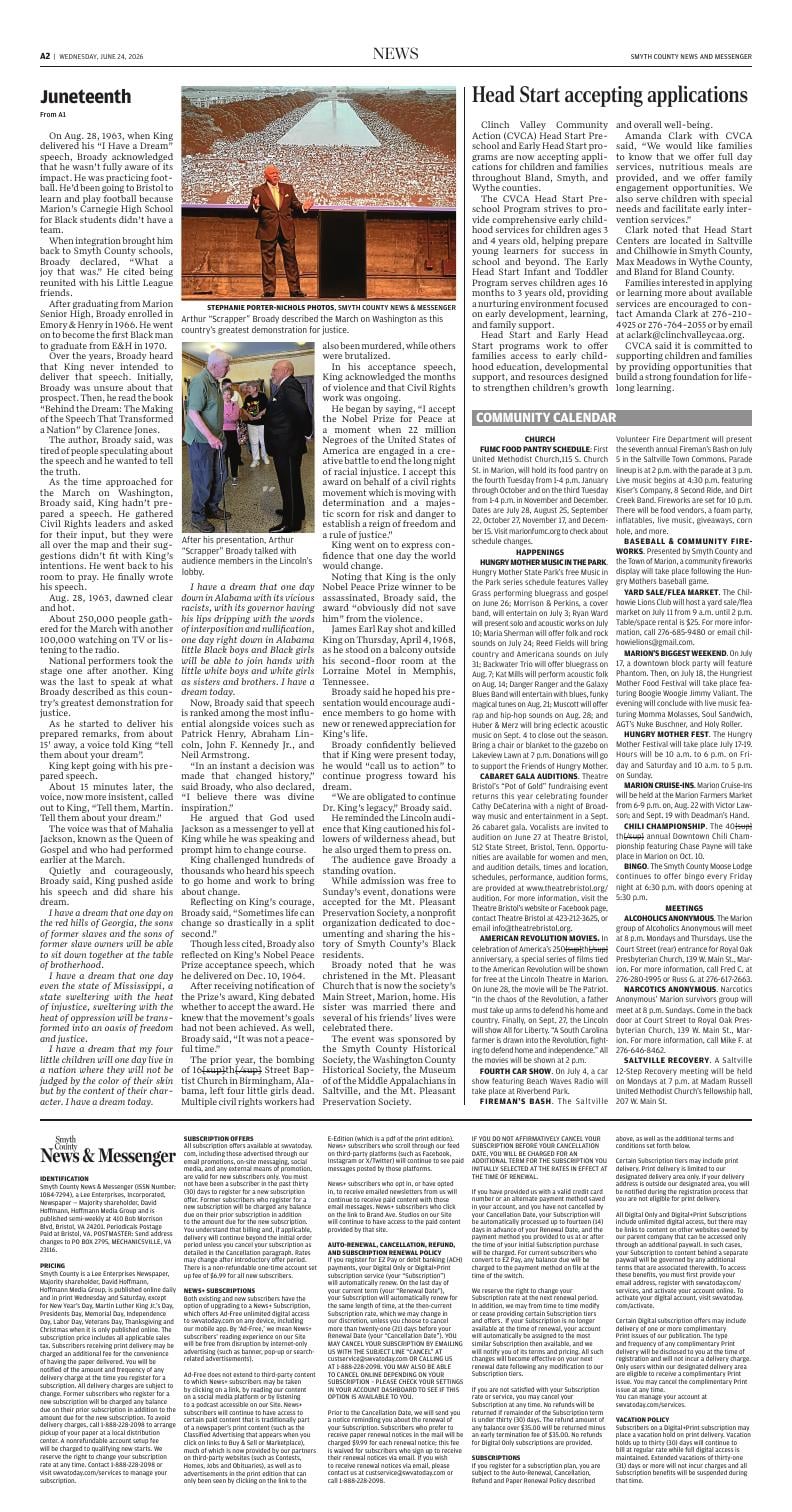
Arthur “Scrapper” Broady described the March on Washington as this country’s greatest demonstration for justice.
Arthur “Scrapper” Broady explained how the "I Have a Dream" speech almost never happened.
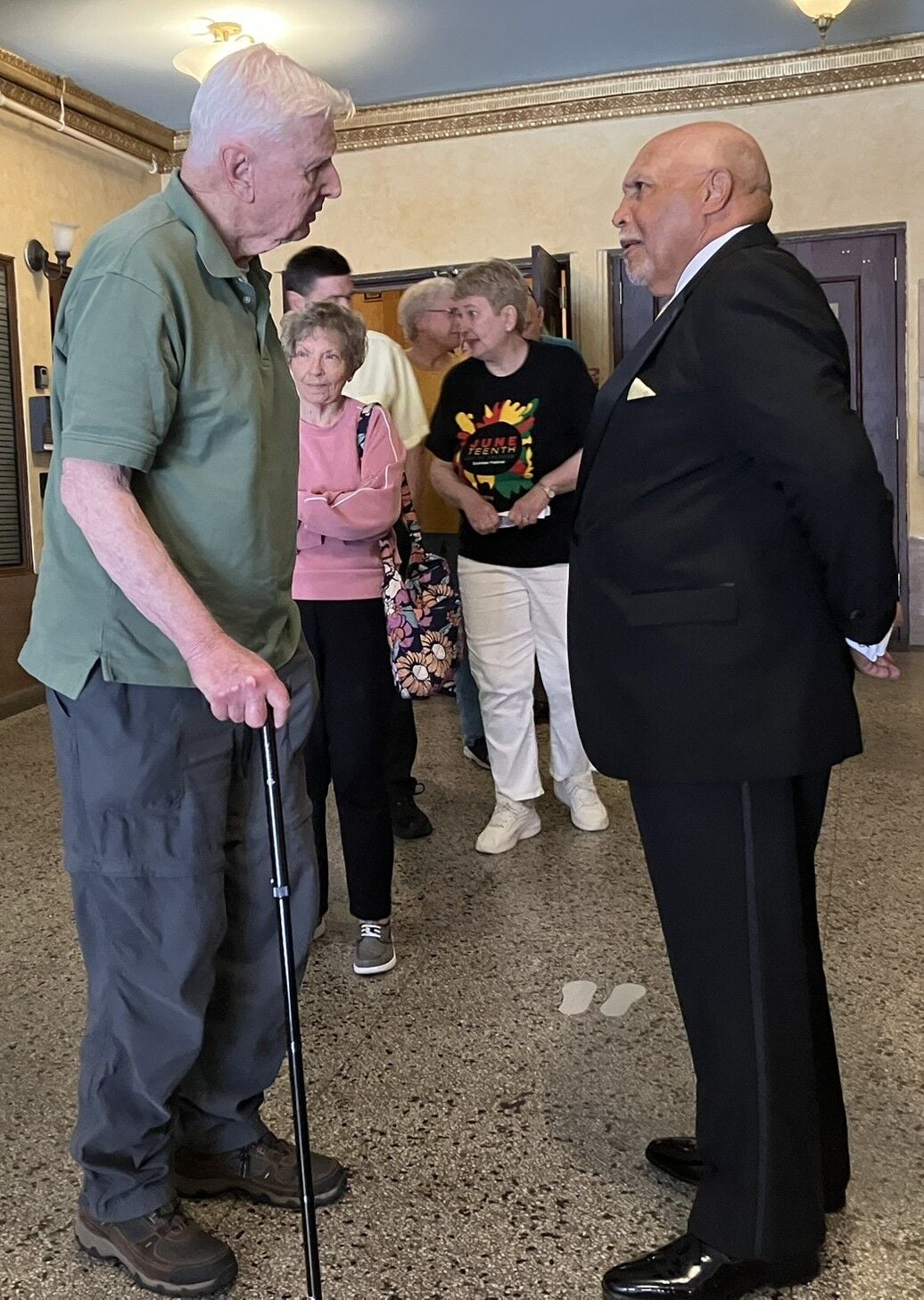
After his presentation, Arthur “Scrapper” Broady talked with audience members in the Lincoln's lobby.
By reflecting on two speeches delivered by Dr. Martin Luther King Jr., a storyteller left his Marion audience with a challenge Sunday afternoon.
A Marion native, Arthur “Scrapper” Broady now lives in Richland, Washington. He returned to his hometown for the community’s Juneteenth commemoration. He took to the Lincoln Theatre’s stage. He remembered spending many hours of his youth in the theatre, though then, because of his race, he was restricted to the balcony. In the latter 1960s, Broady said all people could sit in the main auditorium. Sunday, he recalled thinking that the view from the balcony was better.
On Aug. 28, 1963, when King delivered his “I Have a Dream” speech, Broady acknowledged that he wasn’t fully aware of its impact. He was practicing football. He’d been going to Bristol to learn and play football because Marion’s Carnegie High School for Black students didn’t have a team.
When integration brought him back to Smyth County schools, Broady declared, “What a joy that was.” He cited being reunited with his Little League friends.
After graduating from Marion Senior High, Broady enrolled in Emory & Henry in 1966. He went on to become the first Black man to graduate from E&H in 1970.
Over the years, Broady heard that King never intended to deliver that speech. Initially, Broady was unsure about that prospect. Then, he read the book “Behind the Dream: The Making of the Speech That Transformed a Nation” by Clarence Jones.
The author, Broady said, was tired of people speculating about the speech and he wanted to tell the truth.
As the time approached for the March on Washington, Broady said, King hadn’t prepared a speech. He gathered Civil Rights leaders and asked for their input, but they were all over the map and their suggestions didn’t fit with King’s intentions. He went back to his room to pray. He finally wrote his speech.
Aug. 28, 1963, dawned clear and hot.
About 250,000 people gathered for the March with another 100,000 watching on TV or listening to the radio.
National performers took the stage one after another. King was the last to speak at what Broady described as this country’s greatest demonstration for justice.
As he started to deliver his prepared remarks, from about 15’ away, a voice told King “tell them about your dream”.
King kept going with his prepared speech.
About 15 minutes later, the voice, now more insistent, called out to King, “Tell them, Martin. Tell them about your dream.”
The voice was that of Mahalia Jackson, known as the Queen of Gospel and who had performed earlier at the March.
Quietly and courageously, Broady said, King pushed aside his speech and did share his dream.
I have a dream that one day on the red hills of Georgia, the sons of former slaves and the sons of former slave owners will be able to sit down together at the table of brotherhood.
I have a dream that one day even the state of Mississippi, a state sweltering with the heat of injustice, sweltering with the heat of oppression will be transformed into an oasis of freedom and justice.
I have a dream that my four little children will one day live in a nation where they will not be judged by the color of their skin but by the content of their character. I have a dream today.
I have a dream that one day down in Alabama with its vicious racists, with its governor having his lips dripping with the words of interposition and nullification, one day right down in Alabama little Black boys and Black girls will be able to join hands with little white boys and white girls as sisters and brothers. I have a dream today.
Now, Broady said that speech is ranked among the most influential alongside voices such as Patrick Henry, Abraham Lincoln, John F. Kennedy Jr., and Neil Armstrong.
“In an instant a decision was made that changed history,” said Broady, who also declared, “I believe there was divine inspiration.”
He argued that God used Jackson as a messenger to yell at King while he was speaking and prompt him to change course.
King challenged hundreds of thousands who heard his speech to go home and work to bring about change.
Reflecting on King’s courage, Broady said, “Sometimes life can change so drastically in a split second.”
Though less cited, Broady also reflected on King’s Nobel Peace Prize acceptance speech, which he delivered on Dec. 10, 1964.
After receiving notification of the Prize’s award, King debated whether to accept the award. He knew that the movement’s goals had not been achieved. As well, Broady said, “It was not a peaceful time.”
The prior year, the bombing of 16th Street Baptist Church in Birmingham, Alabama, left four little girls dead. Multiple civil rights workers had also been murdered, while others were brutalized.
In his acceptance speech, King acknowledged the months of violence and that Civil Rights work was ongoing.
He began by saying, “I accept the Nobel Prize for Peace at a moment when 22 million Negroes of the United States of America are engaged in a creative battle to end the long night of racial injustice. I accept this award on behalf of a civil rights movement which is moving with determination and a majestic scorn for risk and danger to establish a reign of freedom and a rule of justice.”
King went on to express confidence that one day the world would change.
Noting that King is the only Nobel Peace Prize winner to be assassinated, Broady said, the award “obviously did not save him” from the violence.
James Earl Ray shot and killed King on Thursday, April 4, 1968, as he stood on a balcony outside his second-floor room at the Lorraine Motel in Memphis, Tennessee.
Broady said he hoped his presentation would encourage audience members to go home with new or renewed appreciation for King’s life.
Broady confidently believed that if King were present today, he would “call us to action” to continue progress toward his dream.
“We are obligated to continue Dr. King’s legacy,” Broady said.
He reminded the Lincoln audience that King cautioned his followers of wilderness ahead, but he also urged them to press on.
The audience gave Broady a standing ovation.
While admission was free to Sunday’s event, donations were accepted for the Mt. Pleasant Preservation Society, a nonprofit organization dedicated to documenting and sharing the history of Smyth County’s Black residents.
Broady noted that he was christened in the Mt. Pleasant Church that is now the society’s Main Street, Marion, home. His sister was married there and several of his friends’ lives were celebrated there.
The event was sponsored by the Smyth County Historical Society, the Washington County Historical Society, the Museum of of the Middle Appalachians in Saltville, and the Mt. Pleasant Preservation Society.

The decision to raise the real estate tax 10 cents did not appear to come easily to Smyth County’s Board of Supervisors last Thursday evening.
Supervisor Jason Parris raised the question: “What do we cut?”
He said that residents want to live in a safe community and send children to good schools, while convenience stations and waste hauling are needed to keep some people from throwing trash over mountain sides.
The only thing we can cut is jobs, Parris said, acknowledging that doesn’t really help because employees live in the county.
Since early in the year, the county has implemented a hiring freeze and plans to eliminate at least eight positions through attrition.
Board Chair Charlie Atkins said the 10 cents only covers schools, fire-EMS, and staff raises that come when the state increases pay for some employees and the county strives to treat others equally.
Supervisor Courtney Widener concurred, saying that none of the supervisors wanted to raise any taxes or fee, but services are necessary and costs are going up. He said he had a hard time with 10 cents.
This year, the county was hit with a 25% health insurance rate increase among other expense jumps.
For the current fiscal year, which ends June 30, revenues have lagged behind projections.
Looking ahead, Widener said he’s worried about future years.
Supervisor Roscoe Call said he didn’t believe they could do anything else, saying it’s essential to support employees.
County Administrator Shawn Utt explained that the state raises the pay for about a third of county employees. It’s hard to look at the others and not raise their wages equally, he said.
Call also noted that the county didn’t raise taxes last year. He urged his peers to consider raising taxes steadily a little at a time.
Supervisor Kris Ratliff reflected that the supervisors need to be good stewards of tax dollars. Part of that, he said, is building a strong school system.
Supervisor Rick Billings acknowledged that he’d previously said he wouldn’t vote for this tax increase. However, he said now he didn’t believe the supervisors had a choice.
Billings summarized that the county’s population is going down so the number of taxpayers is declining, while the county’s bills are going up.
Ultimately, the supervisors voted unanimously to implement the 10¢ real estate tax increase.
In addition to the staff changes, to reduce expenses, the county planned to close the Atkins EMS station, returning coverage of the area to Marion Fire-EMS and combining the staff and equipment with the Saltville EMS station. That move is expected to save about $100,000.
The county also plans to suspend its Capital Improvement Plan for FY27, which would save a little over $2 million.
The supervisors also OK’d a 5% increase in Solid Waste Tipping Fees, which put the rate at $84 per ton.
The supervisors discussed reducing convenience station hours, but Assistant County Administrator Clegg Williams noted that the amount of trash needing to be hauled remains the same regardless of hours.
The supervisors also voted to OK a 5% increase for water utility rates and a 10% hike for sewer utility rates.
Utt explained that the county water system is paying for itself, but the sewer system is not. While the water system is paying for operations, Parris noted that it’s not to the point where it could cover an unplanned replacement or major project. He also said the county still owes on past water projects. He wondered about putting money in today to pay for future projects.
Utt said the goal is to achieve a point where the system can pay as it goes forward.
The supervisors also approved the county budget, which came in at less than $134 million, down nearly $10.6 million from the current fiscal year.
However, since the General Assembly and Governor have not adopted a state budget, Utt said that the county budget will need to be revised once a state budget is in place.
Utt said projections indicate that the state budget will include a 3.5% raise for teachers. The 2026-27 county budget is based on a 2% increase.
Utt said an amended county budget should come before supervisors in August.
The three towns in Smyth County will all boast competitive races for open town council seats this November. The ballot has been set as the deadline to file was June 16.
Chilhowie
Long-time Chilhowie mayor, Gary Heninger, is being challenged by J. Paige Wright for that post.
Three council seats are up for election. Incumbents Robert “Bob” Jeter and Brent Foster are seeking re-election.
Incumbent Shannon Donnelly chose not to run again. Newcomers seeking a council seat are J. David Gary, W. Jeff Jones, Lewis W. Shortt Jr., and L. Becca Wilkinson-Smith.
Saltville
In Saltville, two current council members, Suzanne Carter Abramson and R. Eugene Call, are vying to fill the mayor’s seat. Mayor Cheri Fullen had filed to run but withdrew in May. She has not yet commented on her decision.
Three council seats are set to be filled by voters.
Incumbents Ryan Comer and Cary Sauls are running for re-election. Call fills the third seat.
The incumbents are being challenged by Stephen Hennegar and Tracy Stephenson Prater.
Marion
In Marion, the mayor’s seat is not up for election. However, four council seats will be decided at the ballot box.
Incumbents Larry Carter, Debra Hayes, Susie Jennings, and Tricia Spencer have filed the necessary paperwork and signatures to seek re-election.
Former councilman James “Jim” Barker as well as newcomers to council races, Gregory Taylor and Mavis Williams, will be trying to unseat them.
Primary elections
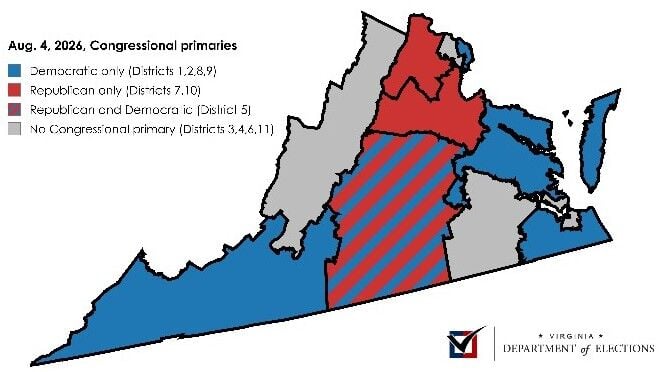
Before the November election, primary elections will be held on Aug. 4.
In-person early voting is underway.
All localities offer early voting. Voters are only allowed to vote early in the jurisdiction in which they are registered.
Early in-person voting will continue through Saturday, Aug. 1.
To vote early in-person, registered voters should go to their designated early voting location for the jurisdiction in which they are registered, present their ID and cast a ballot.
For the first time, early voting will take place in all localities on two Sundays. In addition to the two Saturdays preceding Election Day, early voting will also take place on the second and third Sundays before Election Day.
For the 2026 primary, those days are Sunday, July 19; Saturday, July 25; Sunday, July 26, and Saturday, Aug. 1.
Curbside voting is also available for those with disabilities and those over 65 who wish to vote in person. Contact your general registrar’s office for more information regarding voting hours, additional locations and ballot drop boxes.
A list of acceptable forms of identification can be found online at the Virginia Department of Elections website.
Requested absentee ballots began being mailed no later than June 19, including ballots to registered military and overseas voters.
Any registered voter can request an absentee ballot either in person, by mail, online (Citizen Portal) or by contacting their general registrar’s office. The deadline to request a mailed absentee ballot is July 24. The Smyth County Registrar’s Office may be reached at 276-706-8332 or by visiting 121 Bagley Circle, Ste 422, in Marion.
Registered voters do not need a reason to request an absentee ballot.
Absentee ballots can be dropped off at the general registrar’s office during the early voting period or at polling locations on Election Day. Absentee ballots returned by mail must be postmarked no later than Aug. 4 and received by noon Aug. 7.
Anyone with visual or manual dexterity impairment has the option to vote an absentee ballot using an electronic marking tool.
The deadline to register to vote and cast a regular ballot is July 24. Afterward, voters can register and vote through same-day registration and cast a provisional ballot. Same-day registration must take place in person either at an early voting location for the jurisdiction in which the voter intends to register or at their designated polling location on Election Day.
Voters with questions about absentee or early in-person voting can call their general registrar’s office or the Department of Election at 1-800-552-9745 or email info@elections.virginia.gov.
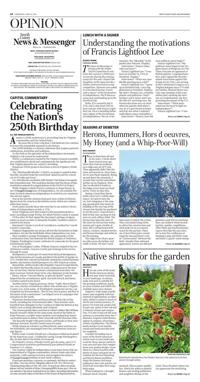
All 133 Virginia counties and cities will have a Republican primary, but only 82 will have a Democratic primary.
On the ballot this year in Virginia are primaries for both Democratic and Republican nominees for House of Representatives seats, a Republican Party primary for U.S. Senate, and local races.