
Saltville museum to celebrate opening of American Revolution exhibit this Sunday
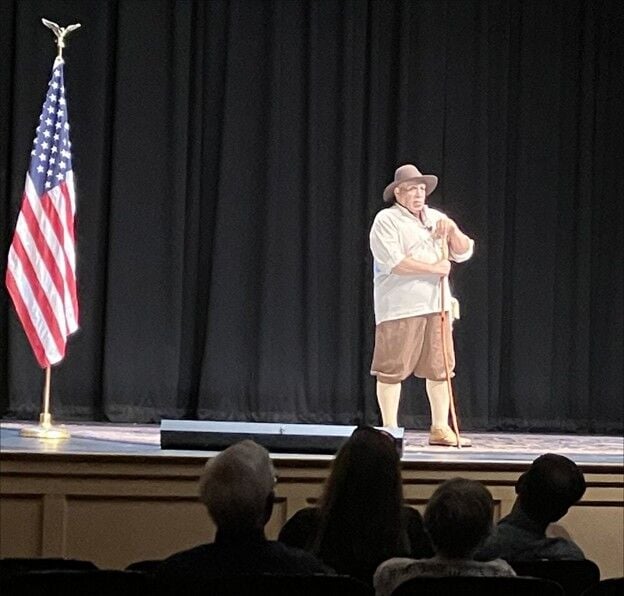
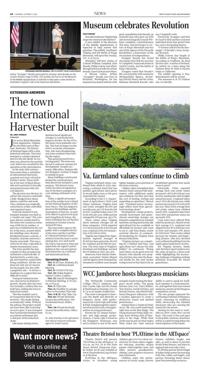
Arthur “Scrapper” Broady portrayed his ancestor John Broady on the Lincoln Theatre stage in 2025. This Sunday, he'll do so at the Museum of the Middle Appalachians in Saltville to help open a new exhibit on Southwest Virginia's role in the American Revolution.
How did Southwest Virginia help shape the American Revolution?
A new exhibit at the Museum of the Middle Appalachians is expected to help answer that question. The exhibit, Southwest Virginia and the Battle of Kings Mountain, will open this Sunday, Oct. 4, at 2 p.m.
Attendees will hear stories of Colonel William Campbell, John Broady, Philip Griever and others through historical talks by Arthur Broady, Garret Jackson and others.
A Marion native, Arthur “Scrapper” Broady now lives in Richland, Washington. He has long been fascinated with his sixth great-grandfather John Broady, an enslaved man who grew up with and served alongside General William Campbell, a Revolutionary War hero, who led troops to victory at King’s Mountain and was one of the signers of the Fincastle Resolutions, a forerunner of the Declaration of Independence.
Scrapper Broady has found documents that link his ancestor to Campbell’s Aspenvale home in Smyth County, and the Battle of King’s Mountain.
Scrapper noted that Broady’s life crossed paths with numerous distinguished figures, including Patrick Henry and his sister, Madame Elizabeth Russell, who was Campbell’s wife.
Previously, Scrapper said that it’s hard to find another enslaved individual from that period who has such a fascinating history.
“I’ve been called to be the messenger” of Broady’s story, Scrapper declared.
Philip Griever also fought at the Battle of King’s Mountain. According to tradition, he fired the first shot. A native of Holland, he settled on a farm along the Holston River in what is known today as Chilhowie.
The exhibit opening is free. Refreshments will be served.
The museum is at 123 Palmer Ave. in Saltville.