

Monarch Watch: Citizen scientists tag, launch monarchs to join migration to Mexico

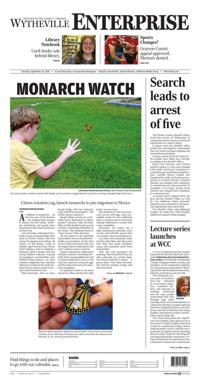
This young citizen scientist reacted with delight as he launched a tagged Monarch Saturday morning at Beagle Ridge Herb Farm.

Monarch Watch tags were applied to each butterfly. Those that are found help scientists at the University of Kansas learn where and when the monarch was released, its sex, and wing measurements.

Ellen Reynolds, an owner of Beagle Ridge Herb Farm, taught each participant how to safely hold a monarch for tagging.
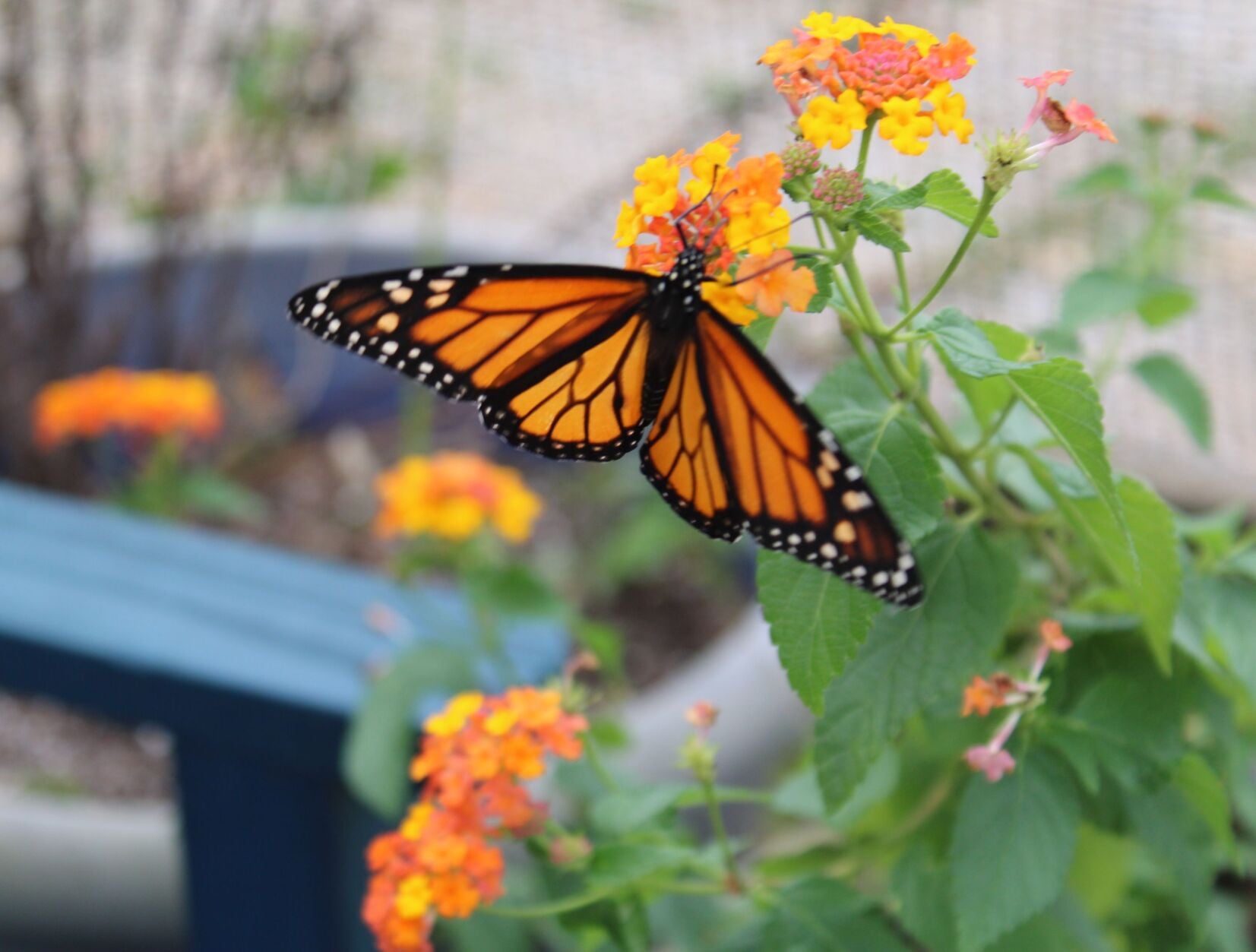
In the farm's butterfly house, every plant serves as food or a host for butterflies.

Nets were used to safely catch the monarchs.

Several caterpillars were munching on a milkweed leaf on a recent Saturday morning.
As millions of monarchs – all that live east of the Rockies -- are making their journey to Mexico for the winter, multiple individuals and groups have launched locally raised monarchs on their way.
Last Saturday culminated butterfly season at Beagle Ridge Herb Farm in Wythe County with two monarch tagging and sending-off events. In one group, a pair of middle-aged friends from Afton, West Virginia, came to celebrate a birthday, while a family with two young children took part. A group of youngsters set butterflies, also dubbed flying flowers, on their southern migration trek Saturday afternoon. Earlier in the week students from a Smyth County Christian school took their turn.
Ellen Reynolds, who co-owns Beagle Ridge with her husband, Greg, told all the participants, “We will be citizen scientists.”
Beagle Ridge is home to a butterfly house dedicated to Ellen’s mother’s memory. After she died, Ellen said the family found an array of items celebrating butterflies in her home. The butterfly house is “Jane’s house,” Ellen declared.
All the plants in the butterfly house either serve as food for butterflies or host plants.
At this time of year, Ellen said that in this area the bright yellow Golden Rod is the most common source of nectar.
Earlier in the season, milkweed of multiple varieties, including Butterfly Weed, Swamp Milkweed, and Common Milkweed, serve as the only host plant for monarch eggs and the only food source for monarch caterpillars.
If a gardener wants to see more monarchs, Ellen said that the right plants are necessary.
She pointed out that one monarch can lay 400 eggs. Each caterpillar needs its own milkweed plant. Currently, there’s not nearly enough milkweed to sustain that many caterpillars.
Monarchs, she noted, are a high-maintenance butterfly. They are the only butterfly species that can contract one of several diseases.
Less than 10% monarchs make it in the wild, Ellen said. She noted that they face many predators along with potential harm from bad weather.
Still, she said monarchs are amazing. Ellen noted that if you cut into a chrysalis at a certain stage, the future butterfly is liquid – a green slime. That slime becomes the beloved winged orange and black monarch.
Beagle Ridge takes part in the University of Kansas’ Monarch Watch program, which “is a large-scale community science project that was initiated in 1992 to help understand the dynamics of the monarch's spectacular fall migration through mark and recapture.”
Each butterfly released Saturday was tagged with an identifying number. If the tag is found, individuals can later look up their butterfly and see where it was located – often in Mexico or Texas.
Individuals who tag monarchs record the tag code, release date, sex of the butterfly, geographic location and wing width and then release them.
U.S. Fish & Wildlife reports that “according to the most recent monarch Species Status Assessment, by 2080 the probability of extinction for eastern monarchs ranges from 56% to 74% and the probability of extinction for western monarchs is greater than 95%. Threats to the species include the loss and degradation of breeding, migratory and overwintering habitat, exposure to insecticides and the effects of climate change.”
The agency has proposed that the monarch be listed as threatened under the Endangered Species Act, but that process takes time.
Learn more about Monarch Watch at https://www.monarchwatch.org/.
Learn more about Beagle Ridge, which is celebrating its 25th anniversary this year, at https://beagleridge.org/.