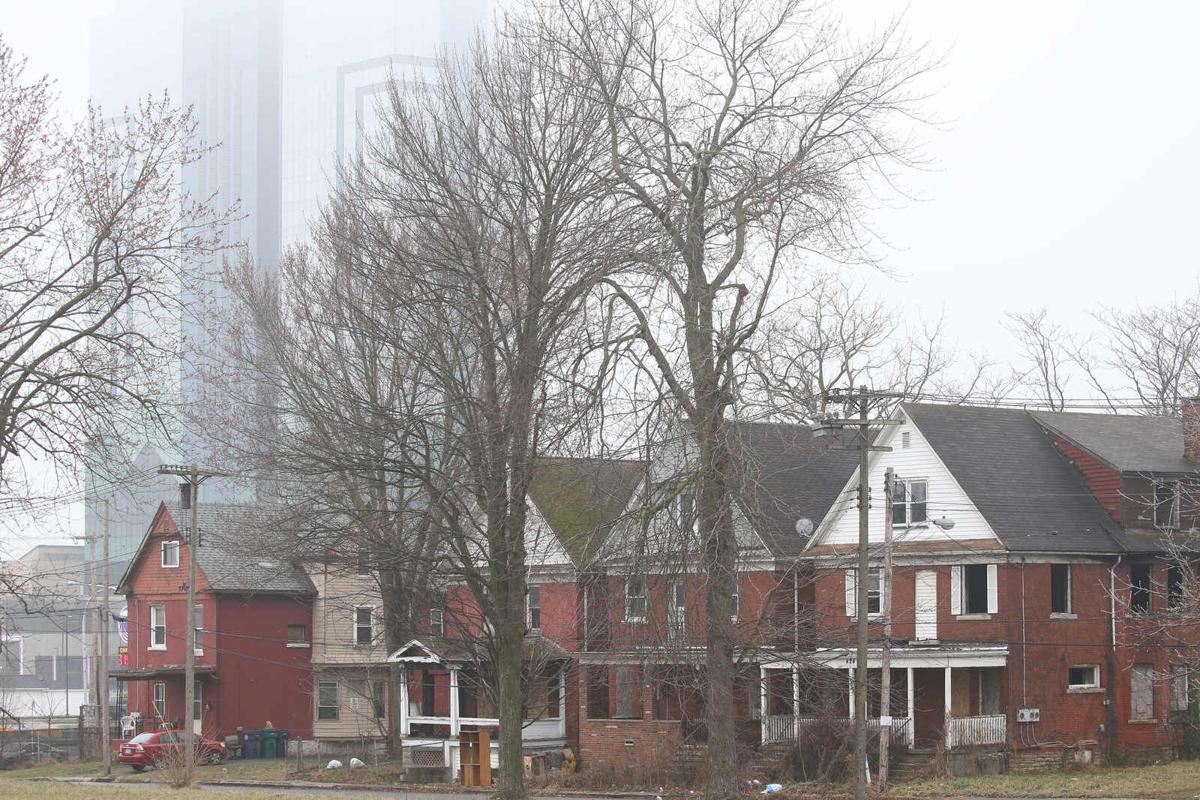
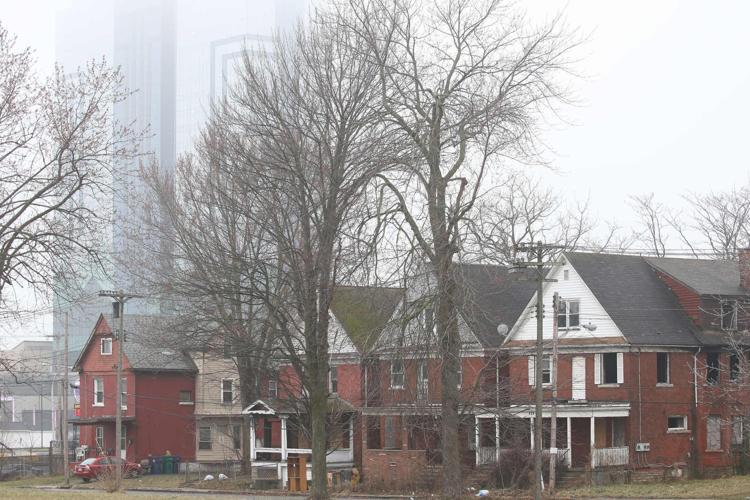
The Seneca Niagara Casino tower looms large over the surrounding neighborhood, which like this row of mostly vacant houses on 8th Street is severely economically depressed, Thursday, Jan. 13, 2022.
By Thomas J. Prohaska
and Deidre Williams
News Staff Reporters
The Seneca Nation of Indians has agreed to stop fighting the state over casino revenue payments, which is good news for the three communities that host their facilities.
“Rather than pursue continued legal action,” Seneca Nation President Matthew Pagels said, “we believe we can now best address our concerns in a compact with greater clarity on our obligations and ... the obligations New York State has to the Nation in return.”
The latest ruling issued earlier this month by U.S. District Judge William M. Skretny said the Senecas must abide by an arbitration panel’s 2019 decision awarding the state a quarter of their slot-machine revenues from three Western New York casinos.
When the Seneca Nation last made full payments of slot machine profits in 2016, the money went to Albany and then was passed on to the cities of Niagara Falls, Buffalo and Salamanca. The state kept 75 percent and transferred 25 percent to the cities. Each city received money derived only from the casino in their city. • Buffalo received $7,026,041 in 2016
As a stalemate between the Seneca Nation and New York State over slot machine revenue drags on, the three cities that host the Seneca casinos are feeling the effects. And there’s no quick fix in
Gov. Andrew M. Cuomo’s announcement that the City of Niagara Falls would receive a $12.3 million advance on unpaid Seneca Niagara Casino revenue was good news for the Falls on Wednesday, but it didn’t do anything for the other former recipients of the casino cash. The City of Buffalo has lost out on an estimated $17 million since the
The Seneca Niagara Casino tower looms large over the surrounding neighborhood, which like this row of mostly vacant houses on 8th Street is severely economically depressed, Thursday, Jan. 13, 2022.