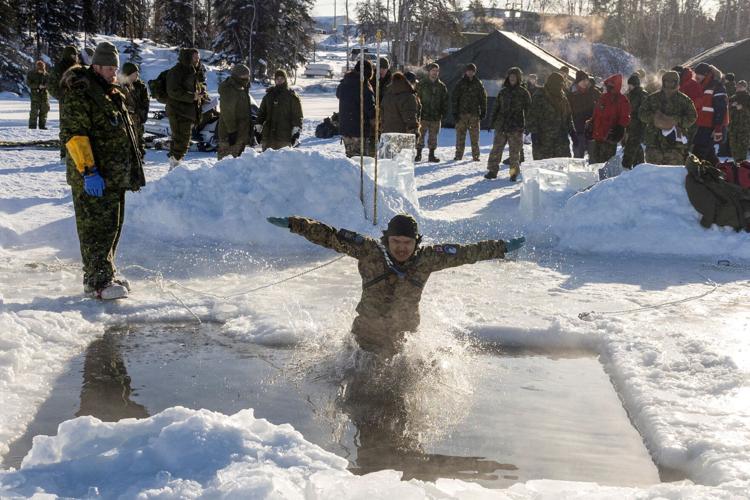
A service member practices through-the-ice rescue Feb. 20 as Canadian Armed Forces deploy to annual Operation Nanook-Nunalivut drills.
CARLOS OSORIO, REUTERS
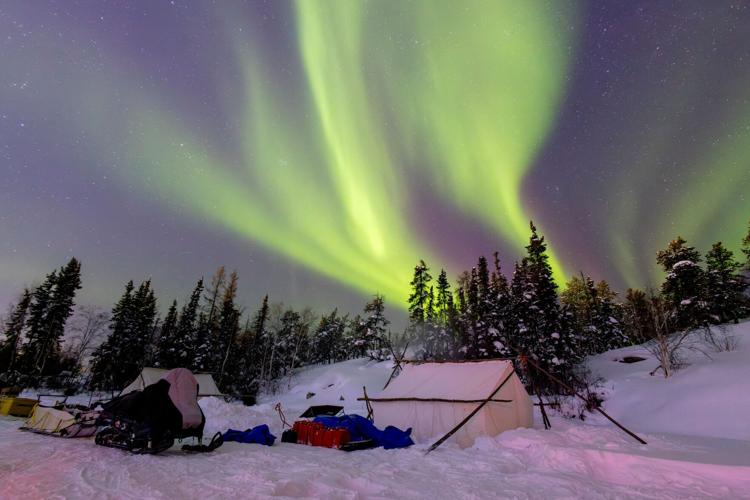
The aurora borealis appears Feb. 18 above a tent belonging to the 1st Canadian Ranger Patrol Group as Canadian Armed Forces deploy to Operation Nanook-Nunalivut in Yellowknife, Northwest Territories.
CARLOS OSORIO, REUTERS
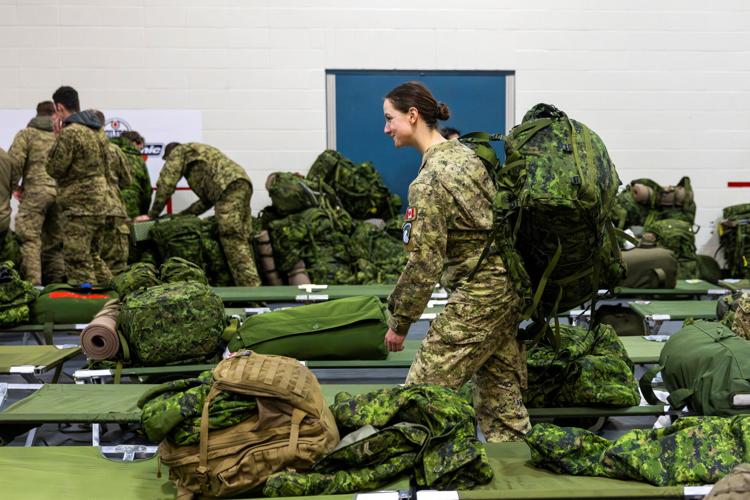
A member of Task Force Grizzly arrives for final remarks Feb. 20 after a week of arctic training by the Canadian Armed Forces.
CARLOS OSORIO, REUTERS
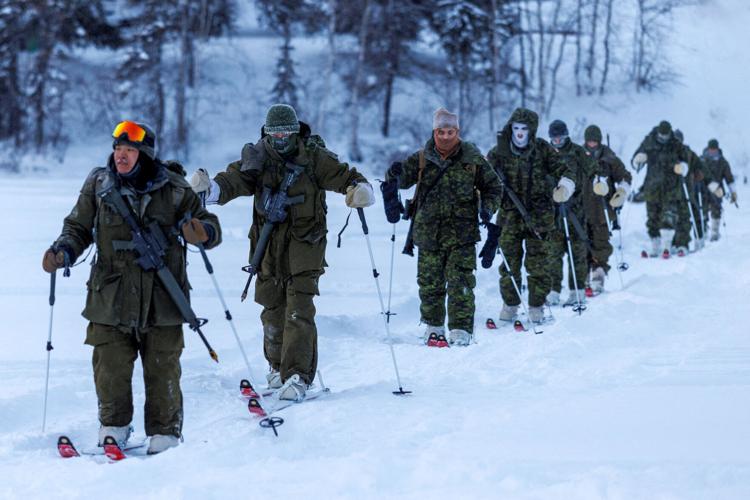
Members of 41 Canadian Brigade Group, part of Task Force Grizzly, patrol on skis Feb. 16 as Canadian Armed Forces deploy to Operation Nanook-Nunalivut drills in Yellowknife, Northwest Territories.
CARLOS OSORIO, REUTERS
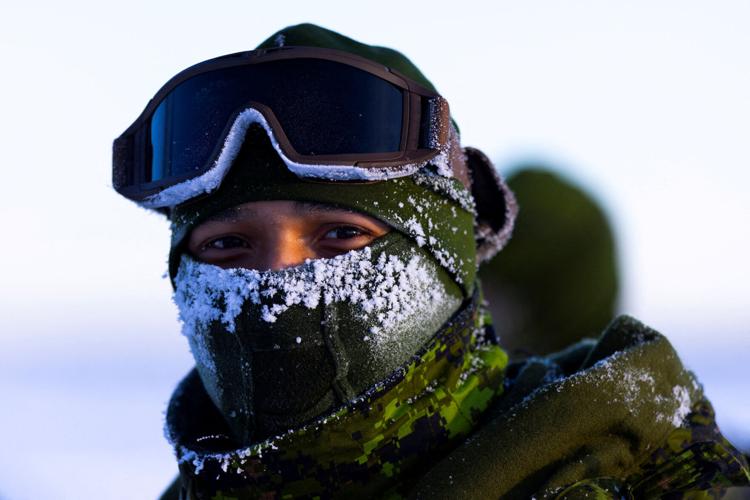
A member of 41st Canadian Brigade Group looks on with ice buildup around his mask Feb. 15.
CAMBRIDGE BAY, Nunavut — Over the past three months, Canadian soldiers conducted a more than 3,100-mile snowmobile patrol in extreme Arctic conditions, traveling from Inuvik, Northwest Territories, to Churchill, Manitoba.
The aurora borealis appears Feb. 18 above a tent belonging to the 1st Canadian Ranger Patrol Group as Canadian Armed Forces deploy to Operation Nanook-Nunalivut in Yellowknife, Northwest Territories.
Members of 41 Canadian Brigade Group, part of Task Force Grizzly, patrol on skis Feb. 16 as Canadian Armed Forces deploy to Operation Nanook-Nunalivut drills in Yellowknife, Northwest Territories.