Researchers at UC Berkeley have identified genetic traces from two previously unknown human lineages hidden in modern DNA. One “ghost” lineage interbred with early modern humans in Africa more than 50,000 years ago and contributes roughly 0.5% to 1% of the genome in individuals today. A seco…
The bones of a Neanderthal from a cave in Iraq's Kurdistan region are offering evidence of both violence and compassion in the closest evolutionary cousins of our species, exhibiting a wound apparently from a fatal spear attack as well as signs of an earlier nonfatal injury that may have elicited kindly care.
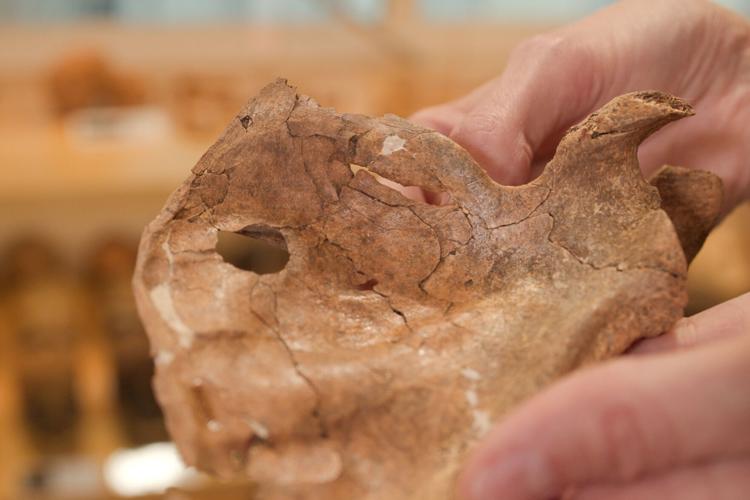
The left scapula of the Neanderthal individual called Shanidar A, who lived about 75,000 years ago, showing a circular hole possibly caused by a sharpened wooden spear, is seen at the University of Cambridge’s Leverhulme Centre for Human Evolutionary Studies in Cambridge, Britain, Sept. 30.
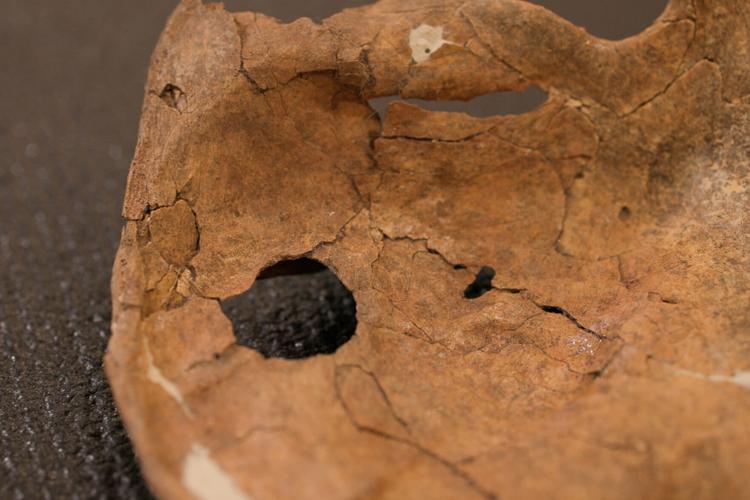
The left scapula of the Neanderthal individual called Shanidar A, who lived about 75,000 years ago, showing a circular hole possibly caused by a sharpened wooden spear, is seen at the University of Cambridge's Leverhulme Centre for Human Evolutionary Studies in Cambridge, Britain, Sept. 30.
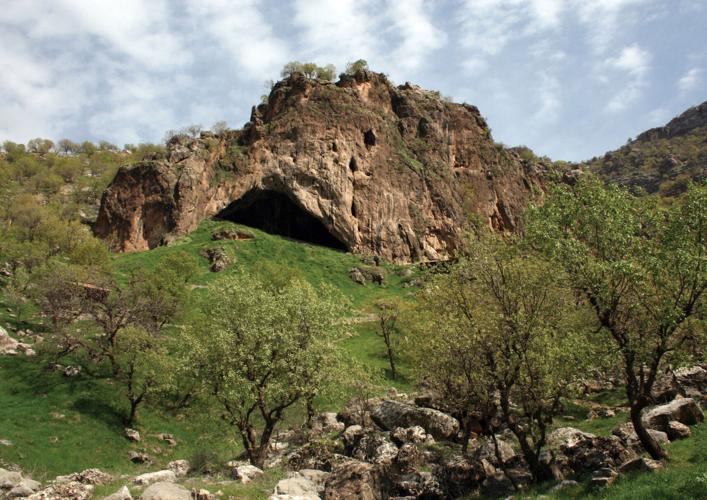
The entrance to Shanidar Cave in Iraq's Kurdistan region, a site of important Neanderthal remains, is seen in an undated photograph released on Oct. 15.
The left scapula of the Neanderthal individual called Shanidar A, who lived about 75,000 years ago, showing a circular hole possibly caused by a sharpened wooden spear, is seen at the University of Cambridge’s Leverhulme Centre for Human Evolutionary Studies in Cambridge, Britain, Sept. 30.
The entrance to Shanidar Cave in Iraq's Kurdistan region, a site of important Neanderthal remains, is seen in an undated photograph released on Oct. 15.
The left scapula of the Neanderthal individual called Shanidar A, who lived about 75,000 years ago, showing a circular hole possibly caused by a sharpened wooden spear, is seen at the University of Cambridge's Leverhulme Centre for Human Evolutionary Studies in Cambridge, Britain, Sept. 30.